
• A notice about Rule 3 regarding sites hosting pirated/unauthorized content has been made. Please see here for details.
  • Staff is working to deal with the problem of synonymous tags. See here for more information and to suggest tag mergers.
  • Due to issues with external spam filters, QQ is currently unable to send any mail to Microsoft E-mail addresses. This includes any account at live.com, hotmail.com or msn.com. Signing up to the forum with one of these addresses will result in your verification E-mail never arriving. For best results, please use a different E-mail provider for your QQ address.
  • For prospective new members, a word of warning: don't use common names like Dennis, Simon, or Kenny if you decide to create an account. Spammers have used them all before you and gotten those names flagged in the anti-spam databases. Your account registration will be rejected because of it.
  • Since it has happened MULTIPLE times now, I want to be very clear about this. You do not get to abandon an account and create a new one. You do not get to pass an account to someone else and create a new one. If you do so anyway, you will be banned for creating sockpuppets.
  • Due to the actions of particularly persistent spammers and trolls, we will be banning disposable email addresses from today onward.
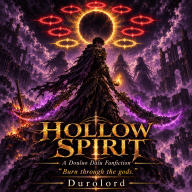
Hollow Spirit
Created
Status
Incomplete
Watchers
15
Recent readers
63

A burned-out web developer dies alone in his flat and wakes up as Lin Jin, a woodcutter's son in a village outside Notting, a few miles from the boy who will become the Sea God. At six he awakens the Twin Heavenfall Swords, star-metal blades that bend weight and pull. In his closed fist, where nobody can see it, sits something else: an ember of the First Flame.

Every beast he kills feeds it Souls. Souls buy growth, and they light bonfires, the only places he can come back from death. But every death takes half of what he carried, and something human goes with it. The system calls that Hollowing.

He knows the story. He doesn't know what it costs to change it.
Chapter 1: A World Reborn New

Durolord

Know what you're doing yet?
Joined
Feb 21, 2021
Messages
139
Likes received
1,057
The deploy was scheduled for three in the morning because that was when the fewest people would notice it breaking.

He had made that argument himself, two weeks ago, in a meeting where everyone else had been too tired to disagree. Now it was 2:41 a.m., the office was dark apart from his corner, and he was the one still awake to watch it.

Two monitors. A cold mug of coffee with a skin on it. A third energy drink he had promised himself he wouldn't open, open. The build pipeline crawled across the left screen in green, green, green, yellow.

Don't you dare.

Yellow became green. He let out a breath and rubbed his chest, where a dull pressure had been sitting since around midnight. Heartburn. Twelve days of crunch, takeaway noodles and caffeine would do that. He made a mental note to buy antacids, the way he had made a mental note to see a doctor about the dizzy spells in March, and to go to the gym in January, and to call his mum back.

His phone lay face up beside the keyboard. One missed call from Mum, 7:12 p.m. One message under it.

Sunday dinner? Your dad's making jollof. Bring a coat, it's cold.

He had read it at 7:13 and thought, After the release. Which was what he had thought about the last three Sundays.

He picked the phone up and typed with one thumb: Yes. Promise. I'll bring the coat.

He didn't press send. The pipeline had stopped.

Red.

"No, no, no. Come on." He leaned in, scrolling. A migration script had timed out against the production database. Not failed, timed out, which meant it might have half-run, which meant—

The pressure in his chest turned into a hand and squeezed.

It was so sudden that for a second he only felt confused. Then the pain went down his left arm like someone had pulled a wire through it, and the room tilted. He tried to stand. His knee hit the desk, the mug went over, and cold coffee ran across the keyboard and dripped onto the carpet.

That's the keyboard gone, he thought, very clearly, and then he was on the floor.

The carpet smelled of dust and old coffee. From down here he could see the underside of the desk, a wad of grey gum someone had stuck there years ago, and the blue glow of the monitor spilling over the edge. His phone had landed a little way from his hand. He could see the draft still sitting there, unsent.

Just press it.

His fingers moved, but not far enough.

The air conditioning hummed. Somewhere in the building a lift chimed for nobody. On the screen above him, the terminal cursor blinked, waiting for an answer he wasn't going to give it.

The last thing he thought was not anything brave. It was: She's going to find out from my manager.

Then the blue light went out, the way a screen goes out when nobody touches it for long enough.


Warm.

That was the first thing. Not warm like a heater, but warm everywhere at once, and close, and moving.

The second thing was noise. A muffled thumping, slow and steady, somewhere very near. Voices, low and blurred, as if they were coming through water.

The third thing was that he couldn't move. He tried, and something that might have been an arm twitched the wrong way.

Hospital, he decided. Heart attack. I'm in a hospital, and they've sedated me, and this is what drugs feel like.

It was a reasonable theory. It lasted until the warm place squeezed, hard, and kept squeezing, and then there was light, and cold, and someone held him upside down and he screamed in a voice that was much too high and could not stop.

He spent the next few hours testing other theories.

Coma dream: possible, but the details were too boring. Nobody dreams about being wiped down with a rough cloth that smells of boiled water and woodsmoke.

Simulation: he'd read enough to give it a fair hearing. But the bugs were wrong. A simulation would get the big things right and the small things wrong, and here the small things were relentless. The rasp of straw under a blanket. A draught from somewhere on his left. The ache of a body that had worked very hard to be born.

Afterlife: he had not expected the afterlife to involve this much crying, most of it his own.

The fourth theory was the one he kept circling away from, because it was the one he had read about a few hundred times in the dead hours of the night, on his phone, under covers, scrolling chapter after chapter of people who died and woke up somewhere else.

No, he thought. That's fiction. Those are web novels. That's not a thing that happens to a web developer with a cardiac problem in an office.

A woman's face leaned over him, too close and too blurry to make out. Dark hair, damp with sweat, falling over one shoulder. She said something soft in a language he didn't know. Her voice was tired and smiling at the same time.

Then she lifted him against her chest, and the slow thumping he had heard in the dark was right there under his ear again.

He stopped crying. He didn't decide to. His body did it on its own, the way a body knows things before the mind has finished arguing.

Okay, he thought, as sleep pulled him down whether he liked it or not. Okay. We'll figure it out tomorrow.


He figured out very little the next day, or the next month.

Babies, it turned out, were terrible at research. His eyes wouldn't focus past an arm's length. His neck couldn't hold up his head. He fell asleep in the middle of thoughts and woke up hungry, wet, or both, with no memory of where the thought had been going. Twenty-six years of being a functional adult, and now the most complex task he could complete was grabbing a finger.

He grabbed a lot of fingers. It seemed to make people happy.

The woman was his mother. That much was obvious by the second week. She fed him, carried him, sang to him in a low, slightly off-key voice while she worked. She smelled of herbs: something bitter and green, something sweet, and smoke underneath it all.

The man took longer to place, because he was there less. He came home in the evenings smelling of sap and sawdust, washed his hands in a basin by the door, and only then picked the baby up, carefully, as if he might break if held wrong. He was big and quiet, with hands like rough bark. He didn't sing. He would sit on a low stool by the fire with the baby on his knee and say a few words now and then, and look at him for a long time.

Their names were the first words he learned to pick out, because they used them all day.

Lin Shan. The man.

Su Wan. The woman.

And the word they used for him, over and over, in every tone from crooning to exasperated: Lin Jin.

Lin Jin, he repeated to himself. It felt like someone else's name. He supposed it would stop feeling like that eventually.


The first year went in pieces.

Learning to roll over, and being absurdly proud of it. Learning that the house had one main room, a sleeping corner behind a hung cloth, a hearth, a table his father had made, and a door that let in a cold that cut through the gaps in winter. Learning that the village outside was small: a few dozen houses, mud and timber, fields on one side and a dark line of trees on the other. Learning the language one word at a time, with a programmer's attention to patterns. Verbs here, nouns there. A tone that turned a statement into a question. A whole set of words his mother used only for herbs.

He learned that they were poor, and careful about it. Meat twice a month. Shoes mended until there was more patch than shoe. His mother sold herbs and mended clothes for other villagers; his father cut wood and sold it in town. Neither job paid much. Both of them came home tired and still found time to hold him.

He hadn't expected that to hurt.

It came at night, mostly. When the fire burned down and his parents' breathing evened out behind the cloth, and the dark was quiet enough for him to think in full sentences.

His mum would have found out by now. The phone call from his manager, or worse, from the police. His dad standing in the kitchen with the pot of jollof still on the stove. His sister, who had been nagging him for months to "take a weekend, please, you look like a ghost on video calls," hearing it and going very still.

He had been going to go on Sunday.

He lay in a cot in another world with his small, useless fists balled up, and cried as quietly as a baby can, which isn't very. Su Wan woke, came out in the dark, and picked him up without saying anything, and swayed with him by the cold hearth until he stopped.

She didn't know what she was comforting him for. She did it anyway.

She's not my mum, he thought, his face pressed into her shoulder.

And then, a long time later, almost asleep: She's someone's mum. She's mine now, I suppose.

He didn't know what to do with that thought, so he left it where it was.


By two, he could walk, talk in short sentences, and pass as a clever child rather than a terrifying one, as long as he was careful.

Being careful was harder than it sounded. The urge to explain things was constant. Once, at the dinner table, his father mentioned that the cart wheel kept slipping, and Lin Jin very nearly told him about the axle being out of alignment, with diagrams. He caught himself and said, "Wheel broken?" instead, and Lin Shan nodded seriously and said, "Mm. Broken," and that was the end of it.

His mother thought he was bright. His father thought he was quiet. The neighbours thought he was a strange little boy who stared at things too long. Nobody thought he was a twenty-six-year-old man from another world, which he considered a win.

There was one problem with being a twenty-six-year-old man from another world, though, and it got worse the more he understood about this one.

He was useless.

He had read the stories. Hundreds of them. People who died and woke up in a fantasy world, a cultivation world, a historical court, and immediately set about changing everything. They introduced crop rotation. They made soap. They knew which rocks had iron in them, how to make gunpowder, how to set a broken bone, how to build a printing press from scratch, and why you should boil water before drinking it. They walked into the past and dragged it forward a century with sheer competence.

Lin Jin watched his father fight with a broken axe handle one evening and realised, with growing horror, that he did not know how to make a better one.

He did not know how to make soap. He knew roughly that it involved fat and something called lye, and he could not have told anyone what lye was made of to save his life. He did not know how to find iron ore. He knew how to boil water, which put him ahead of nobody, because everyone in the village already boiled water.

He knew how to do React. He knew a decent amount of SQL. He could set up a CI pipeline that deployed at three in the morning, and look where that had got him.

He knew how to get across a big city at night, where the safe streets were, how to read a bus timetable and when to cross on a red light. He knew which energy drink was least terrible. He knew how to beat most of the Soulsborne games without summoning help, and he had strong opinions about which bosses were badly designed.

None of it was any use here. There were no buses. There was no electricity. The nearest thing to a computer was the village elder's abacus.

All those people in the stories, he thought, lying awake one night, must have studied for this. Some engineer or history student somewhere who had read up on blacksmithing just in case. And he had read their stories, laughed at the idea, and gone back to work.

He'd never thought it was real. That was the whole point of reading it.

"You're frowning again," his mother said the next morning, tying a cloth around his hair to keep it out of his eyes. "What is a little boy thinking about so hard?"

"Soap," said Lin Jin, before he could stop himself.

Su Wan stared at him, then laughed until she had to sit down. She told the story to three neighbours that afternoon. For a month after that, the old woman next door greeted him with "Ah, the soap scholar," and he decided that the best response was to stop thinking out loud.


He was three when the world told him where he was.

It wasn't dramatic. That was what got to him later. There was no glowing sign, no old man appearing to explain his destiny. It was a market day, and he was sitting on a bundle of firewood at the side of the road while his father haggled over the price of a load with a man from the next village.

The man was in a talkative mood.

"Did you hear?" he said. "The deacon from the Spirit Hall is coming through again in a few years. Same as last time. He'll do the awakenings at Holy Spirit Village, and maybe here too, if the numbers are worth his while."

"Mm," said Lin Shan.

"My eldest's coming up on six by then. I keep telling the wife, if he's got a martial spirit worth anything, if he's got even a little spirit power, that's it. Spirit Master in the family. We'd never chop wood again."

"Mm," said Lin Shan, and pointed at the bundle with his chin. "Three coppers."

Lin Jin had stopped listening to the price.

Spirit Hall.

Martial spirit.

Holy Spirit Village.


The words were in the local language, but his brain translated them for him without being asked, the way it had learned to translate everything else. And on the other side of that translation was a set of names he had read so many times that he could have recited them in his sleep.

Spirit Hall. Martial spirits. Spirit Masters. Awakening at six. Holy Spirit Village, outside Notting City, where a blacksmith drank himself into the ground and his son made hidden weapons in secret.

No way.

He sat very still on his bundle of firewood, a three-year-old with his feet not touching the ground, and felt the world reorganise itself around him.

"Jin'er?" His father had finished. He was looking down at him with his usual mild expression, the bundle sold and three coppers in his palm. "Tired?"

"Papa," said Lin Jin carefully, "what's a martial spirit?"

Lin Shan thought about it. He was a man who thought about things before he said them, which Lin Jin had come to appreciate.

"When you're six," he said at last, "someone from the Spirit Hall comes. They do a ceremony. Something comes out of you. A tool, or an animal, or a plant. That's your martial spirit." He paused. "Most of the time it's useless. Mine's a woodcutter's axe. Good for wood." He hefted the empty carrying frame onto his back. "Sometimes it's something more. Then you can cultivate. Become a Spirit Master. Very strong."

"Like a hero?"

His father shrugged. "Like a lord," he said, and from the way he said it, Lin Jin understood that in this village those were not the same thing.

They walked home together along the dirt road, with the trees on one side and the fields on the other. Lin Shan carried the frame. Lin Jin carried a much bigger thing on the inside, and tried not to trip over it.


That night, after his parents slept, he made a list.

He didn't have paper. He didn't have a pen. He lay on his back in his small bed behind the cloth and built it in his head, line by line, the way he would have written a spec.

Known facts.

One. This is Douluo Dalu. Soul Land. Probably the first one, because the Spirit Hall's still in charge and nobody's mentioned anything from the sequels.

Two. Holy Spirit Village is close. Which means Tang San is close. Or will be.
He tried to remember the timeline. Tang San had been reborn as a baby too. Same generation. If Lin Jin was three now, Tang San was somewhere around three, maybe a little younger, maybe a little older, living with a drunken father in a smithy a few hours' walk away.

Three. Awakening at six. Spirit power measured with a crystal ball. Innate full spirit power is the jackpot. Most kids get nothing.

Four. Spirit rings come from killing spirit beasts. The older the beast, the stronger the ring, and the more likely it is to kill you when you absorb it.

Five. The world gets very, very dangerous later. Wars. Title Douluo. Gods.


He'd read the first book from start to finish twice, and the second one once, staying up far too late on work nights, telling himself one more chapter. He knew the shape of the third and fourth from wikis and arguments in comment sections, and not much more. And under all of that sat a much bigger pile of fanfiction, where Tang San was a hero or a villain or a background extra, where the Spirit Hall was evil or misunderstood, where Xiao Wu lived or died or ran off with someone else.

That was the problem with the pile. He couldn't always tell which memories were canon and which were somebody's fanfic from three years ago.

Unknown facts, he added, and that list was longer.

Why am I here. Whether I'll have a martial spirit at all. Whether it's any good. Whether my being here has already changed something. Whether anything I remember is still true.

He lay there and stared at the dark underside of the roof.

There was a version of this, he knew, where he played it safe. Where he grew up, awakened some ordinary spirit, became a woodcutter like his father or a herbalist like his mother, married someone from the next village and stayed far away from the main characters and their wars. He would live a quiet life in a corner of the map and never come anywhere near the plot.

It was a perfectly good plan. Lots of people in lots of stories had chosen it.

He thought about the office floor. About the carpet against his cheek and the blue light going out above him. About the unsent message.

I spent twenty-six years being careful, he thought. Saving it for later. After the release. After this project. After I'm more senior.

Later had turned out to be a very small window.

In this world, later had teeth. War was coming, he knew that much, and the people who were weak when it came would be swept away with everything else. The Spirit Hall did not care about woodcutters. Neither did Title Douluo, or ten-thousand-year spirit beasts, or whatever came after them.

And on the other side of all that danger was everything the books had promised: rings of light, power that could move mountains, people who lived for centuries, people who became gods.

If I'm going to be here, he thought, I'm not going to be a background extra.

It felt a bit stupid to think it. He was three. He couldn't reach the shelf where his mother kept the salt.

He thought it anyway.

Strength first. Everything else after. And then, because he had been a gamer far longer than he had been a three-year-old: Okay. So how do we grind as a toddler?


The answer, he found out over the next few weeks, was badly.

He tried meditating, because every cultivation novel he'd ever read started with meditation. He sat cross-legged in the corner, closed his eyes and tried to sense the energy of heaven and earth.

He sensed that his legs had gone numb.

He tried running, and fell over. He tried doing push-ups, and managed one and a half before his arms gave out and he faceplanted into the dirt floor. Su Wan found him like that and asked if he was hunting for beetles.

"Training," he told her, with as much dignity as he could manage with dirt on his nose.

"For what?"

"For when I'm six."

She crouched down in front of him, wiped his face with her sleeve, and looked at him with an expression he couldn't read: half amused, half something else.

"You want to be a Spirit Master," she said.

He nodded.

"Most children don't get to be," she said, gently, as if breaking bad news. "Your father didn't. I didn't. That's all right. It's not something you can train for."

Watch me, he thought. Out loud, he said, "I know. I want to be ready anyway."

Su Wan was quiet for a moment. Then she smiled, the tired, warm smile he'd first seen through baby eyes, and tucked a strand of hair behind his ear.

"Then eat your dinner," she said. "Spirit Masters don't get strong on beetles."

He ate his dinner. It was thin vegetable soup with half an egg in it, and his father had quietly put the other half in his bowl too.


That night it rained, and the roof leaked in the corner where it always leaked, and his father got up in the dark to put a bowl under the drip. Lin Jin listened to the plink of water and the low murmur of his parents' voices through the cloth. He couldn't make out the words. He didn't need to. They were talking about him, about whether he was eating enough, about the cost of a new pair of shoes before winter, about whether the herbs would sell this week.

Somewhere a few hours' walk away, a boy who would become a god was asleep in a smithy, beside a father who drank to forget.

Somewhere much farther away, in a city of white stone, a woman with a cold voice sat on a throne and made plans for the continent.

And somewhere very far away, in a world with traffic lights and pipelines and Sunday dinners, a mother had buried her son.

Lin Jin lay in the dark and counted on his fingers, the way a three-year-old would.

Four. Five. Six.

Three more years. That was how long he had before the world would reveal what he had been given.
 
Chapter 2: The Sixth Year New
His sister arrived in the middle of a thunderstorm, which Lin Jin felt was a bit much.

He was four. He had been sent next door to the old woman's house, the one who still called him "the soap scholar", and told to sit still and stay out of the way. He sat still for about an hour. Then the screaming from across the lane got loud enough to hear over the rain, and he stopped sitting still and started pacing, which in a four-year-old body meant walking in a tight circle around the old woman's table until she told him he was making her dizzy.

"Your mother's done this before," she said, threading a needle by the light of the fire without looking at it. "She'll do it again. Sit."

He sat. He stood up again.

Nothing about this is safe, he thought. No hospital. No doctor. No antibiotics. The midwife is a woman who also sells eggs. He knew, in the vague way he knew everything useful, that births in places like this went wrong. He'd read the statistics once, scrolling past an article at two in the morning. He hadn't kept the numbers. He wished, quite badly, that he had.

The screaming stopped.

The silence was worse. He was halfway to the door when a new sound cut through the rain, thin and furious and very much alive.

The old woman put down her needle. "There," she said. "Go on, then."

He ran across the lane through the mud with the rain plastering his hair to his head. His father was standing in the doorway, enormous and soaked and looking more frightened than Lin Jin had ever seen him. When Lin Shan saw him, his face did something complicated, and then he crouched down and picked his son up, mud and all.

"A girl," he said. That was all. His voice was rough.

Behind him, by the fire, Su Wan lay propped against a pile of folded blankets, grey with exhaustion and smiling. In her arms was a red, wrinkled, extremely angry bundle.

"Come here," she said. "Come and meet her."

Lin Shan set him down. He walked over slowly, dripping on the floor, and looked.

He had been an uncle, once. In the other life. His older sister's boy, who he'd held exactly twice at family gatherings before handing him back as fast as was polite. Babies had always made him nervous. They were so obviously breakable.

This one opened her eyes, which were dark and unfocused and wet, and looked roughly in his direction.

"Her name's Nuan," Su Wan said. "Lin Nuan. Warmth. Because she came on a cold night."

"Hi," Lin Jin said, which was not very profound.

The baby sneezed.

Something in his chest went tight. It wasn't the same squeeze as the office, but it was close enough that he noticed. He reached out and touched one tiny, curled hand, and the fingers closed around his, with a strength out of all proportion to their size.

Okay, he thought. Okay. This one's mine.

It was the first time anything in this world had felt like his. Not borrowed, not on loan from someone else's story. He stood there with rainwater running down his back and his sister holding his finger, and decided that he would rather die than let anything happen to her.

He had died once already. It turned out that didn't make the thought any less frightening.

◆ ◆ ◆

The training started the week after.

He'd been doing what he could since he was three: push-ups against the wall, running in circles behind the house, holding a stick out at arm's length until his shoulders burned. But after Nuan came, it stopped being a hobby. He started getting up before dawn, while the house was still dark, slipping out past the cloth and the sleeping baby to the patch of ground between the woodpile and the trees.

He didn't have a sword. He had a broken axe handle his father had thrown on the kindling pile, about the right length for a four-year-old, and a memory full of swordplay from games, anime and two very ambitious weeks of a sword-fighting class at university that he had quit because it clashed with a lecture.

He swung the axe handle. He swung it again. He tried to remember how people in fight scenes stood: feet apart, knees bent, weight forward. He tried a spinning slash he remembered from a game, overbalanced and sat down hard in the dirt.

"That," said a voice from the trees, "is how you get your own guts on the ground."

Lin Jin scrambled up.

A man was leaning on the fence at the edge of the trees, a stack of kindling under one arm. He was old, or at least older than Lin Jin's father, with grey cropped hair and a face like a fist that had been in a lot of other fists. A long scar ran from his left ear to the corner of his jaw. He walked with a stiff right leg.

Lin Jin knew him. Everyone in Yuhuo knew him, in the way you know the village's one strange neighbour. Qin Han lived alone in a hut at the far end of the lane, kept to himself, paid for his food in coin nobody could quite explain, and had been, depending on who you asked, a soldier, a bandit, a bodyguard or a mercenary. The children dared each other to touch his gate. The adults nodded to him and didn't ask.

"Sorry," Lin Jin said. "I'll go somewhere else."

"Didn't tell you to go." Qin Han looked at the axe handle. "What's that meant to be?"

"A sword."

"It's a stick."

"It's a sword stick."

The old man's mouth twitched. It might have been the start of a smile. It didn't get any further.

"Hold it out," he said.

Lin Jin held it out.

"Elbow's wrong. Grip's wrong. Feet are wrong. You're standing like you want to dance." Qin Han set the kindling down on the fence post. "Who taught you?"

Several video games and a sword class I quit, Lin Jin thought. "Nobody."

"Shows." Qin Han limped through the gap in the fence, took the stick out of his hands without asking, and put it back in them a different way. His palms were hard and dry, like old leather. He nudged Lin Jin's back foot out with his boot, pressed one knee down with two fingers, and pushed his shoulders square.

"There. Now swing. Not like that. You're not chopping wood, you're not your father. From here." He tapped Lin Jin's hip. "Swing from here."

Lin Jin swung from there. It felt completely different, heavier, like the whole of him was behind it.

"Again."

He did it again.

"Again."

By the time the sun came over the trees, he had swung the stick about two hundred times, his arms were shaking, and Qin Han had said nothing more encouraging than "Again" and, once, "Less wrong."

"Why?" the old man asked finally, picking his kindling up again.

"Why what?"

"Why's a woodcutter's boy out here at dawn, swinging a stick like his life depends on it?"

Lin Jin thought about lying. Then he thought about Nuan's fingers around his.

"Because one day it might," he said.

Qin Han looked at him for a long moment. He had very pale eyes, almost grey. They didn't give anything away.

"Same time tomorrow," he said, and limped off down the lane.

◆ ◆ ◆

Same time tomorrow became every day.

Qin Han never called it lessons. He called it "not watching you hurt yourself", and he never once said Lin Jin was doing well. What he said was "less wrong", and on one memorable occasion, "that wouldn't have got you killed straight away". Lin Jin learned to treasure that one.

He learned stances. He learned footwork, which Qin Han cared about more than anything else ("A fool with feet beats a swordsman without them"). He learned that a real cut came through the target, not at it, and that his wrists were the weakest part of him and would stay that way for years. He learned to fall without breaking anything. He learned what it felt like to have a stick rapped across his knuckles every time he dropped his guard, which was often.

He did not learn anything about Qin Han.

He tried, sometimes. "Were you a soldier?" got a grunt. "Did you fight spirit beasts?" got a longer silence and then, "Some." "Where did you get the scar?" got "Asked too many questions," which Lin Jin chose to take as a joke.

Once, after a session where Lin Jin had finally managed to block three strikes in a row, the old man sat down on the woodpile and rubbed his bad leg, and said, without being asked, "Had a spirit once. Knife. Not a good one. Seven, eight levels of spirit power, never got any higher. Good for cutting rope." He looked out at the trees. "Wasn't enough. That's the thing you want to know, boy. Wasn't enough."

Lin Jin waited for more. There wasn't any.

"Again," Qin Han said, and got up.

◆ ◆ ◆

At home, nobody asked where he went in the mornings for almost a month. Then his mother found the blisters.

It was bath night, which in their house meant a wooden tub of warm water in front of the fire and a lot of protesting. Su Wan took his hands to scrub them and stopped.

"What," she said, very calmly, "is this?"

His palms were a mess: blisters on blisters, some burst and raw, the skin at the base of his fingers rubbed into hard pads.

"Training," he said.

"With what? A rock?"

"With Uncle Qin."

His mother's face went through about five expressions very quickly. Lin Jin watched them like a weather forecast: surprise, suspicion, worry, anger, and then something thoughtful that he didn't know how to read.

"Qin Han," she said. "At the end of the lane."

"He's teaching me the sword."

"He's teaching a four-year-old the sword."

"Four and a half."

Su Wan breathed out through her nose. Behind her, his father had looked up from mending a basket by the hearth. Nuan, three months old, was asleep in a box lined with old blankets, oblivious.

"Shan," his mother said, without turning round.

"Mm," said Lin Shan.

"Your son is learning to fight from the village mercenary."

Lin Shan put the basket down. He looked at his son for a long time, the same long look he always gave things he was working out. Then he got up, came over, and took one of Lin Jin's blistered hands in his own enormous one and turned it over.

"Hurts?" he asked.

"Yes."

"Going to stop?"

Lin Jin met his eyes. "No."

His father nodded slowly, as if that was the answer he'd expected. He let go of the hand and looked at Su Wan.

"He's a good man," he said. "Qin Han. Quiet. Doesn't drink." From his father, that was practically a speech. He went back to his stool and picked up the basket.

Su Wan looked at her husband. She looked at her son. Then she sighed, reached for the clay pot of salve she kept on the shelf, and started rubbing it into his palms, hard enough to sting.

"If you lose a finger," she said, "I'm not sewing it back on."

"You could, though."

"I could," she agreed. "I'm very good. Hold still."

The salve smelled of bitter green leaves and something like mint. She'd taught him the name of the plant the year before. He'd forgotten it. He felt bad about that, suddenly, and asked her again.

She told him. She told him what it was good for, where it grew, what it looked like before it flowered. And over the next two years, a lot of his evenings went the same way: his hands in his mother's lap, and the names of plants going into his head one by one while she worked salve into the newest blisters.

He didn't forget those.

◆ ◆ ◆

Holy Spirit Village was a long morning's walk to the north, past a ridge and a stream. People from Yuhuo went there sometimes for the market, or for the blacksmith when their own tools broke, though the blacksmith, everyone agreed, was not what he used to be.

"Drinks," the old woman next door said darkly, sorting beans. "All day and all night. Shame. He used to do good work."

"He has a son," her friend said. "Little thing, about your Jin's age. Quiet. Does most of the work in that forge himself, people say."

"Poor child."

Lin Jin kept sorting beans and kept his face very still.

Tang San.

He'd known, of course. He'd worked it out on the night he made his list. But knowing it in the abstract was different from sitting at a table while two old women gossiped about him like he was any other unlucky kid down the road. A few hours' walk away, a boy with the soul of a Tang Sect master was hammering iron in a smithy, beside a father who was secretly one of the strongest people on the continent.

And his father would kill me without blinking, Lin Jin thought, if I gave him a reason.

That was the first thing he'd decided about Tang San, years ago: don't go near him. Not yet. Not as a small, weak child with no spirit and no idea how much of what he remembered was still true. In every version of the story he'd ever read, that smithy had Tang Hao in it. The fanfics disagreed about almost everything else, but they agreed that the Clear Sky Douluo did not like people taking an interest in his son.

So when his father went to Holy Spirit Village for a new axe head, Lin Jin asked to stay home. When the village children talked about walking up to the ridge to look at the smithy smoke, he found reasons not to go. It felt cowardly. It also felt like the single most sensible decision he'd made in two lifetimes.

Later, he told himself. We'll meet later. When I'm worth meeting.

He tried not to notice how much that sounded like after the release.

◆ ◆ ◆

He turned six in the summer, and the awakening stopped being far off and became something he couldn't stop thinking about.

It got into everything. He would be swinging a stick for Qin Han and suddenly wonder what would happen if his spirit was a hoe. He would be helping his mother sort roots and imagine the crystal ball staying dark. He would be bouncing Nuan on his knee, now a solid, giggling two-year-old who had learned exactly one word that she used for him, which was "Ge", and he would think: What if I have nothing? What then?

He made lists in his head, the way he always did when he was frightened.

Worst case: no spirit at all. Or a useless one, like a farming tool or a plant. He thought about Blue Silver Grass, the most common, most useless spirit on the continent, and felt slightly sick. Tang San's had turned out to be the Blue Silver Emperor in disguise, but Tang San was Tang San. I'm a web developer.

Bad case: a spirit, but no spirit power. Can't cultivate. Basically the same as worst case, with extra disappointment.

Average case: a decent spirit, low spirit power. A few levels. Maybe Spirit Master eventually, if I'm lucky and work hard. Not enough for what's coming. Qin Han's knife.

Good case:
He found he didn't want to finish that one. It felt like tempting fate.

Qin Han noticed, of course. He noticed everything.

"You're thinking," he said one morning, after Lin Jin had let three easy strikes through in a row. "Stop it."

"Sorry."

"It's the awakening."

"...Yes."

The old man leaned on his practice stick. "What do you want me to say? That it'll be fine? Might not be." He shrugged. "Most kids get nothing. You know that. Your father knows it. Doesn't matter."

"It matters to me."

"Then work out what you'll do if it's nothing," Qin Han said, "and stop worrying about it." He raised his stick again. "A man with a plan for losing can afford to fight. Guard up."

Lin Jin put his guard up.

He worked it out that night. If it was nothing, he'd keep training anyway. He'd be the best swordsman in Yuhuo. He'd learn every herb his mother knew. He'd find some way to protect Nuan and his parents that didn't need spirit rings. It would be harder. It wouldn't be impossible.

It was a perfectly good plan for losing. He hated every line of it.

The summer he turned five, the news came over the ridge anyway, with the market carts. The blacksmith's boy had been awakened. Blue Silver Grass, people said, and laughed. Then, not laughing: full innate spirit power. A teacher from the city had come and talked to the boy for an hour, and by the autumn he was gone to the academy in Notting.

Lin Jin heard it at the well and went home and sat on the woodpile for a long while.

It's started, he thought. A year ahead of me. Without me.

Then he picked up the axe handle and went back to work.

◆ ◆ ◆

The news came at the end of summer, carried by a man who sold salt.

He came through Yuhuo once a month with a mule and a lot of opinions. This time he stood in the middle of the lane, mule chewing placidly behind him, and announced it to the whole village at once, enjoying himself.

"Spirit Hall's deacon's in Holy Spirit Village," he said. "Did the awakenings there this morning. Big fuss. Old Jack's been running around like a chicken."

A murmur went through the small crowd. Lin Jin, standing by the woodpile with Nuan on his hip, felt his heart start to pound.

"And?" someone called. "Anything good?"

The salt-seller shrugged. "Nothing much this year, I heard. Not like last year's lot. Doesn't matter to you lot, does it?" He grinned around at them. "Because the deacon's coming here next. Says he'll do Yuhuo's children tomorrow. Says your numbers aren't worth his while, but he's an honest man and the Hall wants every village done."

The murmur turned into noise. Parents turned to look at their children. The old woman next door pressed her palms together and muttered something to the sky.

He barely heard any of it.

Tomorrow.

Nuan grabbed his ear and pulled. "Ge," she said, sternly. "Ge, down."

He put her down. She wobbled off toward the mule, and their mother swooped in and scooped her up before she could get kicked. Over Nuan's head, Su Wan's eyes found his.

She didn't say anything. She didn't have to.

His father came home early that evening, his frame empty. He sat on his stool by the fire with his hands on his knees and looked at Lin Jin for a while.

"Tomorrow," he said.

"Tomorrow," Lin Jin agreed.

Lin Shan nodded slowly. Then he reached into his shirt and pulled out a small, flat piece of wood on a string, carved into a rough shape. It took Lin Jin a moment to see it was meant to be a sword.

"For luck," his father said, and held it out.

Lin Jin took it. It was smooth, sanded down so carefully there wasn't a single splinter, and the string was new. It must have taken weeks.

"Papa," he said, and found his throat had closed up.

"Mm," said Lin Shan. He patted his son's head once, heavily, the way he did everything. Then he went to wash his hands.

That night Lin Jin lay awake behind the cloth, the wooden sword on its string clutched in his fist, and listened to his sister's small, snuffling breaths from her box.

Whatever happens tomorrow, he thought, I'm going to keep them safe.

He just had no idea yet what he'd be doing it with.
 
Last edited:
Chapter 3: Heavenfall New
Yuhuo's village hall was a barn with ambitions.

Somebody had swept it out for the occasion and nailed a strip of red cloth over the door, which was the most decoration Lin Jin had seen in six years of village life. The floor was packed earth. Light came through the gaps in the plank walls and lay across the room in dusty stripes.

Six children stood in a ragged line along one wall. Their parents stood along the other, pretending they weren't holding their breath.

Lin Jin was third. He had his father's wooden sword on its string inside his shirt and had been squeezing it through the cloth so long his fingers had cramped.

Breathe. You've done job interviews. You once did a client demo while the database was on fire. This is a demo.

His knees disagreed.

Next to him a boy called Xiao Bao was shaking hard enough that his teeth clicked. On his other side the miller's daughter, who was seven and proud of it, kept whispering "please be a flower, please be a flower." Apparently a rich family would pay for a flower spirit to decorate their garden parties. Lin Jin had no idea if that was true. He hoped it was, for her.

The door opened.

The man who came in was younger than Lin Jin had pictured, late twenties maybe, broad in the shoulders, in a dark uniform with the Spirit Hall's sword stitched on the breast. Square face. The faintly bored look of someone who had done this in forty villages.

Su Yuntao. Lin Jin had read that name in chapter one of a book in another life.

He did Tang San's awakening last year. Holy Spirit Village. He's probably come straight from there again.

Seeing a character from a novel walk into a barn was like spotting a celebrity in the supermarket, if the celebrity could also crush your skull.

"Good morning," Su Yuntao said to the room. "I'm Su Yuntao, Great Spirit Master of the Spirit Hall. I'm here to awaken this village's six-year-olds. Parents, stay where you are and keep quiet. Children, when I call you, come and stand where I tell you. It doesn't hurt."

The headman, who had been hovering by the door, bowed so low he nearly tipped over. "We're honoured, Master Su. If there's anything you need, tea, anything at all—"

"Just quiet, thank you."

The headman shut his mouth.

Su Yuntao took six black stones out of his belt pouch, dull and smooth, each the size of a hen's egg, and set them on the floor in a ring about a body's length across, checking the spacing by eye. Then he put a second thing on a stool beside the ring: a ball of clear blue crystal as big as a child's head.

Every adult in the room looked at the ball.

"First," Su Yuntao said, and read a name off a scrap of paper.


* * *
​

The first girl awakened a sickle, small and rusty-looking. When she put her hand on the crystal ball nothing happened. Her mother made a small noise and pressed her lips together.

"No spirit power," Su Yuntao said, not unkindly. "A tool spirit. Useful on a farm. Next."

Xiao Bao awakened a grey sparrow that landed on his shoulder and pecked his ear. He yelped. The ball stayed dark. His father, a big red-faced man, laughed at the sparrow and then stopped laughing.

"Next."

Lin Jin's legs moved before he had decided to move them.

"Lin Jin," the deacon read, and looked up at a small pale boy with both fists clenched. "Into the middle. Stand still."

Lin Jin stepped into the ring. The floor felt like floor. He'd half expected it to be warm, or hum.

Su Yuntao stepped back, closed his eyes, and released his spirit.

It was quick. The air rippled and his body thickened, shoulders bunching, hands hooking into claws. Grey fur ran down his forearms. His ears lengthened and rose. Two yellow rings lifted from his feet and turned slowly around him.

Wolf. Two hundred-year rings. So that's what level twenty-something looks like from three metres away.

In the book it had been one paragraph. In a barn it pressed on his skin like a hand flat against his chest.

Su Yuntao raised his hands and pale gold spirit power flowed into the six stones. They lit one after another and a ring of light rose from them, closing Lin Jin in a column of soft gold.

Warmth came in.

It came from inside, from somewhere behind his ribs, as if something there had been asleep for six years and someone had opened the curtains. It spread up through his chest and down his arms until his fingertips prickled.

Here it comes. Please don't be a sickle. Please don't be a sickle.

"Relax," Su Yuntao said from outside the light. "Let it come. Raise your right hand."

He raised his right hand.

The warmth in his chest split in two.

He felt it clearly even through the rush. Most of it ran down his right arm, heavy and cool, water through a pipe. The rest was smaller and much hotter, and it went down the other arm and gathered in his left palm so suddenly that his fingers clenched shut over it on their own.

He had no time to think about that. The right hand was already happening.

The air in front of him shimmered and something dark pulled itself out of nothing, and then there were two of them, crossed and point-down at the height of his heart.

Swords. Short ones, sized for a child, but not toys. The metal was blackened grey, like old iron left in a fire, scratched as if it had already been through a hundred fights. Fine violet lines ran through it like cracks in stone with light coming through from the far side, and the lines pulsed slowly, in time with his heartbeat.

The barn had gone silent.

I know these.

He'd spent forty hours of his old life dying to them. A giant on a starving horse, a red wasteland, a sky full of falling stars. The curve was the same. The cracks of light were the same.

Radahn.

These were small and plain, with none of the scale, none of the hair, none of the meteor. A child's drawing of a dragon that was still obviously a dragon.

That's not canon, he thought, a bit hysterically. That isn't even the same genre. Nobody in any fanfic has ever woken up with Elden Ring weapons in a barn.

And underneath the panic, rising like a bubble: Oh, that's so cool.

"Take them," Su Yuntao said. He sounded less bored.

Lin Jin closed his right hand around the nearer hilt.

It was heavy, far heavier than a short sword should be, as if the blade wanted the floor more than ordinary metal did. His arm dipped. He caught it, and after that the sword sat in his grip like it had always been there.

The second one hung beside it, waiting. His left hand was still shut and burning.

Not that hand, something in him said, without words. Keep it closed.

He kept it closed. He reached across awkwardly with his right hand, and the second sword wasn't there, and then it was, resting against the first in the same palm, two hilts side by side as if they'd been made to fit together. He didn't understand how and didn't try.

The gold light faded. The stones went dull.

"Weapon spirit," Su Yuntao said slowly. His own spirit had gone back in; the fur and the rings were gone. He was frowning at the swords the way a mechanic frowns at a part that isn't in the manual. "Twin blades. I haven't seen this kind." He looked at the violet lines. "Not a common one, anyway. What's it called?"

Starscourge Greatsword. Radahn's blades. From a game you've never heard of, in a world that doesn't exist.

He closed his mouth. A name had arrived on its own, and it felt right, so he said, "Twin Heavenfall Swords."

Su Yuntao's eyebrow went up. "You named it already?"

"It just feels like that's its name."

"Hm." The deacon clearly didn't know what to do with that, so he skipped it. "Put your hand on the crystal ball. Right hand."

Lin Jin's right hand was full of swords. He looked at them.

"Let them go. Just think it."

He thought it. The swords came apart into thin violet light that sank into his palm and was gone, and his hand felt oddly empty.

He put it on the ball.

Nothing happened for one long second, and his stomach dropped.

Then a soft blue glow rose from the middle of the crystal and spread until it filled the ball about halfway, and held there. Not the kind of light that makes people gasp. But there.

A sigh went down the line of parents, all of them at once.

"Innate spirit power, level five," Su Yuntao said.

Lin Jin's legs nearly went.

Five. He could cultivate. He wasn't a sickle, he wasn't Qin Han's kitchen knife, he would get rings.

Across the room his father was standing very still with an expression Lin Jin had never seen on him. His mother had both hands over her mouth.

"Good," Su Yuntao said, and Lin Jin heard the measuring in it. "Five's a fair number. You can take your first ring at ten if you work. Most children with five make Spirit Master." He made a mark on his paper. "Not a genius. Solid."

"Only five?" someone muttered behind the parents. It sounded like the headman. "With a spirit like that, I thought..."

"Five is more than this village has had in years," Su Yuntao said without turning round, and the headman was quiet again.

The deacon kept looking at Lin Jin a moment longer, and then said, half to himself, "Strange couple of years. Last summer, a boy over the ridge with innate full spirit power and Blue Silver Grass. Now twin swords I've never seen, out in the back of nowhere." He shook his head. "Spirits are getting odd."

Lin Jin's heart missed a step.

Innate full. Blue Silver Grass.

Except it wasn't grass, not really. It was the Blue Silver Emperor wearing the face of the most useless spirit on the continent, and nobody in the world knew that yet except Tang San, his father and one boy from Yuhuo. A year ago, a few hours' walk from here, Tang San had stood in a ring of black stones just like this one and kept his second spirit to himself, and walked out with everyone thinking he was a pretty waste of talent.

Lin Jin had heard the gossip at the well. Hearing it from the man who'd been there was something else.

His left fist, the one nobody had looked at, felt very hot.

Twin spirits. He hid his.

He didn't know yet why that thought was so loud.

"Next," said Su Yuntao, and Lin Jin walked back to the wall on legs that weren't quite his.


* * *
​

He barely saw the last three. A boy got a hoe. A girl got a small brown rabbit, which made Lin Jin think of Xiao Wu and then very firmly think of something else. The miller's daughter got her flower, red with five petals, and burst into happy tears, and the ball stayed dark for her too. Her mother hugged her anyway.

Six children. One had lit the ball.

Su Yuntao packed his stones and his crystal away briskly and then came over to where Lin Jin stood with his parents. Lin Shan stiffened. Su Wan's hand found her son's shoulder.

"You're his parents?"

"Yes, Master Su," Su Wan said. Lin Shan nodded.

"Weapon spirit, innate five. He can be a Spirit Master if he trains." Su Yuntao said it the way he'd say the weather. "The nearest academy that takes work-study pupils is Notting Junior Spirit Master Academy in Notting City. A few places a year for village children. Free tuition, a bed, meals, and the children earn it sweeping and working in the kitchens."

His mother's hand tightened.

"Five doesn't usually get a place. They want six or seven and a useful spirit." He looked at Lin Jin's right hand, where the swords had been. "But I've never seen that spirit, and nobody at Notting will have either. I've learned it's better to know where the strange ones are than to hear about them later."

He wrote on a scrap of paper in quick strokes and pressed a small seal into the corner, a sword crossed over a staff under six wings.

"Term starts after the harvest festival. Bring this to the gate and ask for the work-study supervisor."

Neither of his parents took it. For a moment the paper just hung there in the deacon's hand.

"He's six," his mother said.

"So are all of them." Su Yuntao waited. "There's a boy from Holy Spirit Village who went last year at six. He's doing fine. They come home at New Year and in summer. It's not a prison. It's a door, and most children in this village never see one."

Lin Jin reached out and took the paper.

His father looked at him for a while. Then Lin Shan nodded, once.

"Congratulations." Su Yuntao gave Lin Shan the short nod men give each other and then nodded to Su Wan. "He's the first from this side of the ridge in a while."

He left, very dark against the bright doorway, the red cloth flapping behind him.


* * *
​

The walk home took ten minutes and felt like an hour.

Neighbours stopped them in the lane. The old woman next door pinched his cheek until he saw stars and said, "The soap scholar, a Spirit Master! Who'd have thought?" Xiao Bao's father slapped Lin Shan on the back and laughed too loud. The miller's daughter showed Lin Jin her flower again, still crying.

Lin Jin smiled and said thank you and kept his left hand in a fist the whole way.

It was warm. It had been warm since the gold light went up, and it wasn't cooling. Like holding a coal from the fire that didn't burn. It pulsed gently against his fingers, as though it was waiting for something.

Nobody had looked at it. The deacon had said right hand, and every eye in the barn had followed the swords.

At home his mother finally let go of his shoulder, sat down on the bench by the table and cried. His father stood in the doorway holding Nuan, whom he'd fetched from the neighbour, and said nothing.

Nuan held out her arms. "Ge! Ge!"

Lin Jin went to take her and realised he'd need both hands.

He looked down at his fist. Then he hugged his sister one-armed, badly, and kept it shut.
 
Glossary New
A living list of names, Chinese forms, meanings, and story notes for Hollow Spirit. Add new names as chapters appear; use it to keep translations consistent and for Patreon author notes.Last updated: 3 November 2026 (v8)Meanings are literal glosses of the characters and not official translations. "Original" means a name created for Hollow Spirit. A dash (---) indicates that the source did not provide a Chinese form.1. Lin Jin and His Family (Original)
NameChineseMeaningNote
Lin Jin林烬"Forest" + "ember / ashes"Ember in the forest; a nod to the Ashen One
Lin Shan林山"Forest" + "mountain"His father, a woodcutter
Su Wan苏婉"Revive" + "gentle, graceful"His mother
Lin Nuan林暖"Forest" + "warmth"His younger sister
Qin Han秦寒"Qin" + "cold"Retired mercenary; his sword teacher
Yuhuo Village余火村"Lingering fire village"His home village
 
Chapter 4: The Hidden Ember New
He didn't get a moment alone until the middle of the afternoon.

The house filled with neighbours as soon as word got round, which in Yuhuo took about as long as walking from the barn to the lane. They brought an egg, a twist of salt, a handful of dried dates the old woman next door had obviously been saving for something. They wanted to see the swords. Lin Jin called them three times in the middle of the room, right hand only, and three times a little crowd of adults leaned in and said "ohhh" at the violet cracks.

"Heavy?" Xiao Bao's father reached toward one.

"Don't touch it," Su Wan said, sharp, and he pulled his hand back. She smiled to cover it. "The deacon said not to. Spirits are particular."

The deacon had said nothing of the kind. Lin Jin caught his mother watching the swords and understood she just didn't want strangers handling something of her son's. He loved her a little extra for that.

His left hand stayed shut through all of it.

Nobody asked. Adults don't watch what a child does with his hands. When Nuan tried to prise his fingers open in case there were sweets inside, he gave her a date instead, and she forgot about him in favour of getting as much date on her face as she could.

He could feel it the whole time, though. A small steady heat, like a cup of tea that never cooled. Now and then it pulsed against his palm as if it were breathing.

Wait, he told it, which was absurd.

It waited.

◆ ◆ ◆

In the end his father cleared the house. Lin Shan stood up, opened the door and stood beside it until the hint sank in. The last neighbour left with one more round of congratulations. Su Wan started on the cups. Lin Shan picked up his axe and said something about wood, which meant he was going to stand in the trees for an hour and feel things where nobody could see.

"I'm going to the stream," Lin Jin said. "To wash."

His mother looked at his face, which was probably still pale and odd. Whatever she saw, she nodded. "Don't be long. Your father's going to market for a chicken."

"A chicken?"

"A whole one." She smiled. "It's not every day."

◆ ◆ ◆

The stream was five minutes past the last house, down a slope through the trees, fast and shallow over flat brown stones. In summer the village children played there. Today it was empty.

Lin Jin crouched on a flat rock in the middle, where he could see both banks, and held his left fist out in front of him. It was shaking.

It's probably nothing. Leftover heat from the stones. Spirit power leaking. Something.

He didn't believe it.

He opened his hand.

There was an ember in his palm, smaller than a pea, a glowing orange-red heart with a thin rim of something darker, like charcoal. Faint wisps that weren't quite smoke curled off it and vanished before they'd risen a finger's width.

It should have burned straight through his skin. It was only warm, the way a sleeping cat is warm.

The ember pulsed once, as if it had noticed him looking.

That's a spirit. The knowledge came from the same place the name Heavenfall had come from, somewhere under thinking. That's mine. That's my second martial spirit.

He sat down on the rock rather suddenly. His legs had decided for him.

◆ ◆ ◆

Twin martial spirits.

Anyone who had read Douluo Dalu knew what that meant. It was the biggest secret of the first book, the thing that made Tang San who he was: Blue Silver Grass in one hand, the Clear Sky Hammer in the other, hidden until he was strong enough to survive showing it.

Twin spirits were one in tens of thousands, maybe rarer. The Spirit Hall wanted them. The sects wanted them. Anyone with sense wanted to own one, study it, use it, or get rid of it if it belonged to the wrong side.

He remembered how carefully Tang Hao had warned his son. Never show the hammer unless your life depends on it. He also remembered the fanfics, the darker ones, where a twin-spirit kid got noticed by the wrong people and the story ended in a lab, or a cage, or a ditch by the road.

And those were normal twin spirits.

The ember wasn't a hammer. It wasn't a beast or a plant or a tool. It wasn't any category he had ever read about, and his other spirit was a pair of swords from a video game that didn't exist here.

If anyone finds out, I won't be a curiosity. I'll be a specimen.

The thought was cold and quite calm, and it sank into him and stayed.

He thought about Su Yuntao, honest and bored and loyal to the Hall. He thought about the headman, who would tell every traveller from here to Notting. He thought about Xiao Bao's father reaching for the sword. And he thought about the real Spirit Hall at the top of the continent, run by a woman who had done terrible things for reasons that only made sense to her.

Nobody had seen. He'd been told to raise his right hand, the second spirit had gone left, his fist had closed by itself, and every eye in the room had followed the swords. Nobody even knew there was something to look for. It was the luckiest thing that had ever happened to him.

So nobody finds out. Not the village. Not the Hall. Not Tang San.

Not Mum and Dad.


That one hurt more than he was ready for, so he set it aside for later, which he knew was a habit.

◆ ◆ ◆

He practised hiding it before he went home.

It was easy. He closed his hand and thought go, the way he had with the swords, and the warmth sank into the palm and disappeared. A trace stayed deep under the skin, like the last heat in a stone that's been in the sun, but his hand looked like a hand.

Come. He opened his fingers and the ember was back, curling its little wisps.

Go. Come. Go.

He did it twenty times, until he could do it with his hand loose at his side and nothing on his face. Then he tried calling Heavenfall in his right hand at the same time and nearly went into the stream. The swords dragged his arm toward the water, the ember flared in a way that felt almost surprised, and for one dizzy second the cool weight and the heat crowded into his chest together and shoved at each other for room.

He dropped both and sat there breathing hard.

Not both at once. Not yet. Noted.

He washed his face, because he'd said he would and because it explained his eyes, and walked home.

◆ ◆ ◆

His father had bought the chicken.

It was a scrawny old bird that had clearly lived a full life. His mother roasted it over the fire with salt and a handful of the herbs she sold, and the smell filled the house until Nuan was running in circles shouting "Meat! Meat!" They ate at the table his father had made, all four of them, with the door shut and the fire bright.

Lin Shan, who never said much, raised his cup of watered wine at the start and said, "For Jin'er." Then he went red, drank, and said nothing else all evening.

Su Wan kept touching her son's hair. Passing with the pot, pouring his water, reaching over to wipe Nuan's face. Every time she looked at him she smiled like she couldn't help it.

"A Spirit Master," she said, for about the fifth time. "My son. I keep saying it and it doesn't sound real."

"I'm not one yet. I need ten levels and a ring."

"You'll get them." She had no doubt at all. "You've been training since you were too small to hold a stick. I always thought you were a strange little thing." She laughed. "Now I know why. Some children just know what they're for."

He put chicken in his mouth so he wouldn't have to answer, and chewed for a long time.

Under the table his left hand rested on his knee, and under the skin of the palm something small pulsed in time with his heart.

She's this proud, and I'm sitting here hiding something from her.

It was the right call. Su Wan couldn't keep a secret from the neighbours to save her life; she liked people too much. His father would keep it, but it would sit on him, and he'd start watching every stranger in the village the way he watched the sky for storms. Nuan was two. Every extra person who knew was another way for it to slip out.

The safest thing for them was not to know. He was nearly sure of that. It still felt like lying to someone in a hospital bed.

"Ge." Nuan held out a greasy drumstick she'd been gnawing on with great seriousness. "Ge, eat."

"You eat it. You need to grow."

"Ge's big," she said, and put it back in her own mouth, satisfied.

Lin Shan laughed, one short surprised bark, and then Su Wan was laughing, and Nuan laughed because they were, and Lin Jin laughed too.

◆ ◆ ◆

He lay awake a long time that night.

The fire was down to red. Through the cloth he could hear his father's slow breathing and his mother's lighter one, and from the box by his bed Nuan making the snuffling noises she made when she dreamed about food.

He held his left hand up in the dark and thought come.

The ember lit his fingers from below, just enough to show the lines of his palm. It was the only light in the house.

What are you? The swords I sort of get. Radahn's blades, a game I played. But you...

He thought about other games, older ones, with bonfires and souls and a fire that was always going out. A tiny flame at the bottom of the world, and the men who burned themselves to keep it lit.

No. That's a stretch. That's fan-theory talk.

The ember pulsed.

At the edge of his vision, something moved.

He went still. It was so faint he thought it was his tired eyes at first, a flicker just past the right side of his sight where things blurred. Thin pale lines, like the ghost of writing on a screen that had just been switched off. He turned his head and it moved with him, always at the edge, never where he looked.

A box. Two or three lines inside it. He couldn't read a word; it was like reading a sign through fogged glass.

The ember brightened, and the flicker brightened with it. Then both faded together and there was nothing in his hand but warmth.

Lin Jin lay in his narrow bed with his heart going fast, staring at the place in the air where it had been.

That looked a lot like an interface.
 

Users who are viewing this thread

Back
Top