
• A notice about Rule 3 regarding sites hosting pirated/unauthorized content has been made. Please see here for details.
  • Staff is working to deal with the problem of synonymous tags. See here for more information and to suggest tag mergers.
  • See here for information on the recent site downtime.
  • Due to issues with external spam filters, QQ is currently unable to send any mail to Microsoft E-mail addresses. This includes any account at live.com, hotmail.com or msn.com. Signing up to the forum with one of these addresses will result in your verification E-mail never arriving. For best results, please use a different E-mail provider for your QQ address.
  • For prospective new members, a word of warning: don't use common names like Dennis, Simon, or Kenny if you decide to create an account. Spammers have used them all before you and gotten those names flagged in the anti-spam databases. Your account registration will be rejected because of it.
  • Since it has happened MULTIPLE times now, I want to be very clear about this. You do not get to abandon an account and create a new one. You do not get to pass an account to someone else and create a new one. If you do so anyway, you will be banned for creating sockpuppets.
  • Due to the actions of particularly persistent spammers and trolls, we will be banning disposable email addresses from today onward.

About the Forum Downtime

Why are there so many vulnerabilities popping out suddenly
Because telecoms and the internet has always been wile e coyote off a cliff. Everyone in the industry knew it, but there was no point in looking down, so nobody did.

Now people are looking down, either because of the dipshits mentioned above, or because they are trying to find and fix all the problems before the dipshits have the chance.

We have lived in an neighborhood where everyone could get in my jiggling the locks a bit for decades without issues. And now people are breaking in. So we have to fix the locks.
 
b698uc.jpg

partly the meme, partly lots of inept coders using C and cutting off their own nuts with it, partly the LLMs doing code analysis that humans didn't care to do as miyako pointed out.

Why are there so many vulnerabilities popping out suddenly

Yeah, or they are discovering intentionally planted vulnerabilities, like what happened with the ssh/lzm/systemd exploit. 🤣

On a more serious note, I am sorry, but it is better that AI scans this shit and the problems with the code become public than for these exploits to stay there and be exploited by state actors and cyber criminals.

Sunlight is the best disinfectant, given enough eyeballs all flaws are visible and all that jazz.


Because telecoms and the internet has always been wile e coyote off a cliff. Everyone in the industry knew it, but there was no point in looking down, so nobody did.

Now people are looking down, either because of the dipshits mentioned above, or because they are trying to find and fix all the problems before the dipshits have the chance.

We have lived in an neighborhood where everyone could get in my jiggling the locks a bit for decades without issues. And now people are breaking in. So we have to fix the locks.

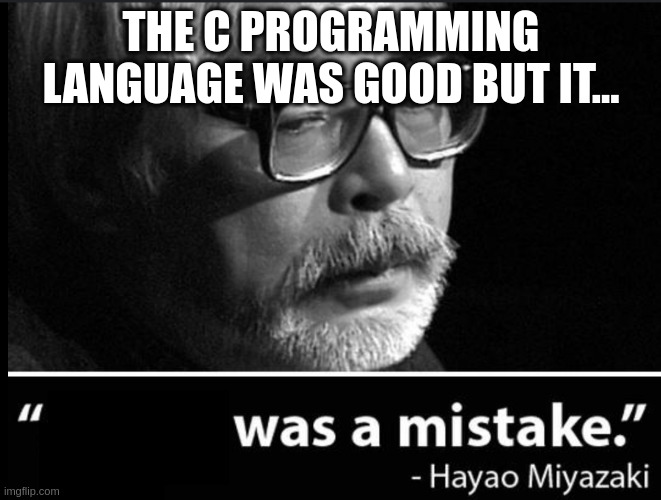
Let me put it this way, the modern tech industry is run on:

An architecture(x86) that was a stopgap developed by a skeleton crew on a shoe string.
A language(C) that was developed by two guys that wanted to run a game on some spare slower hardware.
An OS family (Unix) created by those same two guys whose latest iteration is a messy hodge-podge, where one person oversees the kernel he crated as an uni experiment and who still thinks add features now patch bugs and thing about consistency later is a good idea.(Linux)
 
Last edited:
Why are there so many vulnerabilities popping out suddenly

They were "always there" so to speak. Some vulnerabilities went undiscovered, and others were upgraded to higher priorities. In one notable instance, an exploit was thought to be a 1 in a million chance of hitting the timing correctly, until an AI agent managed to reliably hit the timing.

Turns out when every script kiddie on the planet is given a tool that allows you to constantly hammer everything around the clock for pennies compared to what cost in time and money before, all the exploits that were unknown or too expensive to exploit come flooding out.

As someone who has to deal with critical vulnerabilities being identified every week at work, I'm surprised there aren't more.
 
Well, the site's back up, but now I'm getting a genuinely weird error when loading the front page (in that my screen auto-scrolls to one of the "latest profile posts"). I have no idea why.
 
On a more serious note, I am sorry, but it is better that AI scans this shit and the problems with the code become public than for these exploits to stay there and be exploited by state actors and cyber criminals.
Very true. Most of the people I chat with about linux generally are positive about all the idiot LLM companies blowing so many resources to show how ahead their models are by showing how many bugs there are in linux...that are then patched. I'm mostly worried about the closed source systems that are so slow to apply fixes when vulnerabilities are known and are a pain to audit or barely bother to do so *CoughWindowsCough* and will bite a lot of people. We've all seen how many months it takes microsoft to patch things, if they even do, after exploits are reported to them.

Hell, look at the java overflow bug in jit that just came out, I only heard about it while checking new videos with my morning coffee (haven't read the original report yet just the Low Level video on it), only found because someone was doing a threat analysis in java and was checking their work with an LLM by checking against the code base and basically popped up 'oh btw I noticed this way to write out of bounds' that then turned into a, very circuitous, exploit in a core java function. On one side it's great we know now so it can be managed, on the other it's like 'holy fuck memory exploit in java?!' so, it's the wild west for awhile but hopefully it means that soon systems will be a lot more hardened in the long term.

It's going to change the security landscape to be sure, but frankly it will probably end up back where we were before with the people involved being the most vulnerable part of the security. That Nigerian prince still makes millions a year from that scam, and it's been running since the 70s.
 
Very true. Most of the people I chat with about linux generally are positive about all the idiot LLM companies blowing so many resources to show how ahead their models are by showing how many bugs there are in linux...that are then patched. I'm mostly worried about the closed source systems that are so slow to apply fixes when vulnerabilities are known and are a pain to audit or barely bother to do so *CoughWindowsCough* and will bite a lot of people. We've all seen how many months it takes microsoft to patch things, if they even do, after exploits are reported to them.

Hell, look at the java overflow bug in jit that just came out, I only heard about it while checking new videos with my morning coffee (haven't read the original report yet just the Low Level video on it), only found because someone was doing a threat analysis in java and was checking their work with an LLM by checking against the code base and basically popped up 'oh btw I noticed this way to write out of bounds' that then turned into a, very circuitous, exploit in a core java function. On one side it's great we know now so it can be managed, on the other it's like 'holy fuck memory exploit in java?!' so, it's the wild west for awhile but hopefully it means that soon systems will be a lot more hardened in the long term.

It's going to change the security landscape to be sure, but frankly it will probably end up back where we were before with the people involved being the most vulnerable part of the security. That Nigerian prince still makes millions a year from that scam, and it's been running since the 70s.
The problem with Linux that it is not an OS, it is a kernel.And Torvalds prioritizes "moving fast and breaking things" over clear, coherent architecture and security.
Going check the number of CVEs and major bugs in Linux vs. proper operating systems like FreeBSD, OpenBSD and NetBSD found in the last few years.


On a relalted note, buckle up for more disruption buckaroos, cause there is a critical one in Postgres, too!
 
Last edited:

Users who are viewing this thread

Back
Top