• A notice about Rule 3 regarding sites hosting pirated/unauthorized content has been made. Please see here for details.
  • Staff is working to deal with the problem of synonymous tags. See here for more information and to suggest tag mergers.
  • Due to issues with external spam filters, QQ is currently unable to send any mail to Microsoft E-mail addresses. This includes any account at live.com, hotmail.com or msn.com. Signing up to the forum with one of these addresses will result in your verification E-mail never arriving. For best results, please use a different E-mail provider for your QQ address.
  • For prospective new members, a word of warning: don't use common names like Dennis, Simon, or Kenny if you decide to create an account. Spammers have used them all before you and gotten those names flagged in the anti-spam databases. Your account registration will be rejected because of it.
  • Since it has happened MULTIPLE times now, I want to be very clear about this. You do not get to abandon an account and create a new one. You do not get to pass an account to someone else and create a new one. If you do so anyway, you will be banned for creating sockpuppets.
  • Due to the actions of particularly persistent spammers and trolls, we will be banning disposable email addresses from today onward.

[Harry Potter] Malfoid Stories

Created
Status
Incomplete
Watchers
238
Recent readers
255

Malfoid posting
Types of Malfoid New
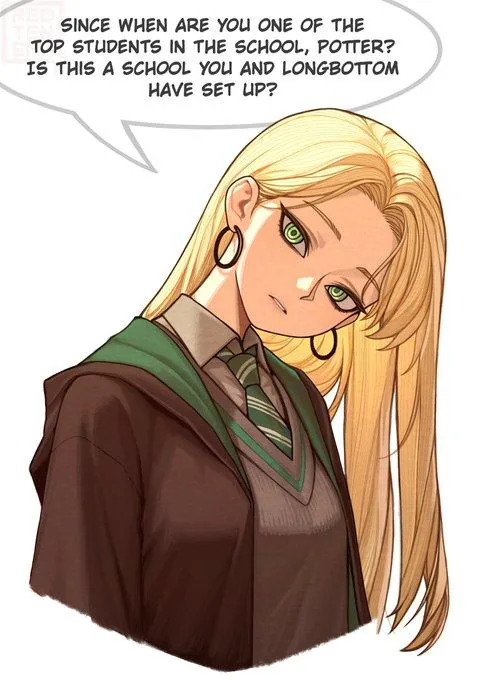
So I decided to try categorizing the Malfoids since there seems to be a few major but somewhat conflicting versions.

First there's the classic Malfoid that started it all. What I dub the Elegant Villainess Malfoid.
redteneri-viral-sep22.webp
Cool, calm, collected, but rocking that sinister energy. The gentleman's Malfoid. She gives off the vibe not to dissimilar to Makima, always acting with poise and in control of herself. She'd look down on Harry at first, judging him for his company but would be someone who could be won over with a show of competence. Unlike other Malfoids she would be not only be entirely honest with her interest in Harry but actively pursue it. She's also the only one that could reasonably bring Harry more to her way of thinking rather than the inverse.

Immediately after Villainess Malfoid we started seeing that transform into Vanilla Malfoid.
HTdEYVbW0AAqb6B
Smug, spoiled, a mean girl who can't be honest. The basic tsundere that most people started latching onto. She can be molded into various sub archetypes but the vanilla version is great for it's versatility as it can be wholesome, funny, and dramatic as is needed. This is the Malfoid who tries to pick a fight and blushes and runs off when she loses while also at the same time the Malfoid who'd be crying mascera running during the Cutting Curse scene and eventually standing with Harry during the final battle. To call it vanilla is not an insult, it means it is the flavor of Malfoid most capable of accepting addons. The Romancing of this Malfoid is a real enemies to lovers route, she would no doubt start off as an antagonist only to be slowly revealed to be much more than she seems as she starts acting against such a shallow role, this is a Malfoid that grows and changes over time letting the romance Mature with her over the course of a story.

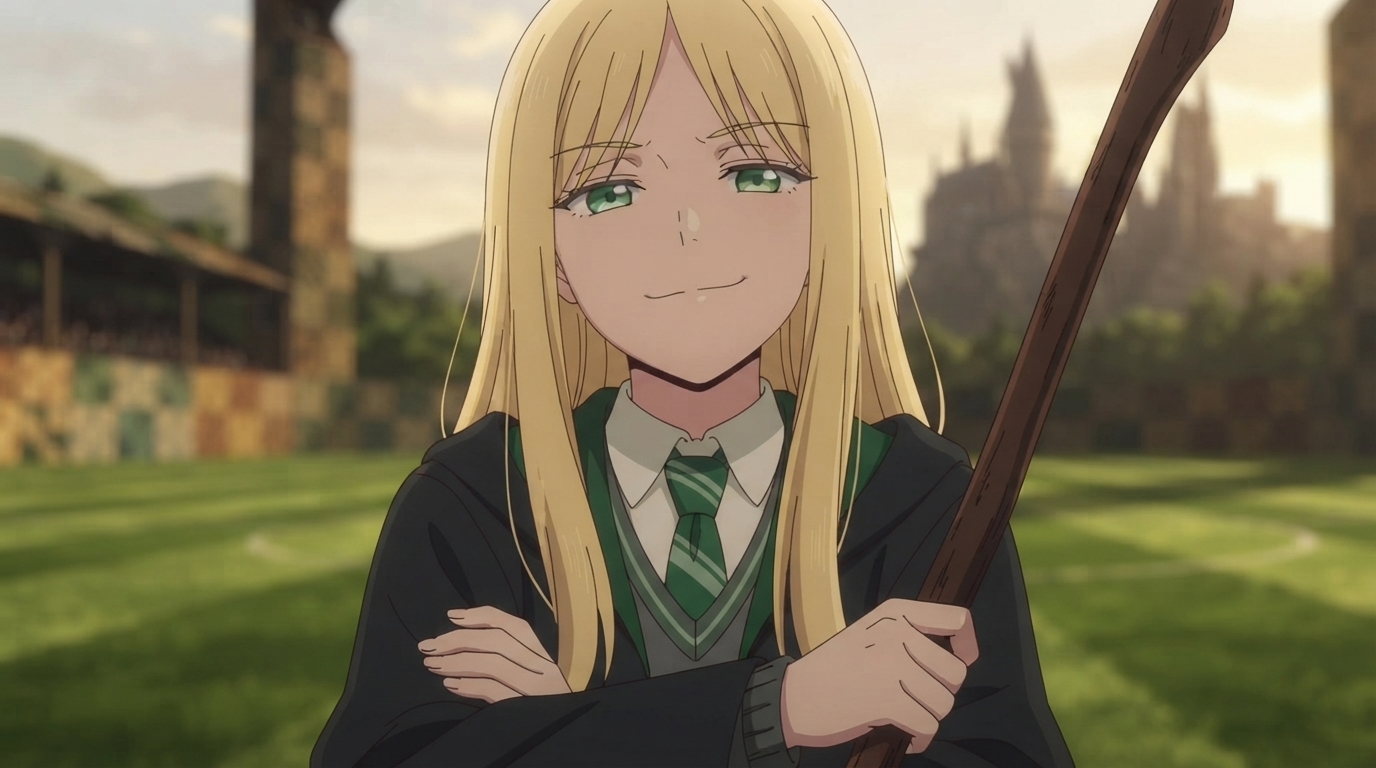
Then one of the more popular variants is the Romcom Malfoid.
malfoid-quidditch.jpeg
Ranging from sweetheart who can't be honest to sassy brat the Romcom Malfoid is indeed a Tsundere but unlike the vanilla brand this Malfoid is rather more specifically geared towards a more lighthearted affair. Pure romance and hilariously adorable shenanigans are it's forte. This Malfoid's interest is clear to everyone from the very beginning even if she's constantly denying it. This Malfoid pairs best with a more competent and mature Harry to act as her foil, where she is entirely attack he can easily ignore it to slip pass her defenses with ease. Her romance with Harry is one where she's constantly on the backfoot as Harry is either able to read her like a book or his calm reactions reactions to her antics completely sidestep her expectations letting him score a critical hit against her.

An evolution stemming from Japan is the Bratty Princess Malfoid.
HT2rBzrboAAefn0
A smug sassy child and kusogaki, characterized often by her large exposed forehead. The bratty princess Malfoid is a younger variant who is much farther along the Tsun axis of the Tsundere spectrum. Aggressive, proud, and very susceptible to being bullied despite trying to be in the position of the bully. This Malfoid has the aura of an uppity Chihuahua, constantly barking, ineffectual bites, and makes you want to yeet it when it inevitably latches onto your ankle. Hers is a cute childish romance with Harry you would watch over amused and knowing.

Lastly is the Sweetheart Malfoid
HT0jBJoaAAAmKuA
The Yearner's Malfoid, the Malfoid you tend to reach at the end of the route once the romance is completed. Happy, loving, wholesome, while she can be a bit Tsundere she's like 90% dere. This is the Malfoid maximized for Yearning. Ultimately you want a little bit of this Malfoid in any other variant, the sweetness once you reach the peak moments of romance or heartwarming. The Sweatheart Malfoid is the Malfoid that is that sweet girl by default, at least when she's with Harry. She might still act more proud and cool while in public but when it's just them it's all smiles and tenderness.
 
Fantastic Beasts of the New World And Where to Find Them New
Let's see what we can do to expand the American magical creature population. Starting with one of my favorite cryptids. Feel free to submit your own ideas!

Slide-Rock Bolter

The Slide-Rock Bolter is a large reptilian creature, a distant relative of dragons, that inhabits steep mountain slopes and rocky ridges of the North American West. In form it resembles a gigantic land-bound whale or anglerfish: a massive, elongated body with a broad head with massive, razor sharp teeth, thick hide, and powerful fin-like claws. Adults typically reach lengths of fifteen to twenty-five meters.

Its primary adaptation is a natural Sticking/Frictionless Charm concentrated along the thick underbelly. This allows the Bolter to adhere to slopes as steep as ninety degrees and to remain motionless for extended periods. When prey approaches, the creature adjusts the charm to reduce friction, slides rapidly downhill, and seizes its target in its massive jaws, often devouring prey in one bite. It then uses its fin-like claws, combined with further modulation of the underbelly charm, to climb back to higher elevations.

Its diet consists mainly of large mammals such as deer and moose, as well as other sizable magical fauna including the Hodag, that travel through mountain valleys and along rocky ridges.

Indigenous magical practitioners hunted the Slide-Rock Bolter for generations. After European and American wizarding settlement expanded into the Rockies, hunting intensified. The creatures were taken for their succulent meat, durable hides, teeth, and the numerous magical applications of their organs, bones, and charm-infused tissues. Rising human and wizarding populations in the nineteenth century sharply reduced their numbers.

In the 1890s the Magical Congress of the United States of America enacted protective statutes. Under these measures the species has recovered substantially. Stillwater Academy in Colorado is the leading center for research on the Slide-Rock Bolter. One of the largest remaining wild populations is maintained within the preserve associated with Mount Burro, where the creatures are studied under conditions that minimize interference while allowing natural behavior. The academy's work has been instrumental in both conservation management and the documentation of the Bolter's unique friction-modulating magic.

---

Hodag

The Hodag is a massive herbivorous magical creature native to North America, historically associated in non-magical accounts with Rhinelander, Wisconsin. Muggle tradition treats it as a hoax originating with Eugene Shepard's 1893 claims and his 1896 fair exhibit; in the wizarding world it is a documented species. In appearance it possesses a broad, frog-like head, an elongated elephantine face, thick short legs ending in heavy claws, a dinosaur-like back lined with stout spines, and a long tail terminating in spear-like projections. Adults commonly reach three times the mass of an American bison.

The Hodag's most distinctive adaptation is a passive magical field emitted by its shimmering coat, functionally equivalent to a continuous Notice-Me-Not charm. This field causes most non-magical animals to overlook the creature or perceive it as something ordinary, allowing herds to graze and forage largely undisturbed. Their range extended from the Canadian Rockies down into northern Mexico, a testament to their success. Magical predators, however, could penetrate the effect.

Indigenous magical practitioners, Bigfeet, Slide-Rock Bolters, and Wampus cats all hunted Hodags. Even when detected, the animals' size, horns, and herding behavior provided substantial defense, yet sustained predation combined with expanding settlement reduced wild numbers.European and American wizards valued the species highly. The meat was nutritious, the coat and organs supplied ingredients for perception-altering potions, devices, and rituals, and the horns—harder than diamond—found use in tools, construction, and specialized crafting.
Domestication proved feasible; cowboy wizards successfully drove large herds across the prairies. Nevertheless, demand continued to outpace natural recovery.

By the twentieth century MACUSA imposed strict management regulations to maintain stable populations. Regulated herds and protected wild stocks now supply a controlled yield of materials used in broom and wand components, concealment cloaks, Muggle-repelling charms, and related applications. The Hodag remains a managed rather than fully wild species across much of its former range, with ongoing oversight to balance ecological presence against continued magical utility.

---

Wampus Cat

The Wampus is a large, six-legged feline native to North America, distantly related to the genus Panthera. Adults reach approximately twice the size of a jaguar, making them the largest cats presently found in the Americas. They possess the ability to climb and adhere to virtually any surface, including inverted ones, and their eyes can perceive magic directly, allowing them to see through nearly all forms of magical concealment, illusion, and glamour.

Historically the Wampus was common in the Appalachian Mountains and the Rockies, where it preyed on Hodags, deer, moose, and other large animals. A natural aversion to fire—certain wavelengths of which overwhelm its magic-sight—caused most individuals to avoid human settlements. Occasional man-eaters nevertheless appeared and were hunted by both Indigenous magical practitioners and later European-settler wizard hunters. Sustained pressure reduced the population substantially.

Wampus remains were highly valued. Properly preserved and enchanted eyes could be used to see through magical illusions and glamours, while the dense coat offered notable resistance to offensive spells—inferior to dragonskin yet still a meaningful protective material. By the twentieth century MACUSA enacted preservation statutes. Populations have since begun a slow recovery, supported in part by tightly regulated annual hunts that permit only a limited number of animals to be taken. The species is also maintained in magical zoological collections worldwide, where its size, climbing ability, and distinctive sensory traits make it a prominent exhibit.

---

Jackalope

The Jackalope is a common leporid native to North America, distinguished by the presence of antlers. In the non-magical world it is widely regarded as a taxidermy hoax; in the wizarding world it is an abundant and well-documented species. Its principal adaptation is a natural Perception-Altering Charm that conceals the antlers, causing the animal to appear as an ordinary rabbit to most observers. This allows the Jackalope to retain an unexpected defensive weapon against predators that do not anticipate horns on a rabbit-sized creature.

The charm is only partially effective. Predators possessing enhanced magical perception, such as the Wampus, readily detect the antlers, as do any hunters simply capable of killing a rabbit by ordinary means. When the animal is dead, Muggles are ordinarily unable to perceive the antlers except under highly specific and uncommon conditions. This perceptual discrepancy creates recurring work for Obliviators, who must prevent non-magical individuals from encountering visible antlered specimens in the field or in collections.

Jackalope antlers are valued in potion-making and ritual work. They serve as ingredients in perception-altering concoctions and have established applications in psychiatric potions, particularly those intended to mitigate intense phobias and irrational fears. Because the species remains widespread, regulated harvesting of antlers supplies these uses without the population pressures that affected larger North American magical fauna.

---

Chupacabra

The Chupacabra is a large chiropteran creature, a gigantic relative of the vampire bat, native to the tropical islands of the Caribbean, Florida, and the tropical rainforests of Central and South America. Although first noted in non-magical media as a cryptid in the 1990s, it has long been known to the wizarding community. It possesses the full suite of traits associated with human vampires: a strong aversion to sunlight, a physiological requirement for blood, enhanced senses, powered flight, and innate magical stealth. Because the species is non-sapient, it applies these abilities with less precision and adaptability than a human vampire, yet sufficiently well that its existence remained effectively concealed from Muggles for centuries. Individuals that die or are exposed to direct sunlight rapidly reduce to ash, further limiting physical evidence.

Ancient Aztec wizards frequently employed Chupacabras as pets, familiars, and guard creatures, incorporating them into blood-rite practices and temple security. This historical association has left the species with an enduring unsavory reputation in the wider magical world, where it is still commonly linked with Dark Magic despite the absence of any inherent malice.

The Chupacabra maintains a healthy population across its range. It displays a marked aversion to hunting humans, the risks of detection and retaliation—even against non-magical people—outweighing any potential gain. Its preferred prey consists of livestock, with goats forming the majority of its diet. This feeding pattern accounts for the majority of documented incidents attributed to the creature in both magical and, more recently, non-magical records. Management remains limited, as the species' self-concealing habits and preference for domestic animals have not yet produced the population pressures seen in other large magical fauna of the Americas. Their remains can be used in a variety of potions, primarily Blood Replenishment or Thinning, as well as other medical uses.

---

Jersey Devil

The Jersey Devil is a winged magical creature native to the eastern woodlands of North America, particularly associated in non-magical legend with the Pine Barrens of New Jersey. Extensive Muggle accounts have long distorted its natural history. Its unusual combination of hooves, claws, horns, and membranous wings confounded magical naturalists for centuries, resisting easy classification.

The species is omnivorous, functioning as both a scavenger and an opportunistic predator. It possesses excellent night vision and the ability to move in near-total silence. It is characteristically shy of humans and avoids sustained contact-Save for encounters it initiates at random. Material uses are well established: the horns and hooves serve as effective thickening agents in potions, while the wings and fur find application in preparations and instruments concerned with strengthening, levitation, and sound manipulation.

Magical study and experimentation in the twentieth century established that the Jersey Devil is a distant offshoot of the hippogriff and griffin lineages. Ancestral relatives crossed the Bering Land Bridge during the last Glacial Maximum. Its flexible diet, comparatively modest size relative to its larger cousins, and capacity for silent movement enabled it to persist where other members of the broader family did not. The creature remains a resilient survivor. It frequently startles human observers before taking flight; whether this behavior serves to enforce territory, deter potential threats, or arises from simple amusement remains undetermined.

---

Sasquatch (Bigfoot)

The Sasquatch, commonly called Bigfoot, is a sapient magical being native to North America, distinguished from the majority of magical fauna by its capacity for reasoned thought and limited spellwork. Individuals can perform basic magical rituals centered on concealment, physical enhancement, and variations of banishment charms. These abilities have long been used to obscure their physical presence from both magical and non-magical observers.

For thousands of years prior to European contact, Sasquatch competed with Indigenous peoples for hunting ranges and habitat. The arrival of European settlers accelerated the loss of territory. Their intelligence reaches approximately the level of a sixteen-year-old human, though they are notably long-lived. Strong natural resistance to spellfire has led many researchers to classify them as a distant offshoot of giants; their ability to employ their own magic, however, complicates precise naturalistic placement.

Treaties were negotiated between the Magical Congress of the United States of America, various Native American tribes, and Sasquatch groups. These agreements were repeatedly broken by all parties. Eventually, reserved lands were established in the Pacific Northwest and the Rocky Mountains, with smaller holdings retained by a few communities in the Southern United States. Occasional sightings by Muggles continue, as some individuals remain curious about the wider world, yet most Sasquatch prefer to manage their own affairs within their territories.

Efforts to improve their treatment have increased over the past century. A number of individuals leave their communities to seek employment in the broader magical world, most often as bodyguards to prominent witches and wizards. One historical example is Petite, who served as bodyguard and personal servant to President Andrew Jackson; the arrangement was concealed from the public by magical means. The President told visitors to not lose any games played with Petite, as Sasquatch had a tendency to rip the arms off any who defeated them in games. As a result Petite became an exceptionally good chess and card game player in President Jackson's magical and muggle circles.

---

Curupira

The Curupira is a small, muscular humanoid forest sprite native to the Amazon rainforest of Brazil, recorded in the earliest Jesuit accounts of the sixteenth century. It is distinguished by bright red or orange hair and feet that face backward. The creature employs natural variations of the Confundus Charm to disorient its targets, causing them to walk in endless circles until exhaustion sets in. Once a victim—whether rainforest animal or human—is sufficiently weakened and lost, the Curupira attacks and devours it. When operating in groups, these tactics become markedly more effective, as multiple individuals can maintain overlapping disorientation fields and close on prey from several directions at once.

Spanish wizards and conquistadors regarded the Curupira as a serious menace during the early colonial period. Organized culling campaigns were repeatedly mounted in an effort to reduce their numbers and secure travel routes and settlements within the rainforest. These efforts met with only partial and temporary success, as the creatures' stealth, familiarity with the terrain, high reproductive potential and capacity for coordinated group attacks limited the impact of conventional hunting parties.

The species is regarded as one of several New World variations on fairy and sprite-like beings and ranks among the more dangerous of them. Its predatory habits have made population control a standing responsibility of the Brazilian Department of Magic. Indigenous Amazonian tribes developed basic counter-rituals, most commonly employing the blood or hair of slain Curupira to create repelling wards effective against the creatures. These traditional methods remain of interest to contemporary magical authorities engaged in containment and research.
 
Fantastic Beasts of the New World And Where to Find Them 2 New
Vaanatipa/Yucca Man

The Vaanatipa or Yucca Man is a mobile plant-based magical creature native to the American Southwest. According to Mojave oral tradition, Kumeyaay shamans once formed a tribal confederation with the aim of expanding eastward into the territories of the Serrano and Paiute. Their intended advantage was a newly developed spell capable of animating yucca plants into golem-like warriors. The resulting Yucca Men were largely destroyed by opposing tribal shamans employing fire magic, and the campaign failed. The story is told and retold as an object lesson on the subject of hubris.

The surviving constructs, however, proved capable of reproduction. By the nineteenth century they were regularly observed across the Southwest. During daylight hours they bury themselves with only their leaves exposed, obtaining nourishment through photosynthesis. At night they rise and travel in search of more suitable soil or supplementary nutrients, occasionally consuming animals. Yucca Men are strongly averse to fire and resist harvesting; established groves will coordinate to defend themselves against intruders.

The Magical Congress of the United States of America and the Department of Magic have implemented measures to preserve the species and conceal it from Muggles. Their leaves possess medicinal properties useful in skin potions and lotions, while processed fibers yield magically reinforced cloth and rope. Occasionally they will wander into Muggle areas, usually Muggle military bases, but US Mage Corps operatives are usually on hand to contain the situation. Not quite plant and not quite creature, they are among the most unique magical lifeforms in the world.

---

Horned Serpent

The Horned Serpent is a large aquatic magical serpent native to the waterways of eastern North America. The prevalence of Thunderbirds as apex aerial predators limited opportunities for large terrestrial reptiles; as a result, most sizable serpentine species, including forms comparable to the basilisk, adapted to aquatic environments. Adults commonly reach ten to twelve meters in length and may live for several centuries. Their hides possess substantial magical resilience, and their venom is extremely potent—a single drop is sufficient to kill multiple adult humans. The creature's primary offensive adaptation is the ability to summon localized fog, the horns functioning as natural foci that manipulate water vapor within a limited area and thereby conceal its approach. Like other snakes, it possesses keen thermal senses.

For the most part the Horned Serpent is a wary, solitary predator that avoids human settlements and targets isolated prey taken from the water. Historical population controls included predation by Thunderbirds, Wampus cats, and Sasquatch, together with hunting by Indigenous peoples. Expanding European settlement accelerated decline, as the animals were harvested for wand-core material from their horns, as well as for venom, hide, and meat.

Strict harvesting regulations enacted in the twentieth century halted the decline and secured the species' survival. The majority of remaining individuals are now maintained within nature preserves. Occasional escapes produce Muggle sightings; numerous reports of "sea serpents" in North American lakes are attributable to Horned Serpents of varying horn length.

---

Thunderbird

The Thunderbird is one of the most widespread magical creatures of North America. Indigenous traditions across the continent describe enormous raptors capable of generating thunder with their wingbeats and lightning from their eyes. The living animal closely matches these accounts: an immense bird of the Accipitriformes type, able to summon and direct storms, emit lightning from its eyes, and fly at near-supersonic speeds. They are highly intelligent as well.

Thunderbirds function as apex predators. Their presence is widely regarded as a principal reason dragons remained comparatively rare in the New World, as the two groups would have competed directly for territory and prey. Between the eighth and eleventh centuries some Indigenous nations succeeded in taming and riding limited numbers of these birds, employing them in intertribal warfare. Subsequent climatic shifts—the Little Ice Age and prolonged mega-droughts in the American Southwest—produced extensive habitat loss. Like dragons, Thunderbirds possess long reproductive cycles and eggs highly sensitive to temperature variation; most populations never fully recovered. By the period of European contact the species had already become uncommon. Further hunting by American and European wizards reduced numbers still more until strict ecological regulations were imposed.

Thunderbird eggshells, feathers, tears, and blood possess nearly as many practical applications as corresponding dragon materials, ranging from magical medicine to alchemy. A small number of individuals can form familiar bonds with witches or wizards, though their substantial space and dietary requirements render such arrangements tightly controlled.

A Few Documented Species

Pamola: A large dark-blue and white species native to the northeastern United States and southeastern Canada, capable of generating blizzards.

Piasa: A golden species with red and blue belly and inner-wing feathers, formerly ranging across the Ohio and Mississippi River basins; effective at regulating humidity and inducing rain and fog.

Arikara: A dark-black species that nests on the ground, named for the two large red feather crests on its head and marked by white spots around the eyes. The most widespread form, it ranges from the Pacific Northwest across the plains to Utah and is a generalist hunter capable of taking prey from small whales to other Thunderbirds.

Menominee: A dark-blue and black species of Canada and the Great Lakes region, distinguished by red spots around the eyes; proficient at creating waterspouts and thereby hunting large fish and seals.

---

Pukwudgie

The Pukwudgie is a small humanoid magical creature native to eastern North America and distantly related to the European gnome, though considerably more dangerous. It possesses the abilities to render itself invisible, alter its voice, and belch fire. Pukwudgies hunt cooperatively, employing these traits to lure prey into ambushes, over cliffs, or into other traps before capturing and consuming it. Their historical range extended from New England southward through Maryland and into Virginia.

Indigenous tribes managed local populations through a combination of food offerings and occasional cullings conducted by shamans. The creatures were sometimes tolerated or even encouraged because they trapped larger predators like Wampus or Sasquatch, and thereby reduced threats to human settlements. European wizards later adopted similar practices, leaving offerings to encourage Pukwudgies to deter dangerous magical fauna.

In the modern period the species' range has contracted sharply due to human encroachment. Attacks on humans have increased in some areas. In others, abundant food waste allows Pukwudgies to ignore Muggles while directing aggression toward wizards perceived as withholding offerings. Current regulations reflect this dual character: populations that refrain from targeting people are permitted to remain; any group that begins attacking humans is subject to elimination.

---

Mothman

The Mothman is a nocturnal magical creature native to North America and a relative of fairies, pixies, and sprites. It ranges from one to one-point-seven meters in height, with a wingspan of up to four meters, and displays a mixture of insect, avian, and humanoid features common to its broader family. In non-magical urban legend it is described as a large moth-human-bird hybrid that appears shortly before disasters; this account is among the more accurate Muggle depictions of an actual magical entity.

Unlike most of its relatives, which favor mostly harmless mischief, the Mothman functions as a harbinger of woe. They can sense disturbances in the aetheric plane and multiple individuals are drawn to locations where major disasters are imminent. Individuals have been observed mimicking warnings previously heard at other catastrophe sites, apparently to reach potential victims. The creatures feed on misery, sorrow, and grief. Both Indigenous and later American witches and wizards have historically treated multiple Mothman appearances as warning signs of impending disaster; some events so indicated have been averted, while others have not.

Certain Mothmen go further and act as active predators, attempting to induce tragedies such as vehicle collisions or spell misfires in order to feed. Because of this behavior the species is classified as a highly dangerous magical creature (Class XXXX) and has been subject to population culling. Specimens and their remains are nevertheless retained for use as early-warning indicators, and their organs find extensive application in divinatory practices.

---

Werebat

The Werebat is the product of a transformation curse transmitted by bite, one of several thropic conditions native to the Americas and analogous to the werewolf, werebear, werecat, and related curses of the Old World. Indigenous peoples contended with the curse for centuries before European contact; colonial populations subsequently suffered its effects as well. Like lycanthropy, the transformation occurs once each month. The afflicted individual becomes a large hybrid creature combining human and bat features, fully capable of powered flight and echolocation.

Although predatory, the Werebat's highly sensitive hearing typically drives it to avoid human settlements and their associated noise. Most individuals hunt rabbits, birds, and other small animals; certain South American variants are primarily frugivorous. Because the transformed state poses a comparatively lower risk to human communities than many other thropic conditions, werebats are better regarded than most of their counterparts. They remain subject to legal requirements on the night of the full moon: they must report to a designated shelter, confine themselves to their homes, or take Wolfsbane Potion.

Occasional escapes have contributed to Muggle urban legends, most notably accounts of the Mothman. Not all such reports are attributable to werebats; a distinct creature known as the Mothman is responsible for a significant majority of the sightings.
 
Back
Top