• An addendum to Rule 3 regarding fan-translated works of things such as Web Novels has been made. Please see here for details.
  • We've issued a clarification on our policy on AI-generated work.
  • Our mod selection process has completed. Please welcome our new moderators.
  • Due to issues with external spam filters, QQ is currently unable to send any mail to Microsoft E-mail addresses. This includes any account at live.com, hotmail.com or msn.com. Signing up to the forum with one of these addresses will result in your verification E-mail never arriving. For best results, please use a different E-mail provider for your QQ address.
  • For prospective new members, a word of warning: don't use common names like Dennis, Simon, or Kenny if you decide to create an account. Spammers have used them all before you and gotten those names flagged in the anti-spam databases. Your account registration will be rejected because of it.
  • Since it has happened MULTIPLE times now, I want to be very clear about this. You do not get to abandon an account and create a new one. You do not get to pass an account to someone else and create a new one. If you do so anyway, you will be banned for creating sockpuppets.
  • Due to the actions of particularly persistent spammers and trolls, we will be banning disposable email addresses from today onward.
  • The rules regarding NSFW links have been updated. See here for details.
"She 's at home resting. She caught a fever after playing in the rain last night without


"She's at home resting. She caught a fever after playing in the rain last night without
thinking it through," Arno finished. "I didn't want to drag her out, especially not today."
The line here is doubled and cut off.
 
A Group of Interest in SCP lore.

Basically the concept of robber barons, horrible work conditions and cheap mass manufacturing made manifest.

They make things like a sticker that makes anything it's stuck on run at 110% but it causes accelerated rusting.

A lot like the cart but always with some massive downside (either for the customer or the workers).
 
Chapter 17 New

The Opening of the Floodgates

Morning arrived without ceremony.

The shutters of the cart rose with their familiar metallic rattle, revealing the narrow street beyond as it slowly came to life. Vendors arranged their stalls in the distance, the scent of baked bread and fried dough drifting lazily through the air. Footsteps passed in uneven rhythms—workers heading to early shifts, students lingering over their commutes, a few regulars already eyeing the cart as they walked by. Inside, everything was in its proper place. Bentos were lined neatly behind the counter, sugarettes stacked in their usual compartment, and the new addition remained hidden from casual view.

The morning crowd came and went without incident. Orders were filled, payments exchanged, brief conversations shared. By late morning, the flow slowed, leaving only the quiet hum of the street and the soft clink of Arno rearranging stock beneath the counter.

It was then that the hospital worker came.

Arno recognized him immediately. There were shadows beneath his eyes that hadn't been there the day before, and his shoulders sagged in a way that suggested a shift that had stretched longer than intended.

"Morning," the man said, offering a tired smile as he stepped up to the counter. "Same as usual."

Arno nodded and reached for the walnut bread. "Rough night?"

The man huffed a quiet laugh. "Double shift. Someone said the Q-Word in the breakroom, and suddenly we got a massive surge in burn victims because some moron thought that it would be a good idea to use Arts to cook a steak quickly. You have no idea, man"

Niko slid the bread across the counter, followed by the familiar packet of butter candies. The man accepted them with a small nod of thanks, but he didn't step away right away. His gaze lingered, flicking briefly to the shelves behind Arno, as if expecting something to have changed.

Arno noticed.

"You asked me something yesterday," Arno said, keeping his tone neutral. "About coffee."

The man blinked, then straightened slightly. "Ah. Yeah. Sorry if that was out of line."

"It wasn't," Arno replied. He hesitated for a second, then reached beneath the counter and retrieved a single can. He set it down carefully between them, turning it so the label faced outward. It was a hot variant of Leithanien Black.

The hospital worker stared at it.

"That's…" He leaned closer, eyes scanning the print. "That's coffee?"

"Yes," Arno said. "You said you wanted to hear if there was one, so here it is. Brand new, too."

The man let out a slow breath, somewhere between disbelief and relief. "You're kidding."

"I'm not," Arno replied. "But I want to be clear before you decide anything."

The worker looked up at him, attentive now despite his fatigue.

"This isn't something you drink to replace sleep," Arno continued. "One can a day at most. It'll help you stay alert, or take the edge off exhaustion, but it won't let you ignore your limits. If you push past them, it won't do anything."

The man nodded immediately. "That's fine. Honestly? That's better."

Arno studied him for a moment longer, then reached down again and placed a second can beside the first. This one was cool to the touch, a faint chill seeping into the wood of the counter.

"There are two types," Arno said. "Hot, and cold. The hot one lasts longer. The cold one works faster, but wears off sooner."

The hospital worker's fingers hovered just above the cans, as if afraid touching them might make them disappear. "Which one would you recommend?"

Arno's gaze flicked briefly to the man's ID badge. "Cold," he said. "You look like you need the relief now, not later."

The man laughed softly at that, then nodded. "Yeah. You're probably right."

He picked up the cold can, turning it over in his hands. The chill seemed to ground him, his shoulders easing just slightly as if the promise of rest had already begun to take shape.

"I'll take one," he said. "Just one."

Arno rang it up without comment. When the man completed the payment, he hesitated again, then looked back up.

"Thank you," he said, more seriously this time. "I don't think you realize how much this helps."

Arno inclined his head. "Just remember what I said."

"I will," the man promised. He tucked the can carefully into his bag, adjusted the strap on his shoulder, and stepped away from the counter. As he left, he glanced back once, eyes bright despite the exhaustion. "I'll see you tomorrow."

After he disappeared into the street, Niko leaned forward slightly.

"He looked really happy," she said.

"He looked relieved." Arno corrected.

The rest of the day followed much the same rhythm, but word travels quickly in small, overlapping circles. By mid-afternoon, a different customer lingered a little longer than usual. By early evening, another asked—casually, as if not to seem too eager—whether Arno sold anything for long shifts.

Each time, Arno made a small observation over each customer. And if they passed his criteria, he would suggest the new product.

By the time the shutters came down that night, the crate behind the counter was lighter—but not by much. Arno locked the window, checked the stock one last time, and exhaled slowly.

News would spread over his coffee. But unlike the previous times with new products, he was ready.


He was, in fact, not ready.

By the next morning, word of the new item grew as it usually did. Arno lifted the shutter before sunrise, the metal barely clearing the counter before voices carried over one another from the street. Someone near the front clapped once, sharp and delighted, and said, "He's opening. He's finally opening!" The line surged forward half a step as if pulled by instinct.

Niko leaned out the window, took one look, and immediately ducked back inside. Her ears were angled straight up. "Arno," she said, very carefully, "there are a lot of people."

Arno glanced past her shoulder. The line didn't just reach the corner anymore, it now bent around the block. Even more people stood with wallets and lists in hand, fidgety and anxious to be the next person to be served. Most of them seemed to be the hospital worker's colleagues, as most of the ones in line had hospital scrubs.

"Alright," Arno said, calm but firm. "Let's move."

The first customer stepped up before Niko could even finish straightening the register. He was smiling, wide and unguarded, the kind of smile people wore when they thought they were early and lucky. "One hot Leithanien Black, please." he said immediately, then added, "I heard about the new item from Charlie. He said not to miss out."

'That must've been the hospital helper from yesterday.' Arno and Niko thought.

Arno slid the can onto the counter but didn't let go right away. "I don't want you to use this as a substitute for sleeping." He warned. "I don't want people to start getting sick, and I don't want to be the reason people aren't going home."

The man nodded without hesitation." Understood. Thank you, really." He took the can, paid, and stepped aside, already twisting the tab.

The next few customers were much the same—excited, talkative, already primed with secondhand information. Someone asked whether hot or cold was better and got three different answers from the line before Arno spoke. Someone else laughed and said they'd never seen this many people awake before eight. Niko worked the counter quickly, repeating prices, sliding cans across the wood, gently telling people to step aside once they were done so the next person could move up.

A woman in a lab coat leaned forward as she paid. "My entire ward's been talking about this," she said. "My junior, Mr. White Jr., came back from break with a massive grin on his face. We thought he was messing with us."

Arno met her eyes. "Glad he liked it." he said. "But please, don't overdo it. These things don't replace proper sleep." He said as he slid forward a cold Yeunyeung.

She nodded seriously and accepted her order. "I know. I just need to function today." She accepted the can like it was fragile and moved on.

At some point, then came those asking the expected questions.

A man near the front hesitated after receiving his first can, fingers tightening slightly around it. He glanced back over his shoulder at the line, then back at Arno. "So," he said casually, "hypothetically—if I wanted to grab one more for later—"

"No," Arno said.

The word cut cleanly through the chatter.

The man blinked. "I mean, I'd pay for it. I've got a double tomorrow and—"

Arno straightened, his hands resting flat on the counter now.

"Only one can per person," he said, voice steady but unyielding. "You were told that when you stepped up. I do not want people hoarding these—either for personal use or to resell them."

The line fell quiet. Onlookers listened intently to the shopkeeper's words.

The man opened his mouth, closed it, then tried again.

"Look, I'm not trying to hoard anything. I'm just saying—two. That's all. One for today, one for tomorrow's shift. I'll pay double right now. Cash, card, whatever you want."

He reached into his pocket and pulled out his wallet, opening it to show he was serious. "I've got a sixteen-hour stretch starting tonight. I'm not asking for a case. Just two."

Arno did not change his mind. "No."

The single word landed heavily.

The man's jaw tightened.

"Come on. You see how many people are here. You're going to run out anyway. What difference does one extra make to you? I'm not scalping them—I'm not that guy. I just need to survive the next two shifts."

"And that's why I have to say no. I get that you'll be busy, but this coffee is not meant to replace proper rest. How will I know that you'll only take it once a day, as per my warnings?"

A low murmur ran through the line. Not angry, but attentive.

Arno's tone remained even, though his posture did not soften.

"Not only that, but the difference is that the rule exists for a reason. If I allow two for you, the next person will want three. Then someone will want five for their whole team. Then people will start coming with friends to buy extras for others. Then someone will try to sell them somewhere. I have seen it happen before with other things. It ends the same way every time: the product disappears quickly, people become dependent, and then it stops being helpful. So the answer is no. One can per person per day."

The man exhaled sharply through his nose, clearly frustrated but still not ready to back down.

"I get the principle, I do. But right now, I'm the one standing here with a sixteen-hour shift and no sleep. Two cans isn't going to crash the system. It's just two."

Someone behind him spoke up—quiet but clear.

"Bro, he said no. Let it go."

Another voice, a woman in navy scrubs, added without heat:

"If he bends for you, he has to bend for everyone. Then there's nothing left by noon."

The man turned slightly, looking back at the line. Several people met his gaze—not hostile, but firm. A few nodded in quiet agreement.

He turned back to Arno, shoulders dropping a fraction.

"You're really not budging."

"I am not."

A long beat of silence. The man looked down at the single can in his hand, then at his open wallet. Finally, he closed the wallet and slid it back into his pocket.

"Fine," he said, quieter now. "Alright. One it is."

He exhaled again—this time in resignation rather than anger—and stepped aside. His grip on the can loosened noticeably, as though the fight had gone out of him.

Niko resumed ringing up the next person without missing a beat. The tension in the air eased as quickly as it had risen.

"Thank you for understanding, mister. Good luck on your shift. And please rest when you can." she said to the next customer, her tone bright but professional. Her eyes flicked once toward Arno—brief acknowledgment.

A few customers later, a voice farther back called out, half-laughing, half-serious:

"Guess he really is serious about the one-can thing."

"I am," Arno replied, eyes still on the register. "That is precisely why it continues to be available."

The line pressed forward again, the energy shifting rather than breaking. People recalibrated in real time. The jokes that followed were lighter—less about stretching the limit, more about logistics: how early they'd need to arrive tomorrow, whether they should warn their night-shift coworkers, whether setting a dedicated alarm for the cart was now part of the routine.

One woman in lab coat muttered to the person beside her:

"I'm telling my whole team to get here before seven tomorrow. No way I'm missing this again."

By mid-morning the cart felt smaller than it ever had. Niko moved nonstop—sleeves rolled to her elbows, a few strands of hair escaping her tie—calling out totals clearly, thanking each person, keeping the flow steady. Arno tracked the remaining stock in silence, mentally logging every transaction and calculating how many more hours the supply would hold at this rate.

When a rare gap finally appeared—barely long enough for Niko to draw a full breath—she leaned toward him and spoke low.

"They're really excited."

"Yes," Arno said.

She hesitated, then asked, "Are you worried?"

He looked out at the line once more—at the faces that were hopeful, exhausted, quietly grateful, quietly impatient.

"With these guys? A little. But I just have to trust that they're responsible enough to heed my warning." he said.

Outside, someone let out a short, surprised laugh as they cracked open a can. The sound carried clearly on the cool morning air.

Arno turned back to the counter.

The next customer stepped forward.

"Cold Bolivar Latte, please," she said, voice rough with fatigue. "Third double in five days."

Arno reached for the can.

The second day continued.


Chink in the Armor

By the next afternoon, the street around the cart had changed. The morning rush of hospital workers had eased as shifts ended and breaks finished. The steady line of tired people in scrubs thinned out, replaced by a different kind of presence. A few men lingered farther back from the window—not in line, not close enough to be waiting for service, but not far enough to seem accidental. They stood with hands in their pockets, watching the cart, talking quietly among themselves. When Arno looked their way, their conversations paused.

Niko noticed them first. She leaned toward Arno while rearranging the remaining cans in their insulated box, keeping her movements slow and ordinary.
"Those three don't look like customers…" she said under her breath.

"I know," Arno replied.

After a few more customers, the three men walked forward. They did not join the line. They stopped directly in front of the counter, blocking the next person without quite touching the wood. Their jackets were clean, their shoes polished, their posture relaxed in a way that felt deliberate rather than casual. None of them looked like they had worked a long shift.

The one in front smiled.
"Business looks good today."

Arno did not smile back.
"If you want to buy something, get in line."

The man gave a short laugh and glanced at the two behind him.
"See? Still playing the normal street vendor." He turned back to Arno. "That's part of the problem."

Niko's shoulders tensed, but she stayed quiet and kept her hands busy with the register.

The man continued, tapping the counter once with his knuckles—light, almost friendly.
"You set up here. Word gets around. People start lining up. And somehow, everyone else who sells anything to keep people awake suddenly can't move their product anymore."

Arno looked at him steadily.
"I sell coffee. That is all."

"Sure," the man said, smile still in place but thinner now. "And somehow your coffee works better than anything else on this block. People are starting to notice. They're asking questions."

"That sounds like a skill issue.," Arno said.

The second man stepped closer. The faint smell of cigarette smoke drifted forward.
"You're cutting into existing arrangements," he said. "Routes. Regular customers. Expectations people have had for a while. You don't get to do that without paying a price."

Arno met his eyes with a hard look.
"It's not my fault that the competition themselves are incompetent ."

The third man gave a low laugh, more breath than sound.
"That's exactly what we're here to fix."

The people still waiting in line had gone completely quiet. No one walked away, but no one spoke either. A few shifted their weight, creating a small gap between themselves and the cart. Others took out their phones to start recording in case of an incident.

The first man leaned forward slightly.
"Here's the simple version. You close this cart today. Maybe you open again tomorrow. Maybe you don't. That depends on how cooperative you decide to be."

Arno's hands stayed flat on the counter.
"No."

The word carried more weight than it had earlier that morning.

The man's expression tightened.
"You're very confident for someone running a wooden cart with a kid helping out."

Niko's fingers gripped the edge of the counter, knuckles paling. Arno did not move.
"Coming from someone who needs threats to get what they need?" he said. "If you are not here to buy something, step away from the counter."

For several seconds no one spoke. Then the second man reached out and deliberately knocked an empty paper cup off the counter. It hit the pavement and rolled a short distance.

"Accidents happen," he said.

Arno did not look down at the cup.

"Touch the cart again," he said, voice level and deliberate, "and I will call the police. Right now. In front of everyone. And I will press charges for attempted damage to property and intimidation."

The second man's hand froze completely. He lowered it slowly, eyes flicking toward the line where several phones were already recording.

The first man gave a short, incredulous laugh, though it sounded thinner than before.

"You're going to call the police over a paper cup?"

"Over assault on private property and attempted extortion in front of witnesses," Arno corrected, tone unchanged. "Yes. I will."

He reached under the counter without hurry and brought out a small, plain phone—nothing flashy, just functional. He unlocked it with a thumb and opened the dialer. His thumb hovered over the emergency call button.

"I am recording this interaction myself," he continued. "So is at least half the line behind you. If you remain here and continue to threaten or interfere with my business, I will place the call. The police can arrive and take statements from every person present. That is your choice."

The woman second in line spoke immediately.

"Do it," she said, voice firm. "I'll give a statement right now. I just want my coffee and to get back to work."

A man farther back nodded.

"Same. Call them. I've got nothing to hide."

More murmurs of agreement rippled through the line. Several people stepped forward slightly, phones still raised. The collective pressure was no longer subtle.

The first man's expression tightened. He looked from Arno to the phones to the growing number of people now openly watching.

"You really want to make this official?"

"I want to continue serving my customers without interference," Arno replied. "If that requires involving the authorities, then yes. I will."

He began pressing numbers on the screen—slowly, deliberately, so everyone could see: 1-1-0 (the local emergency number). He did not complete the call yet, but the screen clearly showed the digits.

The second man took a full step back.

"This isn't worth it," he muttered to the first man.

The third man glanced around again—at the line, at the recordings, at the tired but resolute faces—and gave a small shake of his head.

The first man held Arno's gaze for another long second. Then he exhaled sharply and raised both hands in a small, frustrated gesture.

"Fine. We're leaving."

He looked at Arno one last time. "But this doesn't disappear because you made a phone call. You've just made a note of yourself."

Arno did not respond. He simply kept the phone visible, thumb still resting near the call button.

The three men turned and walked away—faster this time, shoulders stiff. They did not glance back.

The line exhaled as one. The woman second in line stepped up to the counter, placing her money down with a small, relieved laugh.

"Cold Bolivar Latte, please. And… thank you, seriously. You don't know how much not just your coffee, but all your other supplies makes it easier for everyone here."

Arno accepted the payment and handed her the can.

"You are welcome. One per person. Drink it slowly."

The next customer moved forward immediately.

"Hot Leithanien Roast. You really would've called?"

"Yes," Arno said simply. "I would have."

He returned the phone to its place under the counter and resumed serving. The line continued without further interruption. Voices returned—low at first, then steadier. People spoke of shifts, of how much longer the cans would last today, of whether they should come earlier tomorrow.

The cart remained open.

The day continued.


The next day, the crowd still came, but it now carried tension.

People no longer gathered directly in front of the cart for long. They approached in pairs instead of groups, glancing down the street before committing. Some slowed as they got closer, then veered away at the last second, pretending they had somewhere else to be. Others reached the counter with tight shoulders and spoke in low voices, as if volume itself might draw attention.

Niko noticed when a young man paid, took his can, and didn't open it. He tucked it straight into his bag and lingered instead of leaving.

"Is something wrong?" she asked gently.

He hesitated, then leaned closer. "There's a couple of guys down the block," he said. "They're not stopping anyone outright. Just… asking where people are going. Making comments." He glanced over his shoulder. "They asked me if this was worth the trouble."

Arno looked past him, scanning the street. "Did they stop you?"

"No," the man said quickly. "Nothing like that. Just made sure I knew they were watching." He swallowed. "Figured you should know."

"Thank you," Arno said.

The man nodded and left, keeping his head down as he went.

Not long after, a woman who had bought coffee the day before returned—but didn't step up to the counter. She hovered off to the side until there was a lull, then waved Niko over.

"I don't want anything today," she said quietly. "I just wanted to warn you and the Mr. Seller. My coworker got followed for half a block after she left yesterday. They didn't touch her. Just kept pace. Asked where she worked."

Niko's eyes widened in alarm. "Are you serious? Is she okay?"

"Don't worry, little one. She got home safely." the woman replied. "LGD's been circling more since this morning. That's probably the only reason they backed off."

As if on cue, two Lungmen Guard Department officers walked to the cart and ordered some food and juice. One glanced at Arno and gave a short nod before continuing down the street.

"They're helping," the woman said. "But it feels like a test. Like they're seeing how far they can go without crossing a line."

Arno listened without interrupting.

"You might want to stop for a bit," she added. "Just until this blows over."

Arno shook his head. "If I close now, it confirms what they want people to think."

She studied him, then sighed. "I thought you'd say that." After a moment, she added, "Be careful." Then she left without another word.

By midday, the pattern became clearer. People arrived with excuses ready. Some said they were just passing through. Others claimed they were picking something up for a friend nearby. A few turned around entirely when they spotted familiar faces lingering at intersections, pretending to smoke or check their phones.

One customer stepped up, paid, then stayed at the counter longer than necessary.

"They asked me yesterday if I was buying from you again," he said under his breath. "Didn't threaten me. Just… smiled." He hesitated. "I told them yes."

"And?" Arno asked.

"They told me to be careful about what I rely on." He exhaled. "Something foul's afoot."

Arno gave him his order and urged him to be careful. The customer nodded and hurried away.

Later, an older man didn't bother lowering his voice. "This is getting dangerous," he said flatly as he accepted his can. "You've got people stirring trouble three streets over. Someone got shoved near the tram stop this morning. LGD broke it up before it got ugly."

"I heard. This is getting out of hand." Arno remarked.

The man raised an eyebrow."Then why are you still open?"

"Because people still need it."

The man studied him for a long moment, eyes narrowing slightly as though weighing the answer. Then he gave a single, slow nod.

"Alright. Make sure you and the kid keep yourselves safe, okay?."

He turned and walked away without another word, heading deliberately toward the main road where the visibility of LGD patrols was higher. His two companions followed at the same measured pace, hands in pockets, posture relaxed but alert.

As the afternoon progressed, the atmosphere around the cart shifted again. The LGD patrols became more noticeable. Pairs of officers in uniform passed by every fifteen or twenty minutes now, walking the length of the street in both directions. They did not stop at the cart or speak to anyone directly, but their presence was unmistakable. The most overt troublemakers kept their distance. The street remained busy—customers continued to arrive and leave—but an undercurrent of caution had settled over everyone.

Niko leaned close to Arno while she counted the remaining cans in the insulated box. She kept her voice low, barely above a whisper.

"They're not touching the cart anymore," she said. "They're touching everyone else."

Arno continued handing a cold Bolivar Latte to the next customer. He waited until the man had stepped away before replying.

"Yes."

Niko swallowed. Her fingers paused on the edge of the box.

"That's worse, isn't it?"

Arno did not answer immediately. He watched the customer walk off down the street, shoulders hunched against the afternoon wind, eyes fixed straight ahead as though expecting something to appear around the next corner.

"Yes," Arno said at last. "Because it means they are patient."

He turned back to the counter. Another customer stepped forward—a woman in an office bluse, ID badge clipped to her pocket, fatigue etched into the lines around her eyes. She placed money on the counter without preamble.

"Hot Spiced Latte, please," she said quietly. "And…some bread. Whatever Niko likes."

Arno accepted the payment and handed her the can.

"One per person. Drink it slowly."

She nodded once, gave a small, tired smile, and moved aside.

Niko resumed counting the stock.

"How long until we close?"

"Just another two hours." Arno answered. "We will close no sooner."

She glanced toward the street, where a patrol pair had just passed again.

"Do you think the bad guys will come back today?"

"Possibly," Arno said. "But not while the patrols are this frequent. They will wait for a quieter moment."

Niko pressed her lips together.

"And when it's quieter?"

Arno looked out at the thinning line.

"Then we will handle it the same way. One customer at a time. One can at a time. The cart stays open as long as there are people who need it."

He reached for the next can without pause.

The afternoon continued.


Lin received the first report just before noon.

It was brief, factual, and written in the flat tone used when someone did not want to speculate. Two customers at the cart had been followed for several blocks after leaving the cart. Neither was stopped. Neither was spoken to. Both noticed the same thing: unfamiliar men walking just close enough to be noticed, changing pace when they did, vanishing when they turned corners.

The report classified it as post-transaction interference. No injuries. No property damage. No direct confrontation.

Lin flagged it instantly.

She requested supplemental notes immediately. By the time they arrived, two more reports had come in from different members of the Association—small vendors operating nearby. One mentioned customers being approached before reaching the cart and told, politely but firmly, that it "wasn't a good idea" to shop there. Another stated that foot traffic had dropped sharply in a single afternoon after several people were stopped and questioned about what they intended to buy.

Still no violence. Still no names. Still no single group taking responsibility.

That was the problem.

Lin sat at her desk and read through the compiled file again, slower this time. The pattern was obvious. The execution was careful. Whoever was doing this was intentionally staying below the threshold that would trigger automatic escalation to city authorities.

She opened a channel to one of the local coordinators.

"Have any of the affected customers filed formal complaints?" Lin asked.

"No," the coordinator replied. "Most of them don't want their names attached. A few said they'd rather just stop coming."

Lin closed her eyes briefly. That, too, was expected.

By Association rules, protective action required either a member request or a documented breach of contract operations. Arno had done neither. He was still operating within every agreed boundary. The cart itself had not been touched. No threats had been delivered directly.

Which meant the response queue was slow.

Lin issued what she could. Monitoring requests went out to nearby member businesses. Informal observers were assigned to track repeated faces. A notice was drafted reminding local partners that interference with Association-backed operations would carry consequences if attribution could be established.

It was not enough, and she knew it.

She stood and walked to the window, looking down at the street far below. From here, everything looked orderly. Traffic flowed. People moved. Nothing suggested that a small cart several districts away had become a pressure point.

Her assistant spoke from the doorway. "We can escalate if Arno submits a formal concern."

"He won't if he can help it. Reports tell me that he doesn't like to jump the gun.," Lin replied immediately. "Not yet."

"Then we're limited."

"I'm aware."

Lin returned to her desk and opened Arno's file—not the contract, but the notes she had kept herself. Consistent behavior. Controlled distribution. Clear refusal of exclusivity. No attempts to leverage attention for expansion.

He had done everything correctly.

Which meant the pressure would continue until something broke—either customer confidence, or the restraint of the people applying it.

Lin drafted a private message, unsent for now. If the situation worsened, she would need his consent to move faster. Until then, she would continue tightening the net as quietly as possible.

This was no longer a question of market behavior.

It was a test of how long intimidation could remain indirect.

And Lin did not intend to let it go unanswered.


The district operations office had been operating with reduced flexibility for several days. The constraint was not the result of a citywide emergency or festival preparations; it stemmed from a series of coordinated building inspections and permit enforcement actions focused on the blocks surrounding the commercial strip. Following several structural collapses in adjacent districts earlier in the month, the LGD had been directed to provide ongoing support to safety inspectors and fire services through joint patrols.

These assignments were routine in nature but consumed significant manpower. Officers were locked into fixed routes and extended shifts, leaving fewer personnel available to respond to incidents that fell outside the inspection zones.

Ch'en stood at the edge of the main operations table and reviewed the incoming reports as they arrived. Individually, the incidents were understated. There had been no assaults, no robberies, and no overt threats documented.

Instead, the summaries repeated the same persistent pattern across multiple entries: civilians followed for several blocks after leaving the vicinity of the cart, unfamiliar individuals loitering near side streets and matching the pace of shoppers before withdrawing when noticed, and customers quietly turning away after being advised by strangers that it might be wiser to make their purchases elsewhere.

Swire leaned against the table beside her, arms folded, and studied the same cluster of reports.

"This is the fifth one today that ties back to that cart," she said. "Different callers each time, but the radius and behavior are consistent."

Ch'en gave a small nod as she continued reading.

"And still no direct verbal or physical contact has been reported."

Swire shifted her weight.

"That is not because the pressure has stopped. It is because the people responsible know precisely how far they can go without crossing into territory that would allow us to treat this as a clear criminal act."

An officer approached with a tablet and placed it in front of Ch'en.

"Ma'am, two shop owners from the adjacent street just submitted statements. They report that several of their regular customers were asked—calmly but pointedly—whether they 'really wanted trouble' by continuing to buy coffee from the cart."

Ch'en looked up immediately.

"Exact wording?"

The officer shook his head.

"Not identical across accounts. The phrasing varied slightly, but the intent was the same. Enough to make people hesitate and leave without purchasing. Not enough to support a charge on its own."

Swire exhaled through her nose.

"Classic indirect intimidation. They stay just inside the legal boundary so we cannot act decisively."

Ch'en scrolled through the new entries on the tablet, noting the times and approximate locations.

"Any descriptions that hold across reports?"

"Nothing consistent," the officer replied. "Different clothing, different apparent ages, different builds. The only common thread is the behavior itself."

Ch'en handed the tablet back.

"Log these under coordinated harassment and add them to the main case file. Cross-reference the timestamps with the earlier incidents."

The officer paused before stepping away.

"Should we increase visible patrol presence in the immediate area?"

Swire answered before Ch'en could respond.

"We are already stretched thin. Half of our available personnel are committed to inspection escorts through the end of the week. Those assignments are non-negotiable."

Ch'en did not contradict the statement. She had reviewed the duty roster herself earlier that morning.

"We can rotate unmarked units through the block on short, irregular passes," she said. "No fixed schedule, no prolonged loitering. The goal is to be seen enough that people feel less isolated, but without diverting officers from the inspection routes."

Swire considered the proposal for a moment.

"That should provide some reassurance to customers and shop owners. It will not eliminate the pressure entirely, though."

"No," Ch'en agreed. "It will not. The people responsible are deliberately avoiding visibility."

The officer nodded and left to update the patrol assignments.

Swire lowered her voice so only Ch'en could hear.

"Lin's office at the Association sent a summary earlier. They are receiving similar complaints—customers being followed home after purchases, merchants noticing a drop in foot traffic. They are concerned the situation will escalate."

"They have reason to be concerned," Ch'en said. "But concern does not change our current manpower constraints or the lack of actionable evidence."

Swire glanced toward the window, then back at the table.

"We are all looking at the same problem from different angles, and none of us have the resources to resolve it decisively yet."

Ch'en folded her arms.

"Then we proceed methodically. I want every report compared for overlapping times, locations, and behavioral patterns. Whoever is behind this is working in shifts. We make it incrementally harder for them to operate without being noticed."

She looked at Swire directly.

"The moment anyone is physically blocked, grabbed, or directly threatened, we respond immediately. No waiting for confirmation. No second-guessing. Clear instructions to all teams."

Swire nodded.

"I will make sure the message is relayed precisely."

The office continued its steady rhythm around them. Phones rang, terminals updated, officers moved between stations. The inspection assignments remained locked in place, limiting flexibility.

The cart itself had not been touched.

But every person working the floor understood that the situation had already moved beyond a dispute over a single vendor. What was happening now was a deliberate effort to erode confidence and access, and the LGD's ability to intervene remained constrained by the same rules and resources that governed every other priority on the board.

Ch'en returned her attention to the reports.

Each new entry reinforced the same conclusion: people were becoming afraid, and someone intended them to stay that way


Penguin Logistics felt the strain before anyone needed to name it aloud.

The main floor was louder than usual—not chaotic, but densely occupied in a way that left little margin for error or rest. Routes were being reassigned in real time to accommodate last-minute changes from clients. Crates were stacked higher and closer together to maximize limited floor space. Schedules that usually allowed small buffers between runs were now filled edge to edge, with no room for delays or unexpected stops. It was not a full emergency surge, but the pace had accelerated enough that breaks were being shortened or skipped altogether.

Even with the Windrunner's Fuel bars—used sparingly and only on designated high-priority runs—the team remained stretched thin. The bars allowed certain runners to maintain focus and speed through longer shifts, but they did not create additional bodies. They did not add new vehicles or extend the hours in a day. While they helped, it was most certainly not enough in the current workload.

Texas stood in front of the route board, pen tapping lightly against her clipboard as she traced the updated assignments.

"We are running hot," she said. "Every team is booked through tonight, and we are already pulling from tomorrow's flex slots to cover today. The Fuel helps on the long hauls, but it does not change the fact that we are short on people."

Exusiai landed beside her, wings folding neatly as she leaned in to read the board.

"I noticed. Three reroutes before noon. That almost never happens on a normal day. Even the runners using the bars are coming back exhausted."

Croissant passed by carrying a heavy crate balanced against her shoulder. She adjusted her grip before speaking.

"Tell me about it. I was just pulled from inventory again to help with loading. This is the third time this week. The bars keep me help with deadlines, but it's like trying to deliver buckets of sand with a trowel."

Texas glanced upward toward the office balcony.

"Is Emperor aware of how tight things are?"

"Very," Exusiai answered. "He has been pacing in there for the last hour."

As if on cue, the door to Emperor's office opened. He stepped out onto the walkway, tablet in hand, his usual relaxed posture replaced by a noticeably tighter expression. He moved to the railing and looked down at the floor.

"Alright," he said, voice carrying clearly across the open space. "Quick check-in. Does anyone have spare capacity right now?"

Silence answered him. No one raised a hand. No one spoke.

Exusiai gave a small wince.

"None worth mentioning. The Fuel is helping the priority teams stay functional, but we are still at full stretch."

Texas shook her head.

"Every available runner is already assigned. Even the backup slots are filled. The bars extend endurance on the road, but they do not create extra runners."

Emperor clicked his tongue once, softly.

"Figures."

He looked down at the tablet again, scrolling through the current assignments. His thumb paused on one screen longer than the others. After a moment he raised his head.

"You have all seen what is happening around Arno's location?"

Texas nodded.

"Yes. Word has been filtering in through the runners. People are being followed after purchases. Pressured to shop elsewhere. Nothing direct yet—no physical contact, no overt threats."

Croissant set the crate down carefully before responding.

"That is messed up. He is just selling food and coffee. Why would that draw this kind of attention?"

Exusiai folded her arms.

"The coffee is just that good, I suppose."

Emperor sighed and placed the tablet on the railing beside him.

"He is one of ours," he said, not loudly, but with unmistakable firmness. "Or close enough. I do not like that he is being leaned on like this."

Exusiai tilted her head.

"So we step in?"

Texas answered before Emperor could.

"With what? We are already stretched thin. Even with the bars giving some of our runners longer effective shifts, if we pull a team to watch the cart, something else drops—deliveries get delayed, clients get unhappy. We cannot afford that right now."

Emperor spread his flippers slightly, then let them drop back to his sides.

"That is the problem. I would like nothing more than to park someone there full-time, make it obvious we are watching. But at the moment we barely have enough people to keep our existing contracts clean, even with the bars helping on the tightest routes."

He looked around the warehouse again—the crews moving crates, the manifests being updated, the constant, controlled motion of people trying to stay ahead of the workload.

"This surge does not stop if we play hero," he continued. "And if we start missing deliveries, that hurts everyone. Including Arno, in the long run."

Exusiai frowned.

"Does not mean we do nothing."

"No," Emperor agreed. "It means we do what is realistic."

Texas looked up from her clipboard.

"Which is?"

Emperor met her gaze.

"We keep our ears open. If any of our runners hear something concrete—names, locations, repeated patterns—it comes to me immediately. No rumors, no guesses. Only facts."

Croissant nodded.

"Understood."

Emperor's voice sharpened slightly.

"And if someone moves on him directly—physical interference, threats that cross the line—then the situation changes. At that point, I do not care how full the board is."

Exusiai gave a small grin.

"Knew you would say that."

Emperor did not return the smile.

"I mean it."

Texas closed her clipboard with a quiet snap.

"I will make sure the message reaches everyone."

"Good," Emperor said. He picked up the tablet again. "Until then, we keep moving. That is how we stay useful to him and to ourselves."

The team dispersed back to their tasks. Crates continued to shift. Voices overlapped as new assignments were called out. The floor returned to its dense, steady rhythm.

Exusiai lingered for a moment longer, looking up at Emperor.

"Do you think he is holding up okay?"

Emperor paused before answering.

"Arno is careful. He has been careful from the beginning. But careful does not mean untouchable."

He glanced once more at the route board—every slot filled, every runner accounted for—before turning back toward his office.

"Right now," he added quietly, "everyone who might help him is just a little too busy to stand still—even with the Fuel bars keeping a few of us going longer than we should."

He stepped back inside and closed the door behind him.

The warehouse floor carried on.


AN: I will grant an omake of your choosing to anyone who figures out who the reference is for the first guy who requested the coffee. Some details were said in this chapter.

Thanks once again to Tenno who mad the Extra Chapter.
 
Last edited:
Temporary Rivalry (Non-Canon) New

One Mysterious Day

One morning in Lungmen, the world felt strangely complete—too seamless, too inevitable.

Arno guided his modest cart to its accustomed corner, the same narrow stretch of pavement he had claimed for years. He allowed the vehicle to settle with its familiar soft hum, set the brake, and stepped out to begin his morning routine. Only then did he notice that the spaces immediately to either side—gaps that had always remained just wide enough for pedestrians—were no longer vacant.

To his left stood a massive, polished structure of dark wood bound with iron trim, lanterns already burning low and steady in the pale dawn. To his right, wedged precisely between the brick faces of the two neighboring buildings, crouched a crooked, weathered shack with a slanted roof and mismatched boards. A hand-painted sign hung above its doorway:
"Odds & Ends — No Refunds"

Neither structure had been present when Arno closed up the night before. Yet there they stood now, positioned so naturally that the street itself seemed to have quietly rearranged its memory to include them.

At the front of the grand cart sat a broad, rotund man, legs crossed, exuding calm authority. Before him hissed a portable grill, sending fragrant smoke curling into the cool air: fish seared until the skin snapped audibly, poultry roasted to deep, slow perfection, glazes and techniques unknown to Terra's kitchens. The scents alone could halt a passerby mid-stride and redirect their entire morning.

latest

The man met Arno's gaze and raised a hand in easy greeting.
"Good morning, neighbor," he called, voice warm and resonant. "Care to try a sample? First taste is always free—professional courtesy, nothing more. "

Niko, standing close beside Arno, drew a sharp breath.
"…Arno," she whispered, "that smells like it should be illegal."

Inside the shack, half-hidden by shadow, a hunched figure moved with meticulous precision, arranging objects that bore no resemblance to ordinary wares. Clockwork toys glided with uncanny smoothness. Charms and trinkets displayed flawless craftsmanship. Music boxes spun melodies at once alien and strangely familiar.

A young passerby lifted a small wind-up creature. It clicked once, turned its head, and offered a perfect little bow.
"This is master-made," the youth murmured in quiet awe.

From within the shack came a low, gravelly voice.

"Quality lasts," the Merchant said. "Stock does not."

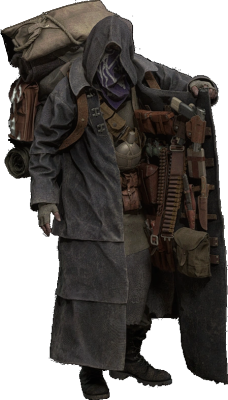
Merchant_Resident_Evil_4_remake.png

By mid-morning the street had become a living current of people. Customers drifted between the three carts, weighing aromas against prices, textures against memories. Others simply stood, momentarily suspended by the sudden abundance of choice. Arno observed in silence, noting that the Duke—for the rotund man could only be the Duke—laughed freely, served generously, and yet never once obstructed Arno's line of sight or interfered with the flow of his own customers.

At one point the Duke leaned closer, voice lowered in mock conspiracy.
"Don't think too hard, my friend. We're only here for today. No intention of claiming your corner permanently."

From the shack the Merchant's voice drifted out. "Temporary arrangement."

A brief pause.
"…Most likely."

Arno exhaled slowly and turned back to his counter.
"Then we should make the most of the morning," he said.

Arno let a small, excited smile appear on his face. "Competition?"

"Friendly rivalry," the Duke declared, slapping his knee.
"Survival of the competent," the Merchant muttered.

For one extraordinary morning, Lungmen bore witness to three sellers working side by side: three distinct philosophies of craft and commerce unfolding along a single stretch of pavement. The street would never again feel entirely ordinary.

By afternoon the grand cart had vanished. The shack disappeared without disturbing so much as a single brick. Only the lingering perfume of roasted meat and the memory of astonished, contented customers remained—along with an unspoken sense that Arno's modest operation had been quietly measured, and quietly endorsed.


When the street finally quieted that evening, Arno found himself seated in a borrowed back room—too orderly to be a mere storeroom, too cluttered to be an office. A single scarred table occupied the center. The Duke sat on one side, relaxed and expansive; the Merchant perched on a crate near the wall, absently adjusting a small metallic object between gloved fingers.

In the corner of the room, Niko was conspicuously silent.

She sat cross-legged on a stool far too small for her, holding a cinnamon bun that was nearly the size of her head. Sugar dusted her fingers. A handmade fish plushie—stitched carefully, lovingly—rested against her side. She took another bite, eyes wide, shoulders finally unknotted from the tension she'd carried all day.

Arno regarded the two visitors who had upended his routine without warning or explanation.

"So," he said, folding his hands on the table, "I will ask the obvious question. How are you here?"

The Duke's laugh rolled through the room, deep and unforced.
"That question has trailed us across more worlds than I care to count, my friend."

The Merchant spoke next, voice rough but not unkind.
"We go where trade exists. Where need exists. Where something worth preserving is being built."

Arno tilted his head. "That is deliberately vague."

"Intentionally so," the Duke replied, still smiling. "Call it following the wind. One day it carries us to a castle, the next to a half-ruined hamlet, the day after to a city still deciding what it wants to become."

"You've seen many places," Arno observed.

"Many," the Duke confirmed. "Some drowning in surplus, others scraping by on almost nothing. Markets paid in coin, in favors, in memories. One memorable world accepted only gemstones carved into skulls."

"Another outlawed merchants outright," the Merchant added.

"And yet?" Arno prompted.

"They found us anyway. And let me tell you, the things we've seen would go beyond your wildest dreams…" the Duke said ominously.

The conversation unfolded naturally thereafter. They spoke of strange patrons and stranger regulations, of markets that existed for a single night, of cities whose streets rearranged themselves when unobserved. In return, Arno offered glimpses of Lungmen—its intricate rules, its rival factions, the way opportunity and peril so often arrived together.

At length the Duke glanced toward the corner and smiled.
"Your assistant has excellent instincts. It took her less than ten minutes to decide we weren't going to devour anyone."

Niko froze mid-bite, then resumed eating without comment.

"She is observant," Arno said quietly.

Eventually the atmosphere shifted—subtle, but unmistakable. The Merchant rose first. From within his coat he produced a small, solid plaque, its surface engraved with careful precision. He placed it on the table and slid it toward Arno.

The Duke cleared his throat, adopting a tone of gentle formality.
"By custom, and by consensus, we recognize you as one of us."

Arno looked down.


SHOPKEEPER'S GUILD
INTERWORLD MERCHANTS' CONCORD

NOTICE OF RECOGNITION


By authority vested in the Guild and by consensus of its standing members,
the bearer of this notice is hereby acknowledged as a
MEMBER IN GOOD STANDING.

This recognition affirms lawful participation in Guild trade,
adherence to established customs of fair exchange,
and the right to operate without interference from fellow members
across all recognized markets and territories.

Issued without expiration.
Revocation subject only to Guild deliberation.


He did not immediately reach for it.
"This does not obligate me to begin appearing in haunted villages, I trust?"

The Duke laughed again. "Only if the mood strikes you."

"Membership does not bind," the Merchant said. "It just means you are one of us now."

Arno lifted the plaque. It was heavier than its size suggested.

"Thank you," he said, and meant it.

They did not prolong the farewell. The Duke stood, already stretching as though the road were calling. The Merchant adjusted his coat, casting a final glance toward Niko—who hugged her plush toy a fraction tighter.

"The wind is turning," the Duke said cheerfully. "Take good care of your corner of the world, Arno."

"And make sure to enjoy yourself too. You have no idea how much fun it has been for us for the past few centuries." the Merchant added.

Then they were gone.

Later that night, when the borrowed room stood empty once more, Arno placed the plaque carefully inside his cart. Niko peered over the counter.

"So… you're in a guild now?"

He nodded.

She smiled, a trace of powdered sugar still clinging to her cheek, and took another bite of the cinnamon bun.

The next day, business resumed its familiar rhythm. Mostly.

The line formed the way it always did—early, quiet at first, then steadily filling with the usual mix of tired faces and practiced patience. The cart stood where it always had. The street sounded the same. If anything had changed, it was subtle enough to be missed at a glance.

Still, every so often, a customer would slow their step. Someone would look down the block, then back again, brow furrowed.

"…Wasn't there another cart here yesterday?"

Another would swear they'd smelled something different in the air that morning—spices they couldn't name, something warm and rich that didn't belong to coffee at all. A third mentioned a shack that definitely hadn't been there last week, though they couldn't quite say where it had stood.

Arno answered none of it. He poured, took payment, nodded people along.

By midday, the questions stopped. The rhythm settled. The street accepted what it could see.

But a few customers left glancing over their shoulders, as if half-expecting something large and friendly to be there when they looked back—only to find the space empty, and no proof it had ever been otherwise.


AN: The reason why I made the Duke sell food and Merchant sell toys is because they obviously cannot sell guns, ammo, and explosives in Lungmen. Otherwise, they'd instantly be sought after by EVERYONE who'd want a piece of them.

Also, just to clear it out, Duke sells food that is made on the spot, like a taco or shawarma vendor. So his food is made to be eaten there, meanwhile Arno sells pre-packaged goods so those are much easier to take home. Just decided to point it out so as to show that there's no redundancy in these roles.

Also gotta let Arno see how the REAL masters move goods.
 
A Customer's Musings-2 New
A Customer's Musings - 2

You know, I thought Arno (Finally got the name of the shopkeep), finally adding coffee, the ambrosia of the hard-working man and woman on terra would be the highlight of the week. But no, rather it was the sudden appearance of 2 new sellers. Both are just as mysterious and so very different from Arno.

One is a man completely covered, carrying a massive backpack full of quality knick-knacks, toys, and some interesting odd and ends. The Merchant, as he calls himself, is quiet, mysterious, and incredibly generous with his prices. So much so that even I, a factory worker, could afford something on my budget. Like the amazing painting of a castle in a lake that I bought, really made me feel like a fancy noble!

The other, named Duke, is the largest man I have ever seen, as I couldn't even see his feet when he sat down. The man had folds on his folds, yet his size was surpassed by his jolly attitude, wit, and cooking. Good lord, his cooking, the smell alone made the visit worth the hour-long line just to buy one of his meals. Which I did, ordered a nice steak, and it was the greatest meal I've ever had the privilege of tasting. Almost on par with my own mother's cooking!

But what really surprised everyone was the teamwork. Arno, Merchant, and Duke coordinating together was a thing of beauty to watch. And a hefty increase to their wallets' weight with the number of customers theyve got. Honestly, it looked like a mini festival with all the food, toys, and other things people have been buying. Made the plaza feel a lot more lively, which is a nice change. Too bad it only lasted a day.

They just packed up and left, and by the time people woke up the next day. They were already gone, a shame really. I really wanted to taste the Duke's full menu.

Hopefully, that little event will help keep Arno above the red. Especially with those bastards making a mess of things by scaring his customers. Too bad they haven't done anything yet, would have loved to call the LGD. See how they like being intimidated and tailed. Also started saving for a security camera, want it pointed right out my window, and hopefully see if I can catch any of those thugs doing something illegal.
 
Just to reiterate on my message at chapter 17, whoever is the first to comment on the reference I used for Tenno's OC (the guy who asked for the coffee) will be given an omake written by me to their specifications. I dropped a few hints in this chapter, so get to it.

Get to guessing people.
 

Users who are viewing this thread

Back
Top