
• A notice about Rule 3 regarding sites hosting pirated/unauthorized content has been made. Please see here for details.
  • Staff is working to deal with the problem of synonymous tags. See here for more information and to suggest tag mergers.
  • Due to issues with external spam filters, QQ is currently unable to send any mail to Microsoft E-mail addresses. This includes any account at live.com, hotmail.com or msn.com. Signing up to the forum with one of these addresses will result in your verification E-mail never arriving. For best results, please use a different E-mail provider for your QQ address.
  • For prospective new members, a word of warning: don't use common names like Dennis, Simon, or Kenny if you decide to create an account. Spammers have used them all before you and gotten those names flagged in the anti-spam databases. Your account registration will be rejected because of it.
  • Since it has happened MULTIPLE times now, I want to be very clear about this. You do not get to abandon an account and create a new one. You do not get to pass an account to someone else and create a new one. If you do so anyway, you will be banned for creating sockpuppets.
  • Due to the actions of particularly persistent spammers and trolls, we will be banning disposable email addresses from today onward.
Margin of Error
Created
Status
Incomplete
Watchers
481
Recent readers
0

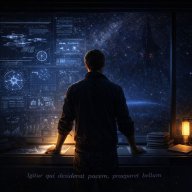
Marcus Sinclair carries memories of a future no one else can see: humanity's first contact, its wars, its extinction. Reborn in 2130, he has decades to prepare Earth for threats lurking beyond the Mass Relays. Scientist, strategist, prophet unheeded. He builds from the shadows, knowing the price of failure is annihilation.
Igitur qui desiderat pacem, praeparet bellum.
Last edited:
0000: Prologue

USSExplorer

Doing what's necessary, even if it causes chaos
Joined
Mar 4, 2019
Messages
649
Likes received
37,875
0000: Prologue
The Edinburgh of my last life, a century before this one, had been far different. It had only grown greyer and grimier as the years passed. The Edinburgh of this new, second life gleamed. The trams ran silently on magnetic rails, and the castle had lights installed that adjusted depending on the weather. Even the air smelled cleaner, as if someone or something had scrubbed it, so that it felt as if I might've been standing in the middle of a field instead of a major city.

As I had that thought, I was sitting on my bed, a datapad before me, with its screen casting a pale light on my face. I was eight now and had accepted that this really was a new life, and not some trick of my mind. How I ended up here remained a mystery, as I'd gone to bed one night in my former life and awoken in this as a baby in a crib.

My name in this life was Marcus Cormac Sinclair, one that bore no resemblance to that in my former life.

My early years, before I was able to speak, had been spent in the silent terror of my mind, trying to understand, adapt, and then accept that this was my life now. I could recall most of my former life, from my childhood to being a father and grandfather, but now, after eight years, it felt more like a bad dream, and the emotions I'd endured in it, and in becoming Marcus, had faded.

I'd learnt to walk and talk ahead of schedule, impressing my parents, Fiona and Ewan, though it seemed they attributed this to a genetics suite that all children received now, one introduced in the 2120s. In the years since, I'd continued to impress them, though as I grew older year by year, I began to sense that there was more to my accelerated learning and development than a standard gene alteration.

That gene suite was one of several technological markers that made clear that this world wasn't merely a continuation of that reality, quite apart from it being well over a hundred years forward in time from my last life. The technology was, by and large, more advanced, but it went beyond that, and the pad before me contained my records detailing such differences.

The major ones were the easiest to spot, starting with no 9/11 in 2001, and then no COVID outbreak in the early twenty-first century. Politics seemingly hadn't fractured after those events either, at least not to the extent I remembered from my former life. There had, however, been events with no counterpart in that former life.

There had been a period around the middle of the last century called the Oil Wars. Conflicts, small and large, public and in the shadows, had been fought over dwindling natural resources. Then, after a revolution in energy generation, it was as if someone had flicked a switch and the world entered an era of peace and stability that has existed to the present day.

The issues of my former life, and the scepticism that had evolved there, had carried over into this life, and it made me question everything far more than any child should, perhaps more than most adults did. Enough that I found myself seeking clues to some shadow conspiracy taking place around the world, at least as far as my limited network access allowed, as children were restricted in what they could discover online, and I wasn't yet willing to test how far I could push the systems.

Yet, for all that the apparent distorted truth of this world unsettled me, what worried me more was myself, or more accurately, what I was capable of. For all that I appeared normal, fitting the expectations of someone who'd undergone the genetic enhancement suite, I was convinced I was beyond it.

At first, when I picked up things faster than expected, I'd put it down to simply remembering details and facts from my last life, or reasoning more maturely than a child should. Yet, as I began primary school, I had the first hint that it was more than that.

A cup had slipped from a table, though I only realised that once I was holding it. I'd placed it back on the table quickly, avoiding anyone seeing what had happened, but that reaction, which seemed to move faster than my conscious mind could process, had caused me several restless nights. Even now, three years later, it continued to torment me.

My body seemed, from limited testing I was willing to risk as a child, to be beyond what it should be: not just the baseline, but the gene suite as well. How far beyond, I didn't know, but it extended to my mind as well.

Even years later, I could clearly recall any random page I had read once in preschool. I could copy a musical piece after hearing a teacher play it once, at least as far as my young body would allow, and I understood things that I shouldn't, that I had no memory of ever learning in my former life.

Everything about me was dangerous, perhaps to everyone around me. I'd come to suspect that this had something to do with my rebirth, but beyond that, it was a mystery that would take decades to understand, perhaps even a lifetime.

Sounds from downstairs reached me when they shouldn't: my hearing, like my other senses, was enhanced far beyond what it had been in my last life.

Callum, my younger brother, was running around causing havoc as most three-year-olds did, while my dad, Ewan, moved after him. Mum was in the kitchen; I could smell her preparing dinner. Keira, my older sister, was in her room, her music as clear to me through two closed doors as it would be if I were there with her. Hell, when I placed my feet on the floor, I could sometimes catch faint vibrations from the music and other sounds that no one else seemed aware of.

They were my family, the Sinclairs, and I loved them as they loved me. Yet I recalled another family, one that included my grandchildren, making it hard to fully accept my place here. It had taken me years to move beyond faking affection for them; not until Callum's birth, when I first saw him after he came home from the hospital with my mother, did I feel a tug at my heart the way I'd felt for my children and grandchildren in that former existence.

My focus returned to my datapad. I'd been given it as a gift last Christmas, and it was beyond what a child my age would normally need, but my parents had been willing to give it to me as I was smarter than my age suggested, even accounting for everything else. I'd altered it to deny outside access, restricted access to cloud storage, and installed a pass-string that would be extremely difficult for any current system to crack, or so I hoped.

I was being paranoid about the security, but as the pad held everything I knew of this world and of the one I'd come from, and everything about this one that was different or felt off. They were the sort of records no eight-year-old should have, yet I wanted it all set down in one place, just in case something happened to me.

Even if I did nothing, I'd have to be careful in this life. My body and mind were further beyond the baseline than they should be; that alone would need managing if I was to enjoy this life. Though I did wonder if that would ever happen. Ever since I'd become certain I was different, I'd had a sense of unease about the future, as if something was lingering there, just out of sight and reach, deep among the stars.

Where this new life led, I couldn't say, but I wanted to enjoy it as best I could. This was a new Earth, and I had to live in it. Whoever or whatever had given me this second chance didn't matter; what did matter was what I did with the chance I now had.

---***---
Roughly a year later, I was at the kitchen table with my parents, looking at a cream-coloured paper bearing the crest of Caledonian Academy. That they had sent a physical letter instead of merely reaching out electronically gave some sense of their standards and values, along with a slightly anachronistic feel that indicated the age of the Academy.

Both my parents were surprised by the letter when it arrived that morning, and as they continued to look over what it said, I noted with amusement that their breakfast had gone cold.

"They don't usually offer places to children your age," my father said. I was certain he was already working through the implications of them reaching out, his mind geared towards engineering as always. "It's normally twelve for such places, maybe eleven. You're not even ten, and they're reaching out. And how did they know to do that anyway?"

How they had known wasn't something I could answer, but I suspected that Caledonian, along with other such academies, had access to the education system. Such access was meant to be illegal, but perhaps the same methods that had existed in my former life were present here, though the Pound, along with other currencies, had been replaced by the World Credit in most places.

I'd already researched Caledonian and other places like it extensively, as I'd planned to apply for entry next year. That they had made their move now wasn't unworkable. They weren't the most famous, nor the richest, but their academic reputation and connections to key universities and industries in the UK and the European Federation would be of use.

I'd felt a draw towards the sciences over the last year, and if that was the direction I wanted to take, then Caledonian was one of the better choices: critically, it was in Edinburgh, so it'd be easy to study from home.

"Marcus." My mother's voice drew my focus, her tone carrying a hint of suspicion. "Did you apply for this?"

"No," I replied honestly with a shake of my head. "My teachers must have submitted something. I think Mrs Patterson mentioned a programme for advanced students last term," I added, offering a reason that should ease some of their concerns.

My parents exchanged a look, one I'd long since learnt to read, having once been a parent. Concern mixed with pride, that uncertainty of how hard to push their child, since I was clearly capable of more. I'd hidden most of what made me different, but I'd let enough show that I stood out without being lauded as some sort of prepubescent genius.

"It's definitely a good opportunity," my father commented slowly. "You'd get better teaching and resources, but you'll be years younger than anyone else there. That could be a problem."

Mum reached out, taking my hand in hers. She didn't say anything; her feelings, ones that echoed my dad's, were written over her face.

"I want to go," I said firmly, letting some emotion enter my voice. "School now is boring."

I didn't need to lie or manipulate them; what I'd said was true and accurate. The local primary couldn't compete with Caledonian in any way that mattered, nor could any of the other local private schools. The chance to have the Academy's name on my CV, and use it to open doors to university once I was finished, was worth taking, even if it meant I'd be surrounded by boys and girls two years older than me.

Friends hadn't been easy to make at preschool and primary. I found it hard to mix with the other children when my mind carried adult memories and worked at levels theirs simply weren't currently capable of. The same would be true, though to a lesser degree, at Caledonian, though friendships made now rarely carried into adulthood in any case.

"You're sure?" Mum asked. "Once you accept, you can't go back to your old school."

I nodded. "I'm sure." I met her eyes, letting her see my appreciation for her concern. They might not be my first family, but they were family, even if I was keeping that at a slight distance because I was different. "I need to learn, Mum, and I'm bored now. I want to see if this place will be better for me."

My mother had spent years throughout her career learning to read subtext in what was said and what people meant. Something I'd learnt after discovering her work involved advising government officials and others on policies. She'd know I was holding back, but she'd never come close to guessing what it was.

"Alright." She squeezed my hand once before releasing it. "We'll visit next week. See the facilities, meet the staff. If it still feels right after that..."

"It will," I finished, certain that the path was before me.

I reached out, running my fingers over the paper. It was an oddly soothing sensation, since paper was rarely used in this era. My eyes examined the Academy's logo, the same lion rampant as one of the flags of Scotland, though navy blue instead of red.

There would be challenges at Caledonian, from older students, teachers, and others, but I was prepared for them. Judging how much to reveal about myself and what I was capable of would take time to assess, but even as I held back, I understood the time there was a mere stepping stone to what came after.

That feeling of danger from the stars was always present, as was the pull towards science, engineering, and mathematics. I'd enjoyed those subjects in my first life, but the tug in this was more than simply carried-over memories: those fields, in some way, were going to matter in the future. I could only hope that, when I finally discovered why, it wasn't too late to deal with whatever threats lingered in this reality.

---***---
I looked up at the iron gates of Caledonian Academy, noting the same lion rampant on them, painted the blue of the Academy so it stood out to any that passed by. Beyond the gates, which slowly opened for me, I saw buildings that dated back centuries sprawled across a campus befitting a private educational institution that held more wealth and influence than most people realised.

As I walked along the gravelled path, my shoes clipping against the loose stones, I noted the other students who were moving around, getting settled in as they returned or prepared to start the new term. All of them, like myself, wore the school's blazer, with trousers, shorts, or skirts depending on gender. The new students, be they first-years or transfers, were the easiest to spot, being the nervous ones by and large.

Many were moving to and from the large buildings at the edge of the campus, the boarding halls. As Caledonian was close to my home, I didn't need to stay in them, one of the reasons I'd chosen this academy over others, as it eased some of Mum's concern.

Once nearer the main building, many looked my way. At only nine, though I'd be ten in October, I was younger than my new classmates by two or three years. That I was wearing the Academy blazer meant I was a student, and I easily caught the snippets of conversation my presence generated.

"Why's a kid here?"
"Shouldn't he be in primary?"
"Whose brother is that?"
"Why's he wearing our school jacket?"

Their words carried a range of emotions, from confusion through concern to, in a few cases, outright dismissal and irritation. I ignored them all as there was no point in trying to deal with them now. They'd learn at the first assembly that I was a new student, and then, once classes began, that I was more than worthy of my place. After that, it was up to them how they reacted to my being a fellow student.

I'd be here six years at most, though I suspected it might be less. I could probably pass the university exams now, but I was maintaining the position of being smart for my age, not some super genius. I was far too young to want or need that sort of attention, and the longer I had to prepare myself for my adult life, the better I'd do.

No, Caledonian was just the first step in a career that I had already partially mapped out. Where it would fully lead wasn't clear yet, but I had years to determine that, and the course I wanted to follow after the Academy.

As I moved through the corridors, towards the main assembly hall, I saw several senior students, wearing badges that marked them as prefects, look my way dismissively. As if I was a child who didn't deserve to be here.

Once it became clear that I was publicly better than most of them, they'd react like kids always did: either by ostracising me or seeking to exploit me. The same tricks that adults used, though with far less skill and experience.

Part of me was looking forward to the challenge, not because I felt it would be worthwhile, but because it would at least offer some way to pass the time while I was here.

My future was beyond this place, as were, I hoped, the answers to why I'd been granted this second, initially unwanted chance at life.

---***---
A/N: Welcome to my newest story. Like the others, this will be a slow burn with world-building involved over a long ride.
 
Last edited:
In their place, the Oil Wars. The shadow conflicts over resources. And then, a revolution in nuclear power, and it was as if someone had flicked a switch: stability, peace, balance.
One can hope.

Ironically, we're about to get that revolution, when we should have had it 50 years ago, because NOW the elites want it for their data centers, rather than wanting to deny us as punishment.
 
Has humanity already discovered Eezo, or is it still to discover it? Does the MC know Eezo from his past life?
 
No. Eezo is 2148. Kid was born in 2130 and is now a 9 year old kid in academy. At best, eezo is around 9 years away.
Actually, eezo was first detected in 2147, and the ruins/archives on Mars were discovered/opened in 2148.
Or so says the official timeline. But something I discovered while writing this is the number of little details and lore that, when placed alongside other facts, cause issues. Nothing truly major, but enough to irritate me as I tried to align those I wanted to keep. I doubt any reader will notice, but we'll see.
 
0001: The Academy
0001: The Academy

"Monsieur Sinclair, perhaps you'd like to attempt the passage?"

The tone of my teacher, Madame Fournier, suggested she thought I wasn't paying attention. Yes, my mind had been elsewhere, but I knew what she was covering. Still, to give the impression I wasn't certain, I glanced down at the datapad and the passage she was referring to.

It was a simple one about a family visit to Paris, the sort of introductory text that was meant for new students, which was what I was. The issue was that I already knew how to say it; Madame Fournier had repeated it ad nauseam over the last twenty minutes, but I'd only needed to hear it once to be able to reproduce it perfectly. That I understood the grammar rules to advanced levels only made the class even more uninteresting.

I read the paragraph aloud, getting it correct bar a single moment. That was an intentional flaw introduced to hide how easy I was finding things, a tactic I'd been using in all my classes during this first semester at Caledonian.

Madame Fournier studied me as I spoke, her eyes narrowing as she did so. Perhaps she was annoyed that I had done such a good job with the passage, or perhaps she felt I wasn't pushing myself. The latter was true, and intentionally so.

I could easily have rushed through the curriculum; nothing about this class or the dozen others was in any way challenging. However, I'd already determined that graduating before I was old enough to be taken seriously, and not viewed as some child genius to be considered a freak, was the best path for me. That it would help limit attention on me, and the differences between me and any other gifted student at Caledonian or elsewhere, was another major factor in the decision.

"Your accent is remarkably good for a beginner," she said. "Have you studied French before?"

"My grandmother speaks it sometimes," I lied, speaking with the confidence of a child who shouldn't know any better. "I must have picked up more than I realised."

My grandmother had tried to teach me a foreign language when I was still a baby, but that had been Spanish. Just as with Madame Fournier, I'd pretended not to understand it perfectly, though I was already confident I could speak the language well enough to hold a decent conversation. The same was also true of French, though no one knew either of those facts.

Madame Fournier held my gaze for a moment before she looked away, seemingly accepting my answer.

The other students, all two or three years older than me, didn't know what to do about me. I was younger than them but, as with every other class, I was already sitting near the top in French. Again, I could easily be top, but I chose to sit just below that level to avoid too much attention; the effort to maintain such a low level was more taxing than anything else that had occurred in my first months at the Academy.

The others still regarded me as something of an enigma. Most ignored me, unable to deal with a child better than themselves, though a few tried to interact with me. I maintained a cool stance with everyone, not yet seeing anyone who might be worth staying in contact with once we graduated. I hoped that would change; otherwise, the boredom of the first few months was going to grow heavy as the years ticked away.

---***---
I sat quietly as Mr Hartley handed back the mathematics test. He moved through the rows, passing out the papers with the presence of someone who'd been doing this for decades yet still retained a love for teaching.

I watched and listened to the other students as they looked at their papers, their reactions ranging from delight to disappointment and all of them easy to read. I knew the pitch, tone, and accent of every other student in this class, and in every other class I took, by heart. Something I'd wasted time on simply to alleviate some of my boredom while maintaining my current level.

As my paper landed on the desk, I looked at the score blazoned on it with fake delight. Ninety-five per cent, based on the scores listed without names on the class display, meant I was top by three marks. Impressive, but I'd been aiming for eighty-seven per cent to maintain the appearance of being good, but not the best. It seemed I'd underestimated the ability of my classmates this time.

Mr Hartley returned to the front of the classroom once he'd handed out all the papers, and the names were then displayed against the scores. "Well done, Sinclair."

I felt the weight of the other students' gazes as they looked at me. This was the first time everyone had lost to a child, and I could already tell how many of them would react to the embarrassment.

Most would simply be angry with themselves, and with me, for the result; some would whisper more loudly behind my back when they didn't think I could hear. A few, perhaps, might even attempt to respond. Those who did so in the class, seeking to regain their places, were at least worthy of respect. Those who chose a more aggressive, external reaction would be a problem, one that so far I'd managed to avoid at Caledonian.

I took a photo of the test, sure Mum would want a record of my performance. Otherwise, I was already putting the moment away, though I was adjusting my plans for the next test. I'd likely return to my sub-ninety position, though already, barely halfway through the first semester, I was beginning to wonder if I'd be able to keep up the charade for another five and a half years.

---***---
My second year at Caledonian had seen me advance into Third Year academically, making me another year younger than my new classmates. In the end, I'd done well enough in the final tests for First Year that the teachers and administrators had suggested I advance an extra year to see if it challenged me. It didn't; the work was as simple and uninteresting as ever, but the fact I'd stood out even while trying not to was unexpected.

Holding myself back was more troublesome than I'd realised, and even though I was still doing so now, at least the standards of what we were learning made it easier to manage where and how to make mistakes to hide the truth of my intelligence. Of course, that tactic had already failed in science, the class I was currently in.

Dr Morrison, having realised that I was both interested in the subject and finding the coursework easy, had shifted my desk to the back of the classroom. In an attempt to stimulate my mind, she made sure the work waiting on the desk when I entered was more advanced than what she was teaching the rest of the class. It failed because the work was still at a level that didn't require me to push myself, but the attempt was appreciated, as was her not constantly trying to encourage me to advance another year or hold me up as an example to the rest of the class.

The rest of the class were all fifteen or sixteen, and being compared to a boy a month shy of his eleventh birthday wouldn't have done them any good. Something a few of my other teachers had yet to learn, though they also didn't have me doing advanced work for the year.

The only class where I clearly struggled was Physical Education, though again that was because I was hiding the truth of my abilities. I played the part of a boy better than normal for his age, but still slower and weaker than classmates who were years older than me. It was the only place where they didn't look at me with anything approaching contempt, though several did try to use it as a place to lord over me simply because they were bigger and older.

I didn't rise to the bait, a restraint that would, I expected, soon see most of them pull back from trying to anger me. There was no point in letting them get to me, and learning how to manage my reactions and abilities was, I'd come to realise, the greatest benefit of being at Caledonian, at least when one ignored that the Academy's name would make entry into elite universities easier to arrange.

"Marcus." Dr Morrison's voice cut through my thoughts. "Would you walk the class through the third problem? I think they'd benefit from seeing your approach."

I stood and moved forward. This had become a regular trick Dr Morrison used to ensure I remained a participant in her class. The others watched me move, their faces doing a better job than those of my former classmates at hiding their feelings at having a younger student guide them through a problem, though not enough that I couldn't read every emotion present.

Even as I guided them through the work, my mind was wandering, travelling down the pathways that the equations opened. As had happened a few times before, I felt as if I could see new directions to head, ones that didn't align with any of the work I'd learnt, in class or privately. It was almost as if something was whispering into my mind, offering hints as to what the future held and why I had this second life.

"Excellent," Dr Morrison said when I finished. I had barely been paying attention to my own words, yet had never appeared inattentive. "Clear and precise, as always."

I returned to my seat, accepting the praise with a nod. I could feel my emotions shifting under the surface, the desire to dismiss the praise as unworthy of my time. The arrogance that I'd warned myself to be careful of when entering the Academy was growing stronger in my second year here, as was the disappointment that I'd still not found any other student who might be worthy of keeping in contact with once I graduated and moved on to university.

Given I was smarter, stronger, and better in every way compared to my classmates, it was hard not to look down on them, but I had to contain those feelings. Standing out too much now risked attention I felt certain I didn't want or need.

Child geniuses were, to the general public, a curiosity, but to those with power and influence, they were likely tools to be controlled and leashed. That was something I wasn't going to let happen to me, which meant the charade needed to be maintained. Yet I wondered what it would feel like to finally remove the self-imposed shackles and see what this body and mind were truly capable of.

---***---
I sat in the front row of the Great Hall of Caledonian Academy, waiting patiently for the ceremony to begin. I'd first entered this hall when I'd been nine; now, at fourteen, this would be the last time I stood here as a student.

My eyes, as they had done before, moved around, taking in the plaques on the walls where former students were remembered, both those who had stood out while here, and those who had gone on to do great things afterwards. Names of judges, politicians from across the spectrum, scientists, figures of industry and others worthy of note were remembered on those plaques.

The newest plaque, one that was currently covered, though I knew whose name was on it, kept drawing my attention. Pride swelled in me at what was currently hidden, though in truth, that plaque was, like my time here, merely a stepping stone to a far greater future. Still, being the Dux Scholae, First Scholar of this graduating class, marked the first clear moment where my name would be remembered.

I shifted in my seat, the ceremonial robes uncomfortable on my shoulders. Not because of the weight of history, but because they weren't meant for a fourteen-year-old to wear. I could've reached this point in half the time, but I'd held myself to a pace that wouldn't draw attention. I'd be entering university young, but not so young that I could be ignored or dismissed as some sort of freak of a prodigy that others didn't know how to deal with.

The whispered excitement of the other graduating students had me looking down the row at them. Most were still unworthy of my time, but a handful had shown promise, either because of their grades or the families they came from. I'd done what I could to form connections with them on the chance that any might be useful contacts for the future, but I suspected I'd be moving on to greater, headier things than any of them would be able to comprehend. I just wished I had some idea of what it was that gave me this drive, and that kept hinting that something dangerous lurked far above us, among the stars.

I'd used the time here to fully examine the history of this world compared to that of the one I had come from. The divergences started, as I'd already determined, in the late twentieth and early twenty-first centuries, but they had only grown wider as the decades passed.

The most glaring of these focused on North America and East Asia. In both places, the dominant nations, the USA and China, had undergone massive changes over the last century. The US had entered a second civil war, one that dragged in Canada, Mexico, and many of the smaller Central American nations. In the end, the area had unified into the United North American States, though only after the Statue of Liberty had been destroyed in the war.

In China, the CCP had fallen, sending the country spiralling for a few decades until the new government and nation, now called the Chinese People's Federation, had regained control. That meant the two great powers of my former life had been weakened greatly, and while they remained imposing, the chaos each had endured had allowed other blocs to rise, such as the European Federation, which had evolved from the EU, crafting a truly multipolar political world.

All the textbooks and reports suggested that, now that the chaos was over, these changes had left the world safer and more peaceful, but I had my doubts. There were too many little moments where it made sense that some group, or groups, had guided events to suit themselves, enough that, with my sceptical nature, I was more certain than ever that the world was being controlled by various groups working from the shadows. Groups that would, I was certain, take an interest in everything about me if I ever stood out more than I currently did.

I'd stand out more once I began university, and likely more still by the time I graduated, but by then I'd be an adult, or close enough to one that I'd have some control over where my future was heading, and be able to better prepare for any attempts to control and manipulate me.

"Marcus Cormac Sinclair."

I refocused my thoughts as Headmaster Buchanan's voice echoed through the hall, stating my name. Standing slowly, I patted down my robes and then waited as he continued speaking.

"In recognition of your exceptional achievement across all disciplines, for scholarship that honours the finest traditions of this institution, and for conduct befitting the ideals we hold dear, the Academy is proud to name you the Dux Scholae of the Class of 2145."

Applause filled the hall as the Headmaster finished, and I walked towards him. I accepted my medal as Dux Scholae with a handshake and then turned to face the students, parents, and faculty. I easily picked out my family as they sat in the fourth row, behind the faculty and returning figures of note. Both my parents were smiling proudly; Callum was waving excitedly, while Keira rolled her eyes, trying to imply she was bored when I knew she was just as proud of me as our parents.

My gaze shifted, taking in everyone else present. My classmates all seemed content with my position, their resentment having lessened over the years, often morphing into respect as I helped them when they needed it without being condescending. Our teachers looked on proudly at the young minds they'd helped to mould, while the returning graduates and other figures of note watched with curiosity as a child far younger than they had expected was named Dux Scholae.

Their interest in me would only grow as I moved forward, of that I was sure. They might think I was predictable, a young genius worth watching, but they, along with everyone else, failed to realise that I hadn't even begun to rise.

---***---
 
Last edited:
Some super-earth managed democracy going on here.

Here's hoping you mix other sci-fi settings into this story. Is find it interesting if something like Cyberpunk was added.

Looking forward to where you take it.
 
Hmm, MC is giving me Star Trek Augment vibes. The natural genius, the perfect memory, the stunning ease of picking up new skills and knowledge, the growing arrogance and disconnect from normal humanity. Not to mention the hinted-at physical superiority. It's got me especially curious about what's really going on here, and what alterations were made to MC when he was inserted.
 
Next time I was asked, I'd speak slower and make more mistakes. Changes I would enact to appear merely as a child who was advanced for their age, and not a genius. Though that line grew thinner each day with each passing class.
I thought maybe he was thing to make friends, but as he's not, why even bother?
I should stop trying to hide in failure.
My results over the first year had been enough to encourage all my teachers to push for my rapid advancement. A challenge I had, after some consideration, accepted
👍
I returned to my seat, accepting the praise with a nod that was just shy of dismissive. The arrogance I had warned myself about when entering Caledonian was growing stronger, and the warnings weaker. The mild contempt I held for most of those around me had settled to the point it felt second nature.
that, at least I agree is a real problem.

On a curious note, why isn't the academy sorting him into a higher curve classroom?
Some super-earth managed democracy going on here.
Definitely, yeah.
Here's hoping you mix other sci-fi settings into this story. Is find it interesting if something like Cyberpunk was added.
that woulda been a much MUCH BIGGER divergence.

But it'd be cool if the MC creates the tech base and an analogous city through his genius.
 
that woulda been a much MUCH BIGGER divergence.

But it'd be cool if the MC creates the tech base and an analogous city through his genius.
Oh completely agreed, but imagine CP77 tech, Halo, xcom, altered carbon, ect.

Im thinking between AI's, Cyberware, Bioware (pun not intended), augmentation (ala Spartans), SlipSpace drive, ect.

Im imagining that the MC in the back ground founding corps like arasaka and militech so that he can be a power behind the throne player and just guide humanity through the system it exists in. Especially important if there's some managed democracy bs going on right now.
 
Some super-earth managed democracy going on here.

Maybe. Stuff like that will linger in the background for some time. Not smart for a child/young man to go poking their nose into such matters without backup/support.

Here's hoping you mix other sci-fi settings into this story. Is find it interesting if something like Cyberpunk was added.
But it'd be cool if the MC creates the tech base and an analogous city through his genius.

Down the road, but yeah, that's likely to happen. Just have to be cautious because moving too fast and Sovereign comes out early (Of Harbinger via the Collectors).

Hmm, MC is giving me Star Trek Augment vibes. The natural genius, the perfect memory, the stunning ease of picking up new skills and knowledge, the growing arrogance and disconnect from normal humanity. Not to mention the hinted-at physical superiority. It's got me especially curious about what's really going on here, and what alterations were made to MC when he was inserted.

It's a slow-moving thread that one, but it's always there. I suspect that it'll only really see the light, and be displayed properly on-screen, whenever I get to the FCW and beyond.

On a curious note, why isn't the academy sorting him into a higher curve classroom?

They did by the end. That's why he was Dux Scholae and graduating when he is. And the next arc (Uni) shows it in play even more.
 
Not really a possibility in Mass Effect. The Alliance has apparently been trying to do this for a few decades, prior to finding Eezo, but never got anywhere.

If you accept the leaks for ME5 though, they apparently figure out blackhole/negative energy wormholes, because of tech they find in Andromeda.
Down the road, but yeah, that's likely to happen.

Speaking of XCOM though, popular crossover with ME. Do you support the versions where Psi and Biotics use the same parts of the brain and are therefore exclusive, or the ones where they're parallel largely unrelated systems that can be stacked?

The Asari, Protheans and Rachnai more or less make Biotics into Psionics as is.
Just have to be cautious because moving too fast and Sovereign comes out early (Of Harbinger via the Collectors).
Not actually an issue, surprisingly. Sovereign has been active for a while. He's not taking down the cycle, because he hasn't figured out how the protheans sabotaged the citadel. You'd have to be public in either figuring out the reapers, building new mass relays OR falling to indoctrination yourself, in order for him to descend upon you like a bad fanfic rendition of "give frodo a lightsaber, sauron gets the deathstar".
 
Speaking of XCOM though, popular crossover with ME. Do you support the versions where Psi and Biotics use the same parts of the brain and are therefore exclusive, or the ones where they're parallel largely unrelated systems that can be stacked?

The Asari, Protheans and Rachnai more or less make Biotics into Psionics as is.

No comment either way in case it gives away future developments. All I'll confirm is that there is a crossover of tech in this, though with what you'll just have to wait and see

Not actually an issue, surprisingly. Sovereign has been active for a while. He's not taking down the cycle, because he hasn't figured out how the protheans sabotaged the citadel. You'd have to be public in either figuring out the reapers, building new mass relays OR falling to indoctrination yourself, in order for him to descend upon you like a bad fanfic rendition of "give frodo a lightsaber, sauron gets the deathstar".

Yet, if a new race suddenly starts fielding tech that matches any Council race, or far more concerningly, is outside the plans for the Cycle, then either Sovereign gets off his ass, or Harbinger sends out the Collectors.
Which ties into my earlier response ;)

"give frodo a lightsaber, sauron gets the deathstar".

Horrible, and yet still better than Rings of Power.

Not really a possibility in Mass Effect. The Alliance has apparently been trying to do this for a few decades, prior to finding Eezo, but never got anywhere.

Ah, someone else has delved deep into the lore. Gargain Station was built for such experiments, though it only came online just before Eezo and the Mars ruins were discovered.
 
I like the idea of biotics and Psionics are two separate things. With the Asari know its Psionics but are purposely misleading the galactic community with thinking it's biotics.

This would go really well with them in cannon hiding the beacon on their homeworld as well as their self image of importance. That they think themselves as the inherentors of the Protheians by being psionic, would lead them to killing the rachni so prevent their dominance.

Hell, theres that dialog in ME2 on Illium where the human, turian, and salarian all think the Asari look most like their respective species.
 
0002: Foundations
0002: Foundations

I stepped towards the lectern slowly, adding just a hint of uncertainty to my movements as everyone would expect from a child of fourteen about to address a room of several hundred people. As with most of my actions at Caledonian, it was a façade to hide the truth about who I was and what I was capable of.

I waited for the applause to fade, letting my eyes sweep over the Great Hall once more as if taking in the moment. Like with everything, I'd prepared for this speech, having been informed of my selection as Dux Scholae a few weeks prior.

"Headmaster Buchanan, distinguished faculty, parents, and fellow graduates," I began, my gaze moving over the assembled rows. "It is an honour to stand here as Dux Scholae, and as I look at everyone, I am reminded that none of us achieves anything alone."

"First, I want to thank my teachers, who saw potential where others might have seen only a child too young for his surroundings. Dr Morrison, Mr Hartley, Madame Fournier, and so many others challenged me to reach further, think deeper, and question everything." I paused there, letting my words sink in before dropping the next beat. "Even when those questions made you uncomfortable."

As I'd hoped, scattered laughter filled the Hall, with most coming from the aforementioned teachers, men and women who had, after Dr Morrison's example, allowed me to learn beyond the curriculum when it was clear I needed to be pushed.

"Next, I want to thank my family." My eyes found them in the fourth row. As I looked, my father, in shirt and tie, sat up straight while my mother looked on proudly. Callum waved even as Keira maintained the faux-disinterest she seemed to favour in her late teens. "It was your love and support that helped me see I was meant to grow. Everything that I am, and what I might become, is because of your love and warmth."

My gaze shifted to the front row. "And to my classmates, who I've spent the last few years with in the halls and buildings of the Academy, thank you for letting me be. I know that some of you resented me when I was first pushed into your year, seeing me as a child who shouldn't be there. Now I hope that all of you, after our friendly competitions over the years, have grown because of my presence, just as I have grown because of yours."

I looked out again, taking in the others present: families of other graduating students, returning former students, and others watching with varying levels of interest. I saw several figures from various universities who had already reached out to me and might well do so again afterwards, hoping to convince me to attend their university.

The fact that I was being, in essence, head-hunted for courses was a nice change from my first life. There I'd had to go through the standard procedure of applying, meeting grade requirements, and then hoping I did well enough in my tests to earn my place. In this life, the universities had come to me even before I'd applied, trying to sway me while speaking about the facilities and links each centre of learning held. It fed my ego to see them recognising my potential, even if they remained blissfully unaware of just how great that potential truly was.

"The Academy's motto is Per Scientiam Ad Astra: Through knowledge, to the stars. For over two centuries, those words have inspired students to reach beyond their grasp, to push the boundaries of what is known, and to seek understanding of the universe around us."

"I believe our generation stands at a threshold. With Eldfell-Ashland's extraction of Helium-3 from Saturn, the construction of Gagarin Station, and the increased focus on Mars and deep space missions, the future lies up there, among the stars. We are finally developing the tools needed to answer questions that have haunted us since our ancestors first looked up at the night sky and wondered what those little dots of light were."

I looked around even as I continued. "Soon, I believe, we will finally have those answers and unlock the mysteries that will, I hope, benefit all of mankind."

My words drew a gentle round of applause, and I paused to allow it to end.

"Now, I don't know what we'll find out there," I added with a disarming chuckle. "None of us, or so I hope. But I'm certain that we'll find something that will change everything we think we know about our place in the universe. And when that day comes, it will be this generation, the ones sitting in this hall, taking their first steps into the world beyond the protection of childhood, who must be ready to face it."

As I spoke, I studied the eyes of the students who were graduating with me. Some nodded along, seemingly enthused with my words, but most seemed uninterested, as if the idea of anything to do with space wasn't worth their time. On a world of billions, with few chances for anyone to leave the atmosphere, that was to be expected. That I was still young and, for all my potential, unimportant in any grand scheme, only added to the sense many likely held: that I was talking without any real understanding.

In many ways, they were right. Yet I knew there was something up there, something that called to me and might perhaps shed light on why I'd been given this second chance at life. If I was right, and there was truly something waiting for us among the stars, then perhaps some might look back at this speech and see a visionary, though how that might help me remained uncertain.

"So, as we leave Caledonian, I ask you, my fellow students, and those here today to congratulate us, to remember: Knowledge isn't just power; it's a responsibility. It's the foundation we build when we don't yet know what we're building towards. Just as I intend, I want everyone to learn all that they can, to question everything they're told, and to push beyond their limits, searching for the future that awaits us all."

"Per Scientiam Ad Astra. Through knowledge, to the stars. I intend to gain that knowledge and then move out into those stars. I hope that some, if not most, of you will join me."

As I stepped back, the applause returned, louder than before. I didn't know if it was merely them being relieved I had finished, or if my words had sparked something in them. I hoped it was the latter, and that they would, with me, move forward to see what lay over that next hill, to seek out new worlds and, if they existed, new civilisations. To boldly go where no man had gone before.

I chuckled at recalling where those words came from: a story that had existed in this reality just as it had in my former one. My laughter, unplanned and unscripted, seemed to amuse several of those watching me.

As I moved back to my seat, I looked at my family again. Callum was moving animatedly, though Keira was doing her best to ignore him. My parents clapped with pride, though I was sure my mum worried over my words and what they implied for my future. She would, I knew, always worry over me, as every mother should.

---***---
"It's boring," Keira announced while sprawled across a sofa, datapad in hand, as I entered the cottage with Dad.

We'd just returned from shopping to stock up the holiday home we'd rented in Ireland for the summer, and already Keira wanted to head home. The house was isolated from any major town or city, and we'd reached it via an electric transport with extended range, something Dad had insisted upon, and Mum had teased him about.

Given the dearth of charging points away from major population centres, Dad's concern had been warranted, and while the rest of my family didn't seem concerned about that, I wondered if perhaps there was a reason for that scarcity which went beyond cost. Part of the reasoning might have been to keep most people in the cities and towns, as they were easier to control and monitor there. I might well be seeing threats and danger where there was none, but I remained convinced that groups were working in the shadows to guide and influence everything, from nations and companies to people, for some unknown reason.

"It's peaceful," Mum corrected my sister from the kitchen as she waited for us to bring the food so she could prepare dinner. "There's a difference."

"The difference is whether you're old enough to appreciate it," Dad added, as we carried the shopping to the kitchen.

The holiday had been arranged so we could spend the summer together before I began university. Mum was relieved that I'd chosen Edinburgh, meaning I remained close to home, though my reasons had little to do with that and more to do with the university's reputation in the fields that I was drawn towards.

***
The holiday passed without any issues, though on the final evening before we returned home, Mum called me for a walk. We walked along the cliffside, looking out on the Atlantic as the sun set.

"Are you ready for university?" she asked as we walked, finally bringing up the topic that I was certain she'd been focused on throughout the summer.

"I'll be fine," I replied, knowing that little of what I said would ease her concerns.

"I'm sure you'll do great in the lectures, but you're not even fifteen, Marcus. Everyone else there is going to be seventeen or eighteen. You'll be the only child in rooms and halls full of young adults."

I chuckled. "I'm not going to do anything stupid because they want me to."

She paused and looked at me directly. "That's not what I meant, and you know it."

"I know, but I figured you'd want to hear me say that at least," I replied truthfully. Having been a parent in my former life, I knew the fears a parent felt when sending a child off to university, watching them take those first steps out of the nest and spread their wings.

"When you're old enough, you should enjoy your life," she said slowly. "But you're a child, Marcus. You have a brilliant, beautiful mind that makes you driven to push faster than most, but you're still a child."

I moved closer. "I know, and that's part of why I chose Edinburgh. So I'd be close to home if I ever needed to return."

She didn't respond verbally, choosing instead to pull me into a hug. I returned it and let the silence linger as she held me. When she pulled back, she looked me directly in the eyes.

"I know that's not why you chose Edinburgh, darling, but I'm still happy you're going to be close to home." She reached out, pushing some of my hair from my brow. "Just be careful, okay? People are going to see your youth as something to resent and mock, if not exploit. You're my brilliant, beautiful son, and I don't want you to lose the drive that's carried you this far."

"I won't, don't worry." I knew I wouldn't; I wasn't a normal teenager, nor even what most believed me to be.

I was more than capable of handling older teenagers and young adults, and had already mapped out the path I wanted to take at Edinburgh. What came after that remained vague, mainly because I knew plans changed the moment they were implemented, but the reason I had been given this second life would become clearer at university. Of that I was certain.

---***---
I walked through the corridors of St Leonard's Hall, amused that the building appeared ancient from the outside, yet inside held all the trappings one would expect of the most modern facilities. As I reached my room, I pressed my finger against the scanner, unlocking the door.

Inside, the posters and books already lying around half the room made it clear the other occupant had arrived earlier and chosen his side. My eyes scanned the posters, seeking some hint of the person I'd be sharing the room with for the next year.

The main one was an image of a double helix with the caption "Know Thyself" underneath. Between that, the datapads covering his desk, and a physical copy of a book by Dawkins, I already had some inkling of his chosen field. That said, my roommate wasn't present, and I moved to the empty side of the room and began to unpack.

I didn't have much: a handful of datapads, including the one carrying all my notes on the variances between this world and my former life, along with some clothing. I didn't need much to begin with. The university provided all the literature and resources that any student needed via the network, though everything that was downloaded was tracked, which was something I'd have to be wary of if I felt an interest develop outside the fields I was here to study.

A faint chime reached my ears, pausing me as I worked to unpack, and I looked at the door as it opened.

"Ah, the prodigy arrives."

The speaker was sandy-haired, with the kind of open face that suggested an ease in social situations. Based on the slight accent, I'd place him as Dutch or possibly Flemish, as I hadn't learnt either language well enough to tell them apart. Still, I'd see if I could pick up some of his native tongue to add to the small repertoire of languages that I was developing.

"Marcus Sinclair," I said, standing fully and extending my hand, though I was still far short of his height.

"Lars Brenner," he replied, shaking my hand, a cup of tea in the other. His grip was firm, adding to the confident air he projected. "Human evolutionary biology. The university warned me I'd be sharing with someone 'exceptional'. Their word, not mine."

I smirked, wondering who had called me that. "They have a gift for understatement."

Lars laughed, and it sounded genuine. "Ah, modesty for a genius. How refreshing." He moved away and settled into the chair at his desk, his eyes looking me over. "I was told you were studying physics, right?"

"Theoretical, yeah, along with, I hope, a focus on mathematics and engineering." I glanced at his desk again. "Evolutionary biology seems an interesting choice. Most people choose medicine, don't they?"

"Medicine is about fixing what's broken." He gestured at the book by Dawkins. "I'm more interested in understanding how we got here. What made us us. The genetic bottlenecks, the selective pressures, and those random mutations that accumulate into consciousness." He grinned. "Also, medical students have no social life, and I have my priorities."

I smiled, enjoying the directness. It was a refreshing change.

That his studies might represent an opportunity for me to learn something about what made me different was also useful. How far I could take such research would be limited, but if time allowed, discovering what my limits were, or at least gaining some indication of where they lay, would be worthwhile.

"Fair warning," he continued, "I keep strange hours. I'll often be up until two or three in the morning, reading, and I've been told I talk to myself while I work through problems. If that's going to bother you, we can establish quiet hours."

"I'll be fine; I don't need much sleep."

"A side effect of the genetic enhancement suite?" I nodded, confirming I'd had the suite, just as he and most other students likely had. "Yeah, my sister and I got it as well, though neither of us gained the ability to work with less sleep; everyone responded differently to the suite."

"Was that part of what drew you to studying human biology?"

He nodded, smiling broadly. "Part of it, yes. The suite was designed to improve everyone fairly, but as the first generations to receive it mature, we're seeing variances that are outside expected norms. Nothing concerning, but enough to suggest there are still mysteries among the atoms that make up who we are."

I nodded, not at understanding what he was speaking about, but at being drawn to a subject for reasons that weren't quite clear. "I get by on four hours on average, though the downside is that I get bored easily."

"And the upside?"

I turned and smirked, a hint of challenge in my expression. "I have time to be bored easily."

Lars laughed at that. "We're going to get along, Marcus Sinclair. I can already tell."

I nodded, accepting the comment without response. He was what I'd expect most students to be: observant, social, and comfortable with himself. That he also seemed the sort of person who could be the centre of attention without trying, and noticed gaps in what others said and did, was going to be useful. I needed to learn how to better hide what I was and what I knew, and he'd be the perfect person to practise that on. That he worked in fields outside my own interests didn't, however, limit his value. There was no harm in building connections beyond the circles I expected to move in.

My datapad chimed, drawing my attention.

Settled in?
Remember, you can come home whenever you need to.
Love you.
-Mum


As I sent a message back, I looked around the room. Lars had already turned back to his work, muttering something in Dutch or Flemish as he scrolled through a research paper.

Settled.
Roommate seems decent.
Talk soon.


Lars was going to be an interesting person to get to know, the first of many, I suspected.

---***---

 
Last edited:
Love these types of stories. I liked that you didn't go the system or inspired inventor routes. It's rather refreshing to get a pure Int MC.

Looking forward to what you can do!
 
0003: First Semester

The message that I'd been semi-dreading since the start of term arrived on an otherwise slow Tuesday morning. Mandatory health checks for all new students were to be completed by Friday evening. According to the message, it was a standard package, one that involved blood work, genetic baseline, and biometric registration.

I sat at my desk in my room, looking down at the message, projecting as calm an outward appearance as I could.

"You look like someone just cancelled Christmas," Lars commented after finishing his breakfast, which amounted, as it often did, to little more than a protein bar and a cup of coffee. "It's just a standard test; it won't take more than twenty minutes."

"I know, I just don't like doctors," I replied, hiding my discomfort, which it seemed he'd sensed, behind a common issue.

As I did so, my mind ran through the calculations, determining how to handle the issue. I'd already seen this coming since every university carried out such checks, but my concerns over the discovery that my body was seemingly beyond what should be possible with the genetic enhancement suite had lingered ever since I'd realised that avoiding these tests was next to impossible.

It was unlikely that the test would reveal anything about my genome, or that concerns would be sent up the totem pole, perhaps reaching the attention of powerful figures, both in the light and hidden in the shadows. However, the chance it might lingered in my thoughts, and was one of my deeper fears.

"Who does?" He shrugged. "But it's mandatory. A requirement for insurance purposes, I think, along with making sure the university is aware of any unexpected issues. They can't have their students dropping dead from undiagnosed conditions."

I already knew that, along with what they'd be looking for. If anything was detected, they were able to offer genetic corrections free of charge since there were few diseases that weren't curable in the current era. However, this would be the most extensive examination I'd undergone, and as I didn't fully understand what was different about my genome, the risk that they might discover something about me was what fed my fears.

I wasn't sure why I had this life, but I was certain that it wasn't to serve as a lab rat for hidden influential figures to research, dissect, and kill to become more powerful.

"Marcus?" I looked over at Lars, discovering that he was watching me closely. "Is everything alright?"

"Just thinking." The reply came easily, as those moments when I seemed to shut off from the outside world had happened often enough that the response was standard. "I had an experience with a blood test while young: a scary nurse with no manners."

Lars chuckled at the story, though it was the best one I could give. Needles weren't used any more, nor had they been for nearly a century, so that excuse wasn't valid. Dermal extractors were clean, efficient, and, critically, painless, such that even babies could get blood extracted without crying any more than they normally would.

"I doubt the nurses here will be bad."

The way he said that, accompanied by the twitching of his lips, made his thoughts clear. The 'hot nurse' was a fantasy that existed even in this era, and in the more remote corners of the world networks, such entertainment showcased anything the governments and powers-that-be didn't approve of. I'd not gone searching for such areas, preferring to delve for information that hinted at hidden truths of the world, but I'd found them anyway.

The presence of those deeper networks, varying in difficulty to locate and access, helped add fuel to my beliefs in shadow movements around the world that were guiding and shaping the past and present to control the future. It was also possible that they used those deeper networks to monitor those who might expose their secrets, though I'd not found any hints of such things so far.

"Yeah, you're probably right," I replied, putting aside thoughts on the hidden networks.

***
Since I'd already researched what the university's protocols would be seeking, I hadn't needed to explore them again. The fear that something might be flagged remained present, but not to the level where it interfered with my lectures or was picked up by anyone except for Lars.

I headed to the medical centre on Friday, choosing to arrive as late as possible without forcing those present to work past their finishing time. That should have been the point where they were most likely to be lax, pushing matters through without flagging anything, should the tests detect something of note.

"Marcus Sinclair," the nurse confirmed after I'd placed my university ID card against the scanner. "Physics major." Her eyes flicked over me. "You're last to come in."

"Sorry, seminars ran late." A valid excuse, though it didn't truly matter whether she believed it or not.

"Roll up your sleeve," she said. "This won't take long."

I watched as she placed the extractor against my upper arm. My focus was on maintaining steady vitals as it extracted my blood and read my statistics.

"All done," she reported as she sealed the sample vial barely ten seconds after she'd started. "The results will be in your student health portal within a week. If there are any concerns, you'll get a follow-up notice."

I nodded, already calculating the timeline as I rolled down my sleeve.

By next weekend I'd have my results, and if there was something that drew attention, a notice to come in for further checks. Such a notice would only occur if they discovered my genome was more than it should be, an unlikely event given what they were meant to look for. Still, I'd have to re-examine my contingencies for escape if needed.

I'd had them in place since I'd chosen Edinburgh, and they went far enough that they'd see me slip from the UK. Perhaps I was overreacting, but I felt safer having the plans in place for disappearing and not needing them than being caught without them if the worst happened. I didn't want to run; my family didn't deserve the chaos that would bring. However, I'd be a fool not to have something prepared.

In future, examinations might well be more detailed. If I wanted to head into space, towards that sense of danger, then the tests would certainly be more invasive. There were ways to limit how deep they pushed, but most of those weren't open to me currently. If needed, by then I should have some clue as to how to fake a report and gain access to restricted systems that handled such work, but for now I had to rely on the surface-only depth that was meant to be examined and escape plans that were, I could freely admit, limited in scope and likelihood of success.

---***---
I glanced at the clock, confirming that we'd stayed here into the small hours of the morning once again. Apart from my partner and me, there was barely anyone in the computing lab; those who were present were focused on their stations, and from the scents that reached me, surviving on caffeine to keep going.

My partner wasn't doing the same. Instead, he let his fingers fly across the keyboard, inputting rows of code at speeds only someone devoted to the art and inspired by an idea could manage. The fact that I could follow every keystroke was another little sign of just how far beyond everyone else I was, because I was certain he wasn't following them so much as knowing instinctively where each key was before he struck it in sequence.

David Chen had been assigned as my partner by our professor in a shared mathematics elective for reasons known only to that man. I suspected he found something amusing, or perhaps interesting, in pairing the physics prodigy, a term that had already formed around me, with a computer science student on a scholarship.

The project, as outlined by the professor, had been a joke. What was intended to take the entire semester to complete had been rattled through by us inside that first evening working together. Since then, we'd started using the time to experiment, crafting something infinitely more interesting.

"The distributed verification layer is solid," David said without looking up from his screen or slowing down his typing. "But I'm still not happy with the key exchange protocol. There's a vulnerability window during the handshake that bothers me."

Even as he kept inputting code, I looked at another screen, scrolling through the code there. I already knew where to look, but I had to manage my responses to avoid drawing attention to myself. I understood what he meant, but getting to the section of code instantly wouldn't make sense for a physics student, even one he knew was smarter than most others. The flaw he was referencing was small, a nanosecond exposure that would be difficult for most VIs to even locate before it passed. However, it was a window of opportunity that I didn't want.

"What if we stagger the verification across multiple nodes?" I suggested. "Distribute the handshake so no single point holds the complete key at any moment."

Even as David's fingers slowed, I knew that was the solution, and what enacting it would entail. "That would require rearchitecting the entire trust model."

"Yes."

"It would also make the system virtually uncrackable," he commented, his mind no doubt playing through the full implications. "Even with the most advanced VI systems."

"That's the idea."

His fingers lifted from the keys, which was something he rarely did when we worked.

"You know, most fifteen-year-olds are worried about hiding their browser history from their parents, but it feels as if you're designing something that could protect state secrets." There wasn't an accusation in his tone or words, but I could sense the questions he wasn't directly asking.

I considered my answer for a moment, weighing how much of it to give.

"I like to be thorough."

"Thorough." He turned back to his screen, but I caught the slight smile that slid onto his lips. "Whatever you say," he added, suggesting he wasn't quite believing the answer but wasn't going to push; not for now, at least.

Silence returned to our work, though it wasn't complete given his typing. The sounds of others doing the same, though not at the same rate, along with the cooling systems and the occasional shuffle of a chair, reached my ears during that silence.

"Can I ask you something?" he asked about ten minutes after seemingly accepting my answer for why I was crafting something far beyond what was required or needed. That he chose to wait until the VI examined the latest batch of code at least gave us something to talk about while we waited.

I smirked. "You can ask."

"Why do you need something this secure? I mean, really need it. This isn't simply an intellectual exercise for you, is it?"

It wasn't the same question, but it reminded me of what others had asked about what drove me to push myself so hard and advance beyond my years. That I wasn't pushing, not even close, wasn't something others could see, but I was used to such questions after my time at Caledonian.

I considered giving him another simple, standard answer that revealed nothing. However, as I caught his eyes watching me and remembered that he was smarter than most of those around me, I wondered if revealing a hint of my reasoning would pique his interest.

"Because someday," I replied, measuring my words, "I'm going to have information that matters. I'm not entirely sure what yet, but I know it'll matter." I chuckled. "Without sounding arrogant, I think it might change the world." He rolled his eyes at the bravado. "And when that day comes, I want a way to control who has access to me and to what I create."

David was silent for a time, perhaps a minute, before shrugging. "Fair enough." He turned back to the screen, though I didn't know whether he truly believed me or was simply ready to resume the work now that the VI had finished examining the last section of code. "Let's build you something unbreakable, then."

I watched him with a small smile. He was a brilliant young man with a great mind, the sort of person who asked questions but, it seemed, accepted that he wouldn't get complete answers instantly. He had potential use as an asset and, perhaps, as a friend.

I wasn't sure I could afford friends, but I was learning that I might need them anyway.

---***---
I sat at the back of the cramped room, ignoring the looks that came from the others present. That I, a first-year undergrad and a young one at that, was present in a postgrad discussion was unusual enough that it had taken a few weeks for the postgrads not to stare each time I arrived.

I shouldn't have been here, certainly not near the end of my first semester, but as I had completed three semesters' worth of work, bar several projects that required time for the examiners to go over, my advisor had suggested attending since it might offer some insight into what I wanted to do once I graduated.

The advisor likely expected me to be lost in such a discussion or might simply have been glad to get me out of his hair, as dealing with a student who was moving forward at such speed wasn't normal. Regardless of my advisor's reason, I had gained access to the postgrad scheme I was most interested in, or perhaps it would be more accurate to say, I had gained access to the lecturer who offered the most benefit to my long-term goals.

Dr Aisling Okonkwo, Nigerian-born and British-raised, was in her mid-forties and had close-cropped black hair. She'd published several papers directly and assisted on others that had drawn my attention to her. Those papers focused on propulsion systems used by spacecraft, which was why she was a consultant for ESA. Most usefully for my chances of gaining access to the agency, she also had a reputation for spotting and nurturing talent.

"The fundamental constraint," she said as the discussion went on, "remains the trade-off between specific impulse and thrust. We can achieve extraordinary efficiency at low thrust levels, but scaling presents diminishing returns that current models struggle to address."

As she finished, she stepped back from the board, where she'd been writing out an equation. It was something suitable for postgrads, but the more I stared at it, the more I felt it was wrong. Not in the sense that she'd intentionally made a mistake, but that something unaccounted for was missing.

I considered commenting on that, but I held back. I'd only been to a few of her discussion seminars, and engaging with her directly, in front of her postgraduates, might be a step too far and too fast. Being here was enough attention for now; I could move to interact after the winter break.

"Can anyone identify the primary limitation in this approach?" she asked, her eyes scanning the postgraduates.

Beyond the odd shuffling in a seat, silence greeted her question. I caught several of the students looking down at their notes, seeking answers that they wouldn't find.

"Mr Sinclair." I blinked as my name was called, since she'd made no move to engage with me during my time as a silent listener. "As usual, you're sitting back there just watching. Perhaps you have a thought about how the equation is limited?"

For a split second, I considered remaining silent, or passing up the opportunity. Offending the postgrads wasn't something I was concerned about, but showing I understood more than I should, and at a level potentially beyond those same postgrads, carried risk. Yet as she waited on my response, I realised I could advance my timeline because of her.

"The model assumes field uniformity across the acceleration chamber," I replied slowly, choosing to go with full understanding instead of a partial grasp of the material. "But when you're talking about the power densities required for meaningful thrust, you get asymmetric gradient formation. The ions and other elements aren't experiencing a consistent field. Instead, they're being pushed through a landscape that's shifting under them."

Silence returned to the room. Several postgrads looked at the board, me, and Dr Okonkwo in some fashion. Others simply blinked as their minds no doubt worked through my statement and confirmed it made sense. Dr Okonkwo's gaze narrowed, though in curiosity, not confrontation.

"May I?" I asked as I stood, gesturing to the marker in her hand.

Once she handed it to me, I moved to the board and began expanding the equation. I introduced a correction factor for the field asymmetry that came from my mind, not any material I'd studied before today. "If you account for the gradient instability and then introduce a compensating oscillation in the field geometry, it's possible to maintain coherence at power outputs higher than those currently achievable, and with far less degradation in efficiency."

As I finished speaking, the corrections were complete, and I stepped back. Thirteen pairs of eyes were on me, looking at me with varying degrees of confusion, amazement, and curiosity. As the silence stretched, one student, and then a few others, began scribbling down the altered equation that was on the board.

"That can't be right," one of them muttered, though I ignored the challenge, keeping my focus on Dr Okonkwo. Her expression remained calm, but I caught the narrowing of her eyes as she looked me over as if judging me in a new light.

"That's… not in any literature I'm familiar with," she said, and there was more wonder in it than suspicion. "You'll have to walk me through how you got there."

I nodded and turned, gesturing to the board with the marker as I did so. She listened carefully, nodding at some points, still at others. I didn't bother dumbing it down; she was more than intelligent enough to follow the alterations that I'd made without any need for that. I noted with amusement that the same was true for several of her postgraduates.

The quiet settled over the room again as I finished, the postgrads now looking at her, not me, awaiting her response.

"Come to my office during my hours tomorrow," she said finally. "I think we should discuss your… creative thinking… in more detail."

I nodded, and after placing the marker on the small ledge at the base of the board, walked back to my seat. I could feel her watching me go, along with everyone else in the room. I kept my emotions internal. Letting any delight at accelerating my timeline show would only see me judged as arrogant.

The first move to gain her attention had occurred; how things went from here I'd see tomorrow.

---***---
 
Last edited:
Did you research the techno babble or just ask chatgpt to fill it in?

Either way enjoyable chapter!
grandpa-both.gif

Asked Claude for help with the dialogue like that, but rewrote it to suit my style as best as possible.
There's little canon technobabble, so crafting stuff as needed, and want it to sound at least semi-logical.
 
0004: Mentor Found
0004: Mentor Found


As I entered Dr Okonkwo's office, I looked around. It was smaller than I expected and carried a slightly anachronistic air. The walls on either side held bookshelves that, along with various data-storage devices, carried physical volumes of several texts I recognised, and a handful I didn't.

Her desk looked old and was carved from wood, yet the surface was inlaid with smart-glass, allowing access to modern systems. That glass was displaying a holographic schematic, which she collapsed as I moved closer, though I was able to see that it was one that used the alterations I'd proposed in her seminar.

Dr Okonkwo offered me a tense smile as I sat, the window behind her open enough that a gentle breeze slipped into the room. Once I was seated, she continued to look at me, as if judging me more carefully than she had at any point before today.

"I've been reviewing your work from the seminar," she began without any comment on the fact that I'd waited a few days to come. Her offer had been for the next day, but my classwork and projects meant I wasn't free when she was and vice versa. "The correction you proposed has already been run through several of the department's VIs, and I've also verified it manually."

I offered a brief nod at her words.

"It works," she continued as she leaned back, her fingers steepling as she kept staring at me. "No, it doesn't just work; it's elegantly simple in correcting a problem that has been plaguing many for years." Her gaze narrowed. "I've checked every paper that even touches on that work, and not one of them even hinted at the solution you offered in my seminar."

I already knew this, since I'd run the same search in the days after that seminar. The answer had come from inside my mind, drawing on something that didn't entirely align with the current technology of this reality. It wasn't the first time I'd had such insights, just the first time I'd revealed them to others. Each time, they opened new avenues of study that ran counter to current research directions.

I didn't understand where this knowledge was coming from, or what greater picture it was leading to; that was a matter for far deeper introspection. What I was certain of was that the knowledge I could draw on was barely being scratched, and that it had something to do with the sense of danger I had each time I looked at the night sky and felt as if something was lurking out there, just waiting to strike.

"As I explained last week, Dr Okonkwo, it was something I'd been thinking about."

"And for how long have you been thinking about this?" she pressed.

"For the correction?" I shrugged. "It simply came to me during your seminar."

She grunted, clearly not believing me. "It came to you? Only after seeing the equation on the board?" I nodded, which caused her gaze to narrow. "I find that hard to believe, but there's nothing to suggest you're not telling the truth."

She leaned forward, never taking her eyes off me. "I knew you were intelligent, Mr Sinclair. Mr Johnson made sure I had access to your files before you attended my first seminar. However, he and that record failed to mention that you, a fifteen-year-old undergraduate, could see a solution to a problem that has plagued me and others for years."

It sounded ridiculous; I knew that. But it was the truth, or at least as much of it as I was prepared to reveal to anyone I couldn't trust implicitly.

"I just saw a possible answer, that's all, Dr Okonkwo," I replied, knowing she wouldn't believe me.

"That's not much of an explanation, Mr Sinclair."

As I'd done since I'd entered, I held her gaze without reaction. My face remained calm as I kept any emotion that might see me judged as arrogant or condescending hidden. Still, being here in her office, having drawn her attention, was why I'd rushed through a year and a half's worth of credits in a single semester. I'd not anticipated engaging with her until the new year, but I had no issues with accelerating my plans. She was, beyond anyone else at Edinburgh, the key to the next stage of the path I felt I had to walk.

"Dr Okonkwo," I said carefully, leaning forward a touch to match her earlier gesture. "I can't clearly explain where my answer came from, for this or for other subjects that have caught my attention." An eyebrow rose there, as I'd hoped. "I just seem able to look at a problem and…" I shrugged. "See what might be a solution. How or why that is, I can't say, but it's how it works."

I leaned back, resuming my former position as I shrugged again. "I can understand that it's frustrating, because it's been frustrating me for years."

Silence filled her office as she studied me, possibly weighing my words against what she expected, given my file. My answer had been truthful, at least as much as I was willing to reveal, and it framed me as someone with insight that should, I hoped, be nurtured and guided. As with each time someone had looked at me as she was, there was a spike of fear that surged inside me: the danger that they'd sense I was more than what I was suggesting. It was illogical, but given what was different about me, it was something I'd learnt to live with.

"I'm not satisfied with that answer," she said finally, letting some of her irritation enter her tone. "But I'm not going to push because I don't know you well enough to make a judgement. Your insight last week was invaluable, and based on it and your records, I get the sense that you've yet to be challenged at the level you need to be."

I smiled, pleased she seemed accepting of my answer, at least enough not to push too deeply during our first real meeting. That had been a concern of mine for some time. "Thank you."

"Don't thank me yet," she countered, her face shifting to hint at amusement. "What I'm going to propose isn't something that would normally be offered. This insight has opened a new pathway, and I want you to assist me in exploring it and, if your insight appears again, to see where else it leads."

She tapped at the smart-glass, pulling back up the schematic that I'd briefly seen on entry. "This work involves funding from ESA for their next generation of deep-space exploratory vessels. If you continue to impress me, and your grades for your degree don't slip, then when it comes time to publish the work, I'd be willing to consider naming you as a co-author."

I blinked, fighting to keep down my shock. I'd hoped to find a way to earn that position before I graduated, but she was dangling it in our opening meeting. This was another advancement on the timeline I held in my mind, and one that I'd not anticipated coming so soon. It would require adaptation from my initial plans, but as I ran the calculations, the downsides were far less concerning than they might otherwise be.

"I accept."

"I haven't finished," she commented, a smile now appearing on her face. "First, if you fail to keep impressing me, the agreement will end, though your name will still be quoted in any paper that covers the insight you've provided." I nodded, accepting that condition, knowing that I'd make sure not to fail. "Also, you'll be working alongside my doctoral students. Most of them, including my primary assistant, James Okafor, are likely to resent your presence on the team because of your age and status as an undergraduate. Handling that will be your problem, not mine."

I filed the name away, as it wasn't one that had been listed as present in the seminars I'd been attending up until now. That the postgrad students would be angered at my presence, and the fact I'd answered a question no one else could, was something I'd already anticipated. Unlike at Caledonian, I couldn't simply dismiss them as unworthy, as all of them were postgrads, meaning they had potential that might be of use to me.

"I understand."

"Do you?" she asked as one eyebrow rose. "You're fifteen and, from your file, used to outperforming your peers, but this will be different. You'll not be dealing with children but adults who won't be so easily swayed. Then there's the professional jealousy and academic politics that might arise if you prove yourself worthy."

"I'll manage," I replied with a nod as I took in her words. All of them aligned with what I'd already anticipated.

Her eyes suggested she wasn't sure I would, but that was to be expected, and before either of us could speak again, her desk chimed. That was followed by a small holographic notice, one that bore the seal of ESA.

"I need to take this," she said, standing slightly to reach over her desk. "Welcome to the team, Mr Sinclair. Come back next week so we can discuss the specifics."

After shaking her hand, I left the office. The ESA connection was a primary reason I'd chosen her seminars, and as I moved down the corridors towards the exit from the building, I mentally adjusted my timetable for advancement again. In a few weeks, I'd start gaining access to research facilities that would matter and show others that I was worth watching and working with.

Of course, there'd be problems, and not just the ones Dr Okonkwo had outlined. I wasn't the gifted child that she and others saw me as, and I could use that to my advantage alongside my insights. Still, I'd have to be cautious, more so than at any point until now. As she'd said, these weren't children but graduate students, and I was certain I could manage.

---***---
As the new semester began after New Year, I was in another seminar. This wasn't one run by Dr Okonkwo, but one she'd suggested might be of interest to me. Her name, alongside acing three semesters' worth of work in a single semester, was opening doors faster than I'd hoped for.

Once news of my performance became common knowledge, the attention around me shifted. Gone were the questions about the child in the undergraduate programme, and in their place had risen an excited buzz once news of my position assisting Dr Okonkwo had become known. The University was adapting too, allowing me access to the Third Year from the start of the semester, and half expected me to complete the equivalent of a bachelor's degree inside a year, eighteen months at most. Even with the work alongside Dr Okonkwo and the extra seminars, I didn't feel that would be a challenge.

Today's seminar, led by Dr Simon Allen, was on field coherence dynamics. It was a subject that aligned with the work I was doing alongside Dr Okonkwo, and she likely hoped the seminar would offer me new insights to advance our work. Unlike before, however, I wasn't merely sitting at the back of the class listening but, at the insistence of Dr Allen, presenting that work to the room.

Having a dozen postgrad students listen to my words without looking at me as if I were insane was rewarding, and while I worked to ensure I didn't develop a big head, I allowed myself to enjoy moments like this.

"That assumes linear degradation of coherence over distance, but your own data suggests the relationship is non-linear past threshold densities. You're contradicting yourself."

The voice, cutting in during my presentation, was unexpected, but I paused and turned to see who the speaker was. Elena Vasquez was twenty-one and, unlike most present, an undergraduate like me. She was intelligent enough that she was allowed to sit in on postgrad seminars, and as my eyes met hers, attractive enough that I felt my heart accelerate for a moment.

I offered a smile as I took a moment to gather my thoughts and prepare a response. I'd expected the challenge, just not from her. As she tapped a stylus against the edge of her datapad, I noted a fire in her gaze that suggested she was speaking out because she genuinely wanted to do so, and not simply because I was younger than her.

"The linear approximation holds within current operational parameters," I replied calmly as the others present watched. "The non-linearity only emerges at densities we aren't currently able to achieve."

"Can't currently achieve," she corrected even as she leaned forward, unwilling to look away. "Shouldn't your framework account for the capabilities that we might develop, or are you only interested in describing what currently exists?"

Around the room, the postgrads shifted, watching intently as Elena did something they seemed unwilling to do: challenge the University's new boy wonder.

"That's a fair criticism," I admitted, remaining calm. "The framework is incomplete because I'm still working through the high-density implications."

"Then perhaps you shouldn't present it as though it were finished."

I bit back a chuckle at her blunt response, enjoying the challenge and who was giving it. "I didn't. What I'm presenting is preliminary work that's still undergoing refinement. You're the one who made the assumption."

Her brow tightened for a moment at my turning the challenge back on her. I couldn't clearly tell what the underlying emotions were, but I caught what might be surprise and confusion.

***
The seminar finished with no further challenges, and I gathered up my equipment. Moving towards the door after thanking Dr Allen for the chance to speak to his group, I found Elena waiting outside.

"You're not what I expected," she said as she pushed herself off the wall. "Elena Vasquez, but somehow I think you already know that, Mr Sinclair."

"I do," I replied as we shook hands, something that caused another sudden increase in my heart rate. "Just as I know you're majoring in astrophysics."

"I'm considering a change to propulsion for my PhD," she added. "Though I'm having second thoughts because of the child genius."

"I hope not," I said as we broke the handshake. "You're the first to challenge me about my work, and your critique was good. The conclusion was wrong, but the underlying reasoning was sound."

"Wrong in my conclusion?" she repeated as an eyebrow arched. "That confident, are you?"

"When I'm right, yes."

She laughed, and I felt blood rush to my skin "I think I'd enjoy arguing with you more often, Marcus Sinclair."

"I think I would too," I replied, keeping my expression calm.

She smiled, pushed back a lock of hair, and then blinked. Whatever had caused the blink seemed to shift her focus, and she moved away. "See you next time," she called out as she left, and I watched her go.

Once she was gone, I frowned. I'd expected to be physically attracted to women as I grew, but Elena was the first to draw a reaction. That she was five or six years older than me wasn't an issue. What interested me was that she was the first I seemed to physically like, and that her mind seemed sharp.

Already I was looking forward to speaking to her again, even if I had no intention of acting on the physical attraction.

---***---
I stood with Dr Okonkwo in one of the university's laboratories, looking at a curved bank of haptic displays, each running simulations on the latest work we'd developed. This was all built on what I'd shown her in the seminar last year, and even as the blue glow of the displays illuminated the room, I knew the results would confirm the theories.

"The experimental design is solid," she was saying, gesturing to expand a schematic. "We've accounted for everything expected and several things that weren't, and the latest VI predictive models confirm that everything is working within acceptable ranges."

I nodded, already aware of that even before the VIs had started working. They were impressive systems, and great for correlating against known parameters and historical data. Their problem was that they couldn't extrapolate. Their programming prevented such things because of laws that covered AI research and intentionally limited VIs.

Yet, as the latest results came back, confirming her words, I felt there was still an issue. My mind was nagging me about something not being quite right, and while it was irritating that I couldn't yet see it, the fact that I didn't know everything was oddly refreshing.

Of course, the moment I thought that, I found the issue.

"The electrode geometry," I commented slowly. "We've positioned them for maximum uniformity, but that creates resonance patterns at high power that will degrade thrust consistency."

Even as I spoke, Dr Okonkwo was pulling up the relevant sections. "We've already optimised this with three teams and VIs. Everything agreed on the configuration."

"They were optimised for uniformity, not for harmonic stability. The VI wouldn't flag it because resonance at these frequencies isn't in its reference architecture." I paused. "May I?"

She nodded and then stepped back. As I worked, I could feel her eyes on me. "If we offset the electrodes by seven degrees and introduce a slight asymmetry here, you break the resonance pattern," I explained as I altered the code. "That will mean a more even distribution of ions across the acceleration cycle, more consistent thrust, and lower overall wear."

Once I finished, I turned back to face her. Her eyes were on the altered code and schematics, changes that the VIs were already recalculating and thus projecting new data across the various displays.

"That's…" She paused and looked over the results as they were displayed. "That's not an obvious insight," she said slowly as if still working through what my changes meant. "I don't think anyone else would've seen this for years."

She didn't ask the question, but I knew it was there. The same question I'd had from her and others: how I saw corrections that no one else could. I didn't bother answering that unasked question, as I'd done so enough by now. That I saw patterns and corrections others missed was well enough established after the few months I'd been a member of her team.

"We'll have to run physical tests to confirm the findings, but if it works, you'll have solved a problem no one realised was there." She looked down at me. "You understand what this means, Marcus? You're not just assisting; you're actively contributing at a level that would be impressive for a doctoral candidate."

I nodded, confirming I was aware. I was only in my second semester at university, though I had begun the third-year syllabus. I knew my work, as an undergraduate and as a member of her team, was drawing attention, the kind that went beyond the university, but that was all calculated into my timeline. As I neared the completion of my degree, at some point next year, most likely, I'd have powerful figures from various industries and agencies desperate to have me on staff.

All of that was anticipated, and I was already beginning work to decide the next step I wanted to take, but what no one realised, and what scared me slightly sometimes, was that I was still holding back. Not today, as that had been a moment of clarity, but at other times I waited days, sometimes weeks, before offering a solution or correction that made the system it applied to more stable and viable.

"I know," I replied to Dr Okonkwo, once more pushing down my concerns over how I had my insights, and what else might be different about me. There was no current need to let them linger.

"You're going to be remarkable," she commented quietly. "I just hope I can keep up."

---***---
 
Last edited:
I'm no longer on your discord server with the whole ID verification thing being a step too far for me. is this aiming to be an alternative ftl story or just a "better mass effect implementation" story?
 
Thanks for the Chapter.

Poor MC, puberty is hell. I can't imagine having to go through it twice.
 
I'm no longer on your discord server with the whole ID verification thing being a step too far for me. is this aiming to be an alternative ftl story or just a "better mass effect implementation" story?

Just change your VPN to a country that doesn't require it. (Like New Zealand for example)

Do it before you run discord.
 
I'm no longer on your discord server with the whole ID verification thing being a step too far for me. is this aiming to be an alternative ftl story or just a "better mass effect implementation" story?

Bit of both, tbh. Though not until after the FCW, I suspect.
and yeah, the ID bs is a pain. Had to do it twice already when they said it only had to be done once...

Poor MC, puberty is hell. I can't imagine having to go through it twice.

Aye, yet its almost a requirement for any reincarnated MC/SI or Isekai story.
 
I'm no longer on your discord server with the whole ID verification thing being a step too far for me. is this aiming to be an alternative ftl story or just a "better mass effect implementation" story?

Bit of both, tbh. Though not until after the FCW, I suspect.
and yeah, the ID bs is a pain. Had to do it twice already when they said it only had to be done once...

A prudent approach. It wouldn't do to rely on the relays... for obvious reasons.

I forget, do the rest of the Citadel races only have the relays as FTL travel? Because if so, then this would mean humanity would enter the galactic community with a clear edge where they don't need relays for interstellar logistics.

Even if it's inferior in speed, range and energy requirements, it would still be a game changer in the military context alone so long as they have exclusive access to it.

It would also be an incredible bargaining chip. The Turians would be inclined, and willing, to try and seduce humanity at that point. :V

And then there're the salarians. I imagine humanity might also be able to leverage it to gain Citadel Council membership sooner.

If humanity has the only FTL method that doesnt require relays.
 
Last edited:
I forget, do the rest of the Citadel races only have the relays as FTL travel? Because if so, then this would mean humanity would enter the galactic community with a clear edge where they don't need relays for interstellar logistics.

No. The only FTL in the games is the one the Reapers left to seed the trap

The Turians would be inclined and willing, to try and seduce humanity at that point. :V
I don't know whether to be offended or intrigued by the idea of a female Turian operative trying to seduce Marcus

And then there're the salarians.

I'm looking forward to (and dreading) writing a scene of Marcus talking to Salarians at their speeds. Most likely going to give me a headache just trying to write the random topic/concept jumps and all the 'science' that'll need inventing to do so.

If humanity has the only FTL method that doesnt require relays.

Anything outside the cycle would, if too open, draw attention from Sovereign or Harbinger. An early harvest would restrict an already narrow (relatively speaking) window of preparation.
 
The mc is a bit paranoid like as long as he can back up his work with all the math needed there is no way anyone can see anything other than a genius unless he can't explain in depth what knowledge he's sharing but it seems he knows and understands the underlying principles so his inner thoughts feel weird like when he was keeping a straight to not crack and not show what? there is literally nothing to see but some kid who is beyond his years
 

Users who are viewing this thread

Back
Top