• A notice about Rule 3 regarding sites hosting pirated/unauthorized content has been made. Please see here for details.
  • Staff is working to deal with the problem of synonymous tags. See here for more information and to suggest tag mergers.
  • QQ will have forum downtime on October 21, starting at 10:00 AM Eastern time, for software updates.
  • Due to issues with external spam filters, QQ is currently unable to send any mail to Microsoft E-mail addresses. This includes any account at live.com, hotmail.com or msn.com. Signing up to the forum with one of these addresses will result in your verification E-mail never arriving. For best results, please use a different E-mail provider for your QQ address.
  • For prospective new members, a word of warning: don't use common names like Dennis, Simon, or Kenny if you decide to create an account. Spammers have used them all before you and gotten those names flagged in the anti-spam databases. Your account registration will be rejected because of it.
  • Since it has happened MULTIPLE times now, I want to be very clear about this. You do not get to abandon an account and create a new one. You do not get to pass an account to someone else and create a new one. If you do so anyway, you will be banned for creating sockpuppets.
  • Due to the actions of particularly persistent spammers and trolls, we will be banning disposable email addresses from today onward.

[Harry Potter] Malfoid Stories

The Secretary of Magic and the Rogers Affair New
The Secretary of Magic and the Rogers Affair

The office of Secretary of Magic is, in formal terms, a cabinet position subject to the same political pressures and constraints as any other. In practice, the authority it confers has grown substantially as the United States expanded from a relatively insulated republic into the preeminent global power. This combination of institutional reach and limited public visibility has periodically attracted candidates whose ambitions or methods proved incompatible with the office.

The most serious case occurred in 1932 with the candidacy of Ezekiel Thomas Rogers. Rogers was of mixed German and Navajo ancestry. He publicly minimized the former while emphasizing a personal narrative of tragedy and self-advancement. His parents, a Navajo father and white mother, were killed on their Arizona farm by a group of Navajo who objected to the couple's experimentation with Dark Arts—specifically, attempts to combine Aztec blood-magic techniques with contemporary non-magical medical knowledge. Orphaned, Rogers attended Plotinus Academy on scholarship, enlisted in the United States Mage Corps, and was promoted from sergeant to lieutenant for actions against German mages in the First World War. He received the Franklin Star for valor. Throughout this period he continued private research into the Dark Arts his parents had pursued. After the war he obtained papers from an abandoned French magical residence concerning advanced Aztec and Navajo blood practices. He later joined the faculty of the Salem School of Witchcraft as a professor of Ancient Magic Rituals. His 1925 doctoral thesis on a blood-replenishment ritual earned the Galen Prize for Magical Medicine; the work was, in fact, a reconstruction of Aztec rites whose origins he did not disclose.

Around 1930 Rogers completed the Skinwalker transformation. He survived the process by means of Aztec blood-replenishment rituals. Three of the Navajo men responsible for his parents' deaths did not. Thereafter he required periodic human sacrifices to stabilize his altered state. While cultivating political alliances and standing as a candidate for Secretary of Magic—with the public support of Franklin D. Roosevelt—he grew less able to conceal the physical and mental costs of the transformation.

The disappearance of a young woman last seen in Rogers's company drew the attention of Freeman Savage, a private investigator and fellow veteran of the First World War. Savage interrupted an attempted sacrifice, extracted the intended victim, and escaped. Rogers responded by having Savage declared a kidnapper and murderer and dispatching Aurors in pursuit. Savage evaded capture, entered the MACUSA building, and, employing a Navajo spell and totem supplied by an associate, revealed Rogers's nature before the assembled Magical Congress. Rogers resisted; concentrated spellfire together with machine-gun and grenade fire brought him down.

Savage was subsequently recognized as a national hero. President Roosevelt awarded him the Presidential Medal of Freedom and offered him the post of Secretary of Magic. Savage declined the office but accepted substantial compensation for the resolution of the case. The position then passed to Jonathan Akroyd, a wizard of established reputation who held it through the Second World War.

Savage had many more adventures before, during and after the Second World War... But that's another story.

HVb46utWgAAwFTE
 
Black Eyed Children are said to resemble ghostly children of early-teens or younger and have unnatural eyes that are pure black. They are regarded as sinister, terrifying and at times even dangerous by those who encounter them but no one is sure what they are.
 
Ideas of what Black Eyed Children are ranges from a fictional concept like The Rake or Slenderman (non-Cryptid or non-folkloric) to Aliens and some form of Fae, the real Fae not "Fairy"/"Fairies".
 
I'm not sure about the numbers being that high (that would make approximately 5% of the population wizards, and I refuse to believe that one in twenty people can be magic without breaking the Statue of Secrecy or being mostly squirreled away in pocket universes), but I agree it should be larger than 3,000.

The best comparison I've seen is that Wizarding Britain feels like a reasonably sized town (given how many people know each other personally) and it would line up with Rowling throwing out 3,000 as a total population. There's a whole bunch of other details that line up well with a single town's population (Diagon Alley as the main shopping center in Britain, a single school educating most of the children, a gang of thugs maybe 50-100 strong threatening the whole place), so that's probably what Rowling was thinking of when creating locations and culture. This only gets messed up when she has to draw on things that just don't exist in small towns (like the Ministry of Magic and Quidditch World Cup).

Personally I estimated 12,000 or so with basic napkin math (one house table is once described as 200 people cheering, makes 800 at Hogwarts, school age population is about 12% of normal population, double it for wizards living exceptionally long lives). This would make the wizarding population slightly less than 0.2% of the total population, giving approximately 500,000 wizards in the USA. This could be adjusted somewhat, as wizards are effectively an isolated population and have no real reason to follow muggle population trajectories.

Assuming that they have approximately the same genetic drift as normal populations wizards require between 1,000 and 10,000 people. Stretch the "town" to its maximum size and I'd expect a maximum population of maybe 30,000 before you need to substantially rewrite Wizarding Britain itself.

Notably, the magical population includes far more than just wizards, with goblins, centaurs, vampires, hags, and more adding to the population. This would allow for larger institutions like Gringotts and St. Mungo's (I wonder how many house elves work there?) without breaking the town population numbers that underpin a lot of locations. You can view those as neighboring British towns if you like.

Yeah, a total wizard/witch population more than 20,000 in a country the size of the UK would be practically impossible to hide and would render the statute of secrecy a moot point and dead letter.

If you want to bulk up the population of the magical world, you cannot really exceed 20,000 without someone noticing. That and you can make a self-sustaining population and economy easily. But it will also be big enough for real fractiousness, factionalism, and infighting of the kind that can believably produce a protracted martial conflict. 20k people you can plop onto about 30 square miles of land (I am just spitballing but that is the size of a feudal barony, according to Google) easily. And, you'd be able to fill a few functioning villages (with a school district - or one very big school that goes from 11 to 18 -, at least one police station, a town hall, a lot of fields/farmland to break it all up, and even a hospital if you do it right, maybe an amusement park too if we're feeling like pushing it. But that is all in one place. If you're in a country that is a bit over 94,300 square miles (the island of Great Britain itself being 80,800 of them) and break it all up into a few locations, then Wizarding Britain probably still won't get found.

Plus the wars would start to feel like wars. Not a nation state being confounded by 20-odd people, who are somehow thwarted by another 20-odd people, then most of everybody involved all goes home to their normal lives and raise children after the fact, for 15 years before group the first manages to not just confound, but take over the government this time which nominally puts group the second on the back foot, even though all of group A and group B's children all go to school together and nobody thinks to leverage that until the very end.


View: https://www.youtube.com/watch?v=Y6FfuP2Oogs


Skinwalkers

Most wizarding cultures possess spells that permit a practitioner to Transfigure into an animal form. Such magic is difficult to sustain and limited in duration. Animagi achieve transformation through a specialized, high-level discipline that grants a single, fixed animal shape which can be assumed at will. Skinwalkers operate by an entirely different method. They acquire the ability to assume the forms of animals or other people, and to perform additional acts of dark magic, by deliberately violating longstanding magical taboos. These practices rest on ancient blood-magic rituals. Navajo and other Native American magical communities, both historical and contemporary, regard the subject as profoundly dangerous and are reluctant to discuss it. And with good reason.

Becoming a Skinwalker demands sacrifices comparable in severity to the creation of a Horcrux. The process requires murder, human sacrifice, sexual depravities and, in many recorded cases, cannibalism. It is both intricate and lethal: nine out of ten individuals who attempt the initial stage die in the effort. Those who survive obtain substantial increases in capacity for dark magic, including possession, mind control, blood magic, and flesh-shaping. The cost is severe and permanent damage to mind and soul. Although the Americas have not produced Dark Lords on the scale familiar in the Old World, powerful dark wizards have existed; Skinwalkers rank among the most feared of them. A number of dark practitioners, both American and foreign, have succeeded in acquiring the practice or learning aspects of the process to enhance their own powers.

Any confirmed Skinwalker is subject to a kill-on-sight order issued by the Department of Magic. The minimum bounty is ten million dollars. Native American wizards are frequently engaged for such operations because of their accumulated practical experience with these entities.

iu

You don't see too many people getting skinwalkers right nowadays thanks to the way that myths, legends, and folklore mix together on the internet.

Seriously, I've had it said to me that skinwalkers are beasts of inhuman origin and that they hail from Appalachia, as opposed the deserts of the Southwest.

But yeah, a skinwalker is a dark wizard of the 'Oh, shit!' variety.

The Secretary of Magic and the Rogers Affair

The office of Secretary of Magic is, in formal terms, a cabinet position subject to the same political pressures and constraints as any other. In practice, the authority it confers has grown substantially as the United States expanded from a relatively insulated republic into the preeminent global power. This combination of institutional reach and limited public visibility has periodically attracted candidates whose ambitions or methods proved incompatible with the office.

The most serious case occurred in 1932 with the candidacy of Ezekiel Thomas Rogers. Rogers was of mixed German and Navajo ancestry. He publicly minimized the former while emphasizing a personal narrative of tragedy and self-advancement. His parents, a Navajo father and white mother, were killed on their Arizona farm by a group of Navajo who objected to the couple's experimentation with Dark Arts—specifically, attempts to combine Aztec blood-magic techniques with contemporary non-magical medical knowledge. Orphaned, Rogers attended Plotinus Academy on scholarship, enlisted in the United States Mage Corps, and was promoted from sergeant to lieutenant for actions against German mages in the First World War. He received the Franklin Star for valor. Throughout this period he continued private research into the Dark Arts his parents had pursued. After the war he obtained papers from an abandoned French magical residence concerning advanced Aztec and Navajo blood practices. He later joined the faculty of the Salem School of Witchcraft as a professor of Ancient Magic Rituals. His 1925 doctoral thesis on a blood-replenishment ritual earned the Galen Prize for Magical Medicine; the work was, in fact, a reconstruction of Aztec rites whose origins he did not disclose.

Around 1930 Rogers completed the Skinwalker transformation. He survived the process by means of Aztec blood-replenishment rituals. Three of the Navajo men responsible for his parents' deaths did not. Thereafter he required periodic human sacrifices to stabilize his altered state. While cultivating political alliances and standing as a candidate for Secretary of Magic—with the public support of Franklin D. Roosevelt—he grew less able to conceal the physical and mental costs of the transformation.

The disappearance of a young woman last seen in Rogers's company drew the attention of Freeman Savage, a private investigator and fellow veteran of the First World War. Savage interrupted an attempted sacrifice, extracted the intended victim, and escaped. Rogers responded by having Savage declared a kidnapper and murderer and dispatching Aurors in pursuit. Savage evaded capture, entered the MACUSA building, and, employing a Navajo spell and totem supplied by an associate, revealed Rogers's nature before the assembled Magical Congress. Rogers resisted; concentrated spellfire together with machine-gun and grenade fire brought him down.

Savage was subsequently recognized as a national hero. President Roosevelt awarded him the Presidential Medal of Freedom and offered him the post of Secretary of Magic. Savage declined the office but accepted substantial compensation for the resolution of the case. The position then passed to Jonathan Akroyd, a wizard of established reputation who held it through the Second World War.

Savage had many more adventures before, during and after the Second World War... But that's another story.

HVb46utWgAAwFTE

Good show, good show! This is what I want to see. The world is a wide and rich tapestry full of lores to pull from, to mix and match, and do well if you know how to pay attention.


Also, check this out.


View: https://www.youtube.com/watch?v=T7qR-qeH_nI

I think it hits on a lot of good points, Harry and Malfoid teaming up, Voldemort looking like a diabolical snake lich, Malfoid having a peacock patronus, if you look closely a couple of the students are firing Avada Kedavras (most start off with white-colored spells, but especially on the left side once Malfoid goes through the door, that one student was casting PK .40 PK Fire. Which makes sense, Avada Kedavra is not too dissimilar to a pistol. Now, there are a few key differences between Avada Kedavra and a gun. The first of which being the travel time (most bullets move at supersonic velocities and even the subsonic ones aren't realistically things you can dodge once they're airborne, Avada Kedavra it is different, think like the difference between the speed of human bullets and Plasma Pistol shots in the Halo games, those you can see and dodge around). The second is the lethality ratio. Statistically speaking, when accounting for the total area of the human body, a given bullet striking it and passing completely through has only a 20% chance of hitting something vital enough to kill (larger bullets carrying and expending more energy, bullets that dump all of their energy on the initial impact and remain inside the target, deliberate aim for vital organs, first aid promptness/efficacy, follow-on treatment and whether or not it is received, and a whole myriad of other factors effect whether or not someone who is shot will live or die). But if Avada Kedavra hits, and there is no love fueled self-sacrifice blood magic protecting the intended target, the target dies, that is it. It is definitely the sort of spell you'd reach for if you're in open combat with another wizard who is trying to kill you.

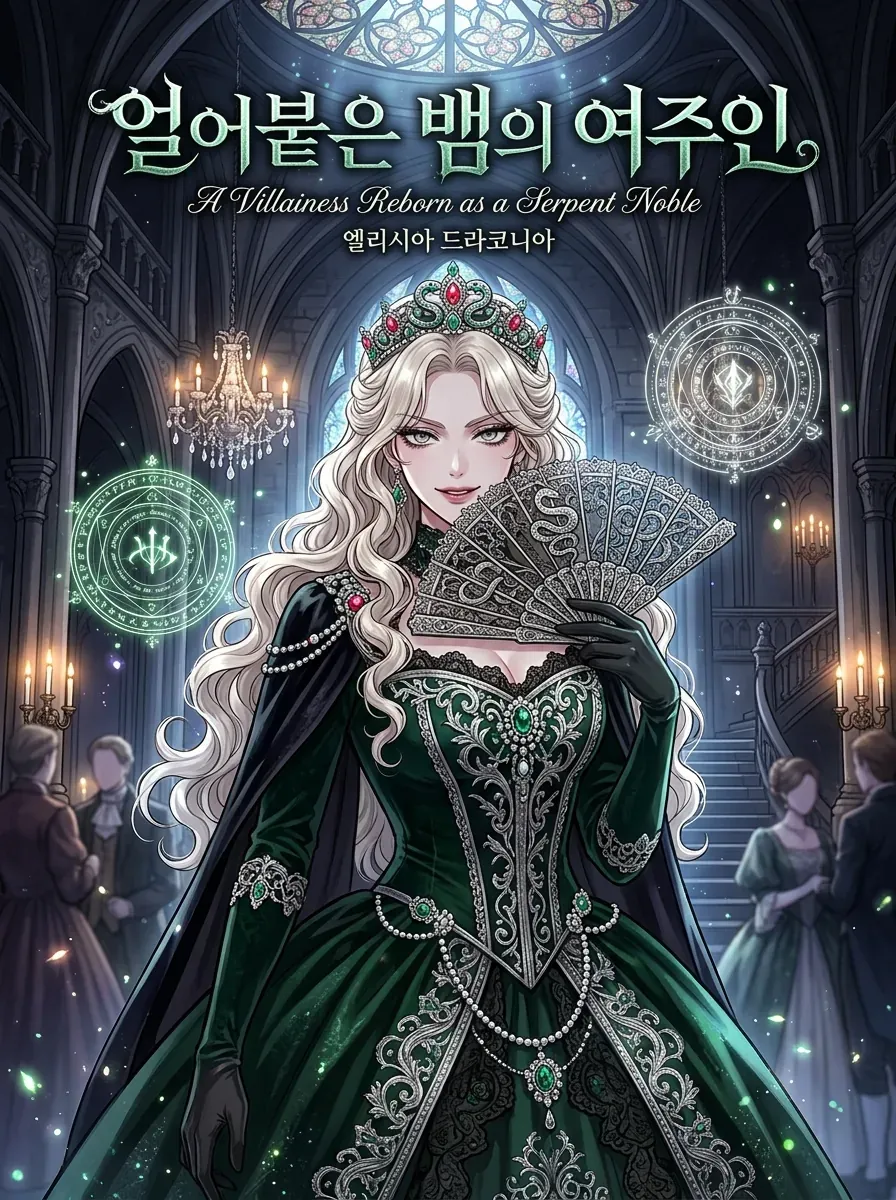
Also Malfoid Villainess Manhwa cover arts that I found:

gosokdoru-manhwa-villainess-malfoy.webp


malfoid-manhwa-regressed-villainess.webp


I picture her as having extravagant, baroque clothes like this just for nights out with her family (being her parents - at least until...)

malfoid-manhwa-villainess-contract-engagement.webp


"Sign the magical marriage contract, Pottah."

Then she becomes much more casual and relaxed:

__malfoid_and_harry_potter_wizarding_world_and_1_more_drawn_by_grin2702__sample-101532b0eab1312eafd08dd40aa8ec7f.jpg


Looks like somebody else had the same idea about them having a bunch of kids. And she even has the spicy potato chips and everything.

Count intends to get back to writing tomorrow.
 

Users who are viewing this thread

Back
Top