• A notice about Rule 3 regarding sites hosting pirated/unauthorized content has been made. Please see here for details.
  • Staff is working to deal with the problem of synonymous tags. See here for more information and to suggest tag mergers.
  • QQ will have forum downtime on October 21, starting at 10:00 AM Eastern time, for software updates.
  • Due to issues with external spam filters, QQ is currently unable to send any mail to Microsoft E-mail addresses. This includes any account at live.com, hotmail.com or msn.com. Signing up to the forum with one of these addresses will result in your verification E-mail never arriving. For best results, please use a different E-mail provider for your QQ address.
  • For prospective new members, a word of warning: don't use common names like Dennis, Simon, or Kenny if you decide to create an account. Spammers have used them all before you and gotten those names flagged in the anti-spam databases. Your account registration will be rejected because of it.
  • Since it has happened MULTIPLE times now, I want to be very clear about this. You do not get to abandon an account and create a new one. You do not get to pass an account to someone else and create a new one. If you do so anyway, you will be banned for creating sockpuppets.
  • Due to the actions of particularly persistent spammers and trolls, we will be banning disposable email addresses from today onward.

[Harry Potter] Malfoid Stories

The Secretary of Magic and the Rogers Affair New
The Secretary of Magic and the Rogers Affair

The office of Secretary of Magic is, in formal terms, a cabinet position subject to the same political pressures and constraints as any other. In practice, the authority it confers has grown substantially as the United States expanded from a relatively insulated republic into the preeminent global power. This combination of institutional reach and limited public visibility has periodically attracted candidates whose ambitions or methods proved incompatible with the office.

The most serious case occurred in 1932 with the candidacy of Ezekiel Thomas Rogers. Rogers was of mixed German and Navajo ancestry. He publicly minimized the former while emphasizing a personal narrative of tragedy and self-advancement. His parents, a Navajo father and white mother, were killed on their Arizona farm by a group of Navajo who objected to the couple's experimentation with Dark Arts—specifically, attempts to combine Aztec blood-magic techniques with contemporary non-magical medical knowledge. Orphaned, Rogers attended Plotinus Academy on scholarship, enlisted in the United States Mage Corps, and was promoted from sergeant to lieutenant for actions against German mages in the First World War. He received the Franklin Star for valor. Throughout this period he continued private research into the Dark Arts his parents had pursued. After the war he obtained papers from an abandoned French magical residence concerning advanced Aztec and Navajo blood practices. He later joined the faculty of the Salem School of Witchcraft as a professor of Ancient Magic Rituals. His 1925 doctoral thesis on a blood-replenishment ritual earned the Galen Prize for Magical Medicine; the work was, in fact, a reconstruction of Aztec rites whose origins he did not disclose.

Around 1930 Rogers completed the Skinwalker transformation. He survived the process by means of Aztec blood-replenishment rituals. Three of the Navajo men responsible for his parents' deaths did not. Thereafter he required periodic human sacrifices to stabilize his altered state. While cultivating political alliances and standing as a candidate for Secretary of Magic—with the public support of Franklin D. Roosevelt—he grew less able to conceal the physical and mental costs of the transformation.

The disappearance of a young woman last seen in Rogers's company drew the attention of Freeman Savage, a private investigator and fellow veteran of the First World War. Savage interrupted an attempted sacrifice, extracted the intended victim, and escaped. Rogers responded by having Savage declared a kidnapper and murderer and dispatching Aurors in pursuit. Savage evaded capture, entered the MACUSA building, and, employing a Navajo spell and totem supplied by an associate, revealed Rogers's nature before the assembled Magical Congress. Rogers resisted; concentrated spellfire together with machine-gun and grenade fire brought him down.

Savage was subsequently recognized as a national hero. President Roosevelt awarded him the Presidential Medal of Freedom and offered him the post of Secretary of Magic. Savage declined the office but accepted substantial compensation for the resolution of the case. The position then passed to Jonathan Akroyd, a wizard of established reputation who held it through the Second World War.

Savage had many more adventures before, during and after the Second World War... But that's another story.

HVb46utWgAAwFTE
 
Black Eyed Children are said to resemble ghostly children of early-teens or younger and have unnatural eyes that are pure black. They are regarded as sinister, terrifying and at times even dangerous by those who encounter them but no one is sure what they are.
 
I'm not sure about the numbers being that high (that would make approximately 5% of the population wizards, and I refuse to believe that one in twenty people can be magic without breaking the Statue of Secrecy or being mostly squirreled away in pocket universes), but I agree it should be larger than 3,000.

The best comparison I've seen is that Wizarding Britain feels like a reasonably sized town (given how many people know each other personally) and it would line up with Rowling throwing out 3,000 as a total population. There's a whole bunch of other details that line up well with a single town's population (Diagon Alley as the main shopping center in Britain, a single school educating most of the children, a gang of thugs maybe 50-100 strong threatening the whole place), so that's probably what Rowling was thinking of when creating locations and culture. This only gets messed up when she has to draw on things that just don't exist in small towns (like the Ministry of Magic and Quidditch World Cup).

Personally I estimated 12,000 or so with basic napkin math (one house table is once described as 200 people cheering, makes 800 at Hogwarts, school age population is about 12% of normal population, double it for wizards living exceptionally long lives). This would make the wizarding population slightly less than 0.2% of the total population, giving approximately 500,000 wizards in the USA. This could be adjusted somewhat, as wizards are effectively an isolated population and have no real reason to follow muggle population trajectories.

Assuming that they have approximately the same genetic drift as normal populations wizards require between 1,000 and 10,000 people. Stretch the "town" to its maximum size and I'd expect a maximum population of maybe 30,000 before you need to substantially rewrite Wizarding Britain itself.

Notably, the magical population includes far more than just wizards, with goblins, centaurs, vampires, hags, and more adding to the population. This would allow for larger institutions like Gringotts and St. Mungo's (I wonder how many house elves work there?) without breaking the town population numbers that underpin a lot of locations. You can view those as neighboring British towns if you like.

Yeah, a total wizard/witch population more than 20,000 in a country the size of the UK would be practically impossible to hide and would render the statute of secrecy a moot point and dead letter.

If you want to bulk up the population of the magical world, you cannot really exceed 20,000 without someone noticing. That and you can make a self-sustaining population and economy easily. But it will also be big enough for real fractiousness, factionalism, and infighting of the kind that can believably produce a protracted martial conflict. 20k people you can plop onto about 30 square miles of land (I am just spitballing but that is the size of a feudal barony, according to Google) easily. And, you'd be able to fill a few functioning villages (with a school district - or one very big school that goes from 11 to 18 -, at least one police station, a town hall, a lot of fields/farmland to break it all up, and even a hospital if you do it right, maybe an amusement park too if we're feeling like pushing it. But that is all in one place. If you're in a country that is a bit over 94,300 square miles (the island of Great Britain itself being 80,800 of them) and break it all up into a few locations, then Wizarding Britain probably still won't get found.

Plus the wars would start to feel like wars. Not a nation state being confounded by 20-odd people, who are somehow thwarted by another 20-odd people, then most of everybody involved all goes home to their normal lives and raise children after the fact, for 15 years before group the first manages to not just confound, but take over the government this time which nominally puts group the second on the back foot, even though all of group A and group B's children all go to school together and nobody thinks to leverage that until the very end.


View: https://www.youtube.com/watch?v=Y6FfuP2Oogs


Skinwalkers

Most wizarding cultures possess spells that permit a practitioner to Transfigure into an animal form. Such magic is difficult to sustain and limited in duration. Animagi achieve transformation through a specialized, high-level discipline that grants a single, fixed animal shape which can be assumed at will. Skinwalkers operate by an entirely different method. They acquire the ability to assume the forms of animals or other people, and to perform additional acts of dark magic, by deliberately violating longstanding magical taboos. These practices rest on ancient blood-magic rituals. Navajo and other Native American magical communities, both historical and contemporary, regard the subject as profoundly dangerous and are reluctant to discuss it. And with good reason.

Becoming a Skinwalker demands sacrifices comparable in severity to the creation of a Horcrux. The process requires murder, human sacrifice, sexual depravities and, in many recorded cases, cannibalism. It is both intricate and lethal: nine out of ten individuals who attempt the initial stage die in the effort. Those who survive obtain substantial increases in capacity for dark magic, including possession, mind control, blood magic, and flesh-shaping. The cost is severe and permanent damage to mind and soul. Although the Americas have not produced Dark Lords on the scale familiar in the Old World, powerful dark wizards have existed; Skinwalkers rank among the most feared of them. A number of dark practitioners, both American and foreign, have succeeded in acquiring the practice or learning aspects of the process to enhance their own powers.

Any confirmed Skinwalker is subject to a kill-on-sight order issued by the Department of Magic. The minimum bounty is ten million dollars. Native American wizards are frequently engaged for such operations because of their accumulated practical experience with these entities.

iu

You don't see too many people getting skinwalkers right nowadays thanks to the way that myths, legends, and folklore mix together on the internet.

Seriously, I've had it said to me that skinwalkers are beasts of inhuman origin and that they hail from Appalachia, as opposed the deserts of the Southwest.

But yeah, a skinwalker is a dark wizard of the 'Oh, shit!' variety.

The Secretary of Magic and the Rogers Affair

The office of Secretary of Magic is, in formal terms, a cabinet position subject to the same political pressures and constraints as any other. In practice, the authority it confers has grown substantially as the United States expanded from a relatively insulated republic into the preeminent global power. This combination of institutional reach and limited public visibility has periodically attracted candidates whose ambitions or methods proved incompatible with the office.

The most serious case occurred in 1932 with the candidacy of Ezekiel Thomas Rogers. Rogers was of mixed German and Navajo ancestry. He publicly minimized the former while emphasizing a personal narrative of tragedy and self-advancement. His parents, a Navajo father and white mother, were killed on their Arizona farm by a group of Navajo who objected to the couple's experimentation with Dark Arts—specifically, attempts to combine Aztec blood-magic techniques with contemporary non-magical medical knowledge. Orphaned, Rogers attended Plotinus Academy on scholarship, enlisted in the United States Mage Corps, and was promoted from sergeant to lieutenant for actions against German mages in the First World War. He received the Franklin Star for valor. Throughout this period he continued private research into the Dark Arts his parents had pursued. After the war he obtained papers from an abandoned French magical residence concerning advanced Aztec and Navajo blood practices. He later joined the faculty of the Salem School of Witchcraft as a professor of Ancient Magic Rituals. His 1925 doctoral thesis on a blood-replenishment ritual earned the Galen Prize for Magical Medicine; the work was, in fact, a reconstruction of Aztec rites whose origins he did not disclose.

Around 1930 Rogers completed the Skinwalker transformation. He survived the process by means of Aztec blood-replenishment rituals. Three of the Navajo men responsible for his parents' deaths did not. Thereafter he required periodic human sacrifices to stabilize his altered state. While cultivating political alliances and standing as a candidate for Secretary of Magic—with the public support of Franklin D. Roosevelt—he grew less able to conceal the physical and mental costs of the transformation.

The disappearance of a young woman last seen in Rogers's company drew the attention of Freeman Savage, a private investigator and fellow veteran of the First World War. Savage interrupted an attempted sacrifice, extracted the intended victim, and escaped. Rogers responded by having Savage declared a kidnapper and murderer and dispatching Aurors in pursuit. Savage evaded capture, entered the MACUSA building, and, employing a Navajo spell and totem supplied by an associate, revealed Rogers's nature before the assembled Magical Congress. Rogers resisted; concentrated spellfire together with machine-gun and grenade fire brought him down.

Savage was subsequently recognized as a national hero. President Roosevelt awarded him the Presidential Medal of Freedom and offered him the post of Secretary of Magic. Savage declined the office but accepted substantial compensation for the resolution of the case. The position then passed to Jonathan Akroyd, a wizard of established reputation who held it through the Second World War.

Savage had many more adventures before, during and after the Second World War... But that's another story.

HVb46utWgAAwFTE

Good show, good show! This is what I want to see. The world is a wide and rich tapestry full of lores to pull from, to mix and match, and do well if you know how to pay attention.


Also, check this out.


View: https://www.youtube.com/watch?v=T7qR-qeH_nI

I think it hits on a lot of good points, Harry and Malfoid teaming up, Voldemort looking like a diabolical snake lich, Malfoid having a peacock patronus, if you look closely a couple of the students are firing Avada Kedavras (most start off with white-colored spells, but especially on the left side once Malfoid goes through the door, that one student was casting PK .40 PK Fire. Which makes sense, Avada Kedavra is not too dissimilar to a pistol. Now, there are a few key differences between Avada Kedavra and a gun. The first of which being the travel time (most bullets move at supersonic velocities and even the subsonic ones aren't realistically things you can dodge once they're airborne, Avada Kedavra it is different, think like the difference between the speed of human bullets and Plasma Pistol shots in the Halo games, those you can see and dodge around). The second is the lethality ratio. Statistically speaking, when accounting for the total area of the human body, a given bullet striking it and passing completely through has only a 20% chance of hitting something vital enough to kill (larger bullets carrying and expending more energy, bullets that dump all of their energy on the initial impact and remain inside the target, deliberate aim for vital organs, first aid promptness/efficacy, follow-on treatment and whether or not it is received, and a whole myriad of other factors effect whether or not someone who is shot will live or die). But if Avada Kedavra hits, and there is no love fueled self-sacrifice blood magic protecting the intended target, the target dies, that is it. It is definitely the sort of spell you'd reach for if you're in open combat with another wizard who is trying to kill you.

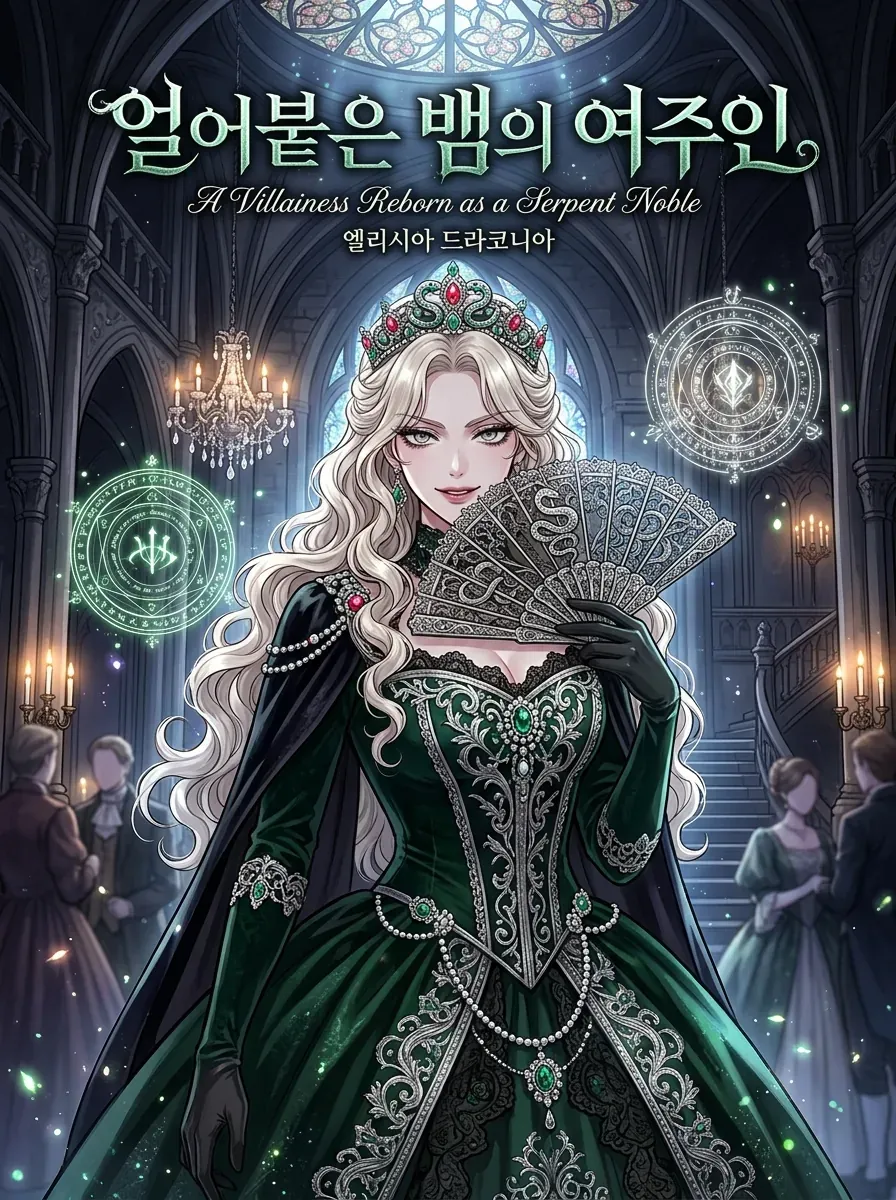
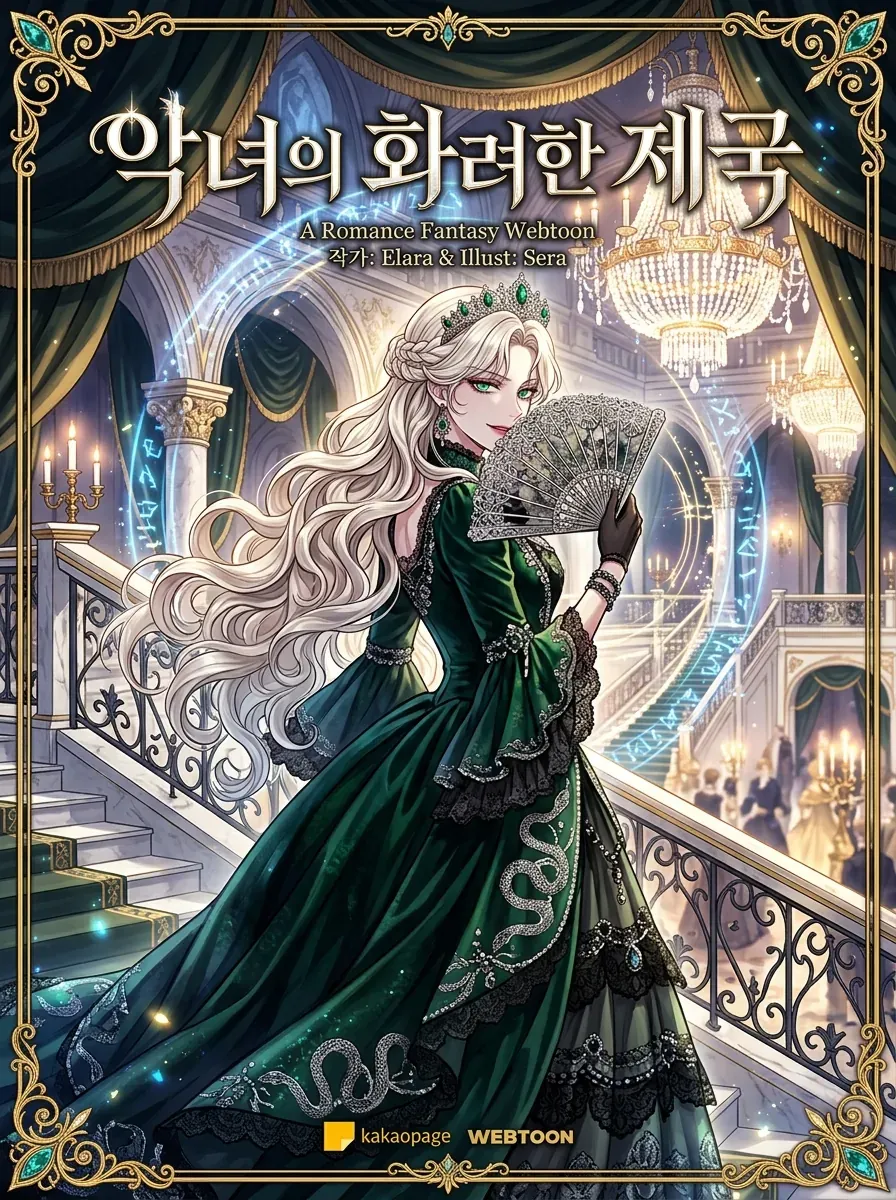
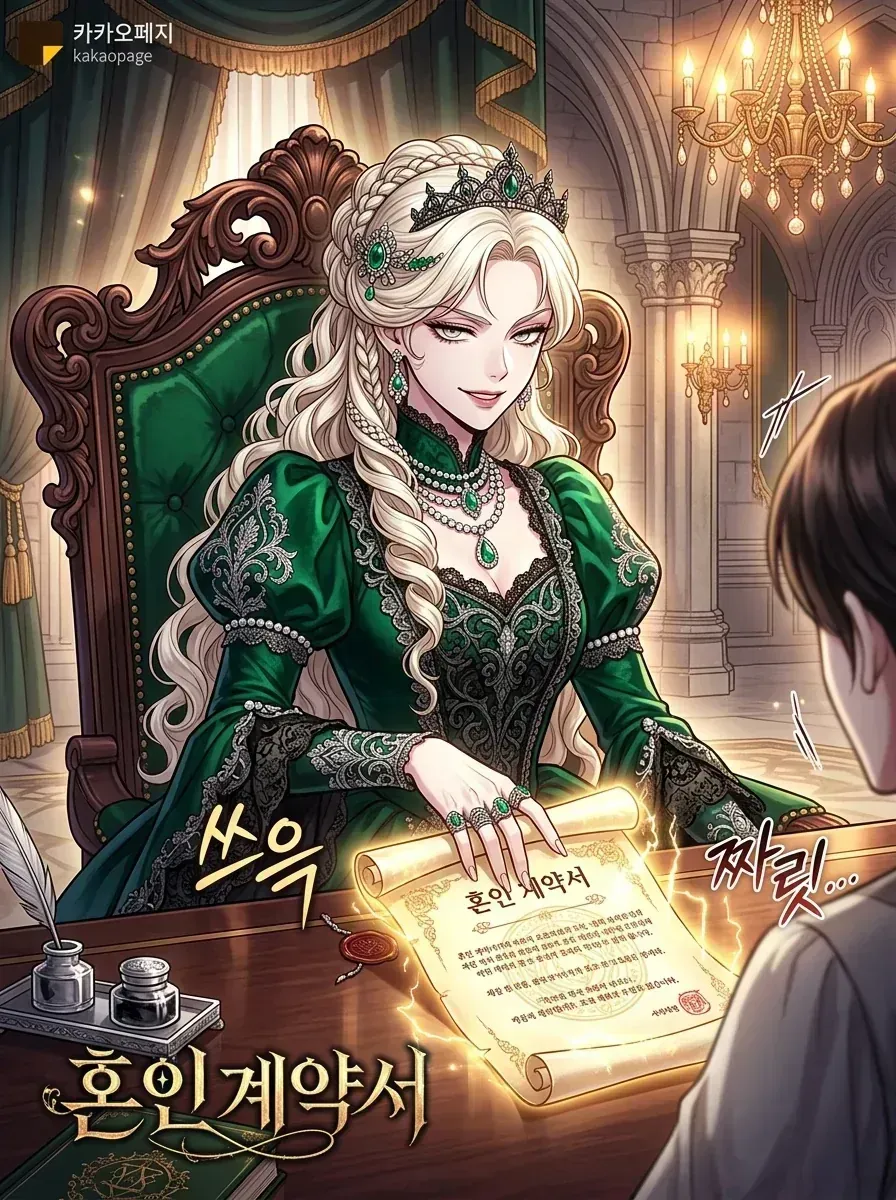
Also Malfoid Villainess Manhwa cover arts that I found:

gosokdoru-manhwa-villainess-malfoy.webp


malfoid-manhwa-regressed-villainess.webp


I picture her as having extravagant, baroque clothes like this just for nights out with her family (being her parents - at least until...)

malfoid-manhwa-villainess-contract-engagement.webp


"Sign the magical marriage contract, Pottah."

Then she becomes much more casual and relaxed:

__malfoid_and_harry_potter_wizarding_world_and_1_more_drawn_by_grin2702__sample-101532b0eab1312eafd08dd40aa8ec7f.jpg


Looks like somebody else had the same idea about them having a bunch of kids. And she even has the spicy potato chips and everything.

Count intends to get back to writing tomorrow.
 
Seeing Malfoid in casual muggle clothes gives me a whiplash that makes me realise how...liberal? Un-classical? The general fandom is compared to even a Gen X woman like Rowling, who at least clung to the aesthetics of high culture, even if she stuffed it full with resentment for it.

I'd say one of the core, unchanging conceits of Malfoy's character is that she's a highborn girl through and through, and without it, you lose who she is - it's what Harry must change himself to accommodate for - but I guess the trappings of British class differences is kind of a hard thing to simplify and disseminate.

Plus she never even fleshed out how pure-blood society networking works.

And, well, imagining Harry joining Lucius for poker night during Narcissa or Abraxas's birthday with a bunch of well-dressed men named 'Rosier', 'Nott' and 'Greengrass' is a challenge in itself. Though Harry's got enough Slytherin in him to get by, me thinks.

Maybe ol' Slughorn the shipper becomes the great equaliser in all this? It's funny to think of Harry in Sixth Year diving headfirst into the Slug Club just to try and catch Malfoid in the act, only to end up with a surprisingly wide web of connections to use during the Horcrux Chase.
 
He lay on his back with his heart going. His father was a bully and his mother had been Snape's friend before she married the bully, and he liked a girl who hated him. None of it fit in his head at the same time.
I wonder what Snape would think of Harry's new opinion of all these people? Would he be surprised that Harry is angry and feels betrayed by them?
That was really good, you could feel how confusing all that was for Harry. And now he's thinking about how he treated Dracaena just like a bully he'd rather not be. It's true that she probably genuinely had no idea why he rejected her lol. Well, hopefully he'll be able to explain himself to her.
 
Seeing Malfoid in casual muggle clothes gives me a whiplash that makes me realise how...liberal? Un-classical? The general fandom is compared to even a Gen X woman like Rowling, who at least clung to the aesthetics of high culture, even if she stuffed it full with resentment for it.

I'd say one of the core, unchanging conceits of Malfoy's character is that she's a highborn girl through and through, and without it, you lose who she is - it's what Harry must change himself to accommodate for - but I guess the trappings of British class differences is kind of a hard thing to simplify and disseminate.

This is true, and probably sources more than a few of what I would call Rowling's incongruities (both expressed and implied) with what her readers took away from her story.

Moreover, Harry trying to accommodate his highborn GF and her trappings of wealth does a great deal to make them both more definite as individual persons.

Harry has to meet Malfoy's needs, quirks, and foibles that all come from being born into wealth. So, he cannot be a mere passively responsive caldera of resentment over that which he did/does not possess. Nor can Malfoy melt into the undifferentiated muggle masses, she'd lose her definition, and lose herself if she did and then there would be no point. So Harry must logically accommodate the high-maintenance one. Now, a general rule with relationships is that you shouldn't change yourself into something you're not because then you'll just be miserable and your partner will end up loving a lie. However, that isn't the exception from putting in the work to keep a relationship that people sometimes take it as. Love is an active process that takes active effort, substantive work, and a great deal of personal sacrifice. It is not - as many poets and writers seem to think it is - mere drunkenness on infatuation. And I think that the underlying cause behind a lot of relationships imploding is people not going in with that figured out.

So if I want to have moments of affection like what is here depicted (Malfoy letting her mask of perfect poise slip or showing some spontaneous affection, especially when dressed in such a way that lets her show off her pregnancy) then it would probably be in a very different circumstance than Harry doing laundry, and while she'd probably insist on properly dressing herself at least until she is very late along her pregnancy. As I had said, I just assume she has multiple, exceedingly baroque outfits like that because, well, those outfits are her normal.

I therefore agree that Harry having to learn to live in Malfoy's world, as opposed to the other way around, is both more in character for her, and more beneficial to his character arc, logically speaking. Also, being independently wealthy himself, he is going to have to learn to handle that. Money isn't the end of your problems, it is a disposable tool with which to solve your problems - it is the ability to understand that simple fact that, ironically, enables one to have a great deal of money. So the fact that Harry is going to be in a higher wizarding tax bracket whether he wants to or not.

Which brings us nicely to your next point.

Plus she never even fleshed out how pure-blood society networking works.

And, well, imagining Harry joining Lucius for poker night during Narcissa or Abraxas's birthday with a bunch of well-dressed men named 'Rosier', 'Nott' and 'Greengrass' is a challenge in itself. Though Harry's got enough Slytherin in him to get by, me thinks.

Maybe ol' Slughorn the shipper becomes the great equaliser in all this? It's funny to think of Harry in Sixth Year diving headfirst into the Slug Club just to try and catch Malfoid in the act, only to end up with a surprisingly wide web of connections to use during the Horcrux Chase.

And just like that I think you've done a lot to flesh out how Pureblood networking works.

In spite of my theorizations above, Wizarding Britain's population remains at sub/circa-3000.

You can also easily fit 3000 people into a small town and still have it be considered a small town, you end up with a social fabric where people figure out who you are (with a fair-ish degree of accuracy) quickly as you become very familiar very fast to a decent chunk of the populace. As you will be a regular fixture in their lives, their impressions will also tend to last and be exceedingly difficult to change. Civic institutions are statistically trusted a great deal more than they are in larger settlements. Public participation is also more valued, as among a group that small, it is more meaningful, tangible, and arising from those two, substantive. So Lucius dropping a sack of galleons wherever he pleases is going to have real, demonstrable impacts for whoever's lap it lands in, that person and their whole personal network of people with whom they have meaningful relationships (of which, there should statistically be 23 distinct such groups total in Wizarding Britain to completely encompass all people within it, each homed mostly [83 - 95% of the time - depending on whether you think that 5.7 times of 6 should be interpreted exactly as such or rounded down to the nearest whole number] in one of the four macro networks established by the Houses in the local school, which being such an old institution in a community this small, is the core and key pillar to Wizarding Britain's national identity). That Lucius spent any time on that school's Board of Governors, that he was responsible for a Horcrux incident pertaining to the same, and that he was fired from said board and incarcerated on that front are all things that will not be forgotten even if he faces no further formal legal consequences after Voldemort's death.

The math adds up too. We can, for our purposes, suppose that the entire Pureblood movement in Wizarding Britain comes out of the personal relationship networks of Voldemort's original circle of friends - The Knights of Walpurgis - Voldemort himself doesn't count but we have: the Avery, Lestrange, Mulciber, Nott, and Rosier of the 1930s and 40s. 5 x 130 (thereabouts of the theoretical maximum number of faces that a normal human brain can recall and attach emotion to), and you've got 650, a hundred short of the living populace of Wizarding Britain that got sorted into Slytherin. And citing the percentages above, somewhere between 539 and 618 of those 650 people should be fellow Slytherins.

The Sorting Hat effectively dictating which quarter of Wizarding Britain that any given individual will get to pull from for the vast majority of their personal network at age 11 sort of makes movements and generational vogue ideals being confined to single houses inevitable. It also neatly explains how half a dozen kids at a lunch table become the single biggest threat to Britain since Grindlewald.

The outliers are people who cause hat stalls or who regularly encounter extraordinary circumstances. Such as Harry. They can create hybrid networks easily, and organically. Harry gets his friends, his entire year, the Gryffindor Quidditch team, Hagrid, McGonagall, and more than a few others besides. So Lucius opening the door for Harry with these guys with the phrase 'son-in-law' and a good interaction or two will create the conditions for Harry's standing within the group to alter favorably.

And again, it is fun to think that there is a side to Harry that is as Slytherin as they come. I like silly fics that lean into this and have Harry go full schemer.

Though I am still tempted to write a snippet of Harry taking Malfoid to play a muggle arcade game and her getting way too locked into it.

Or, funnier, for Lucius and Narcissa to play it and both be bad at it, and get way too wrapped up in the very basic storyline.


I wonder what Snape would think of Harry's new opinion of all these people? Would he be surprised that Harry is angry and feels betrayed by them?
That was really good, you could feel how confusing all that was for Harry. And now he's thinking about how he treated Dracaena just like a bully he'd rather not be. It's true that she probably genuinely had no idea why he rejected her lol. Well, hopefully he'll be able to explain himself to her.

"That you are having these thoughts at all demonstrates greater maturity than I previously thought you capable of, Mister Potter." - Snape


Ideas that I want to work on in the days to come:

1) Lyra's Driving Lesson - Lyra returns home for Christmas on her second year in a mood. If Potter and Weasel can drive a car, why can't she? Lucius folds like a steel chair, as usual whenever his daughter wants something, and decides that he is going to find her a driving instructor. Naturally, this instructor must be magical, have a rather fluid definition of personal responsibility, know how to drive, and most importantly, come from a good family. Fortunately, the heiress to the most eminent alchemist family on the continent fits the bill perfectly.

2) The Family that Plots Together - Lucius finds out that his youngest granddaughter's Yule Ball date stood her up. It is time to do his namesake proud. Harry will still have to be petrified before he gets to the shotgun though.

3) The oft-talked-about Lucius catches James Potter and Lily Evans (who have mysteriously been flung decades into the future and assumes his daughter's boyfriend is being unfaithful) James and Lily have to rely on Snape for help.

4) Harry's struggles to avoid folding up instantly like Lucius when it comes to the kids.
 
The Library New
HVcFmNyboAESP_l


What are they studying?


They were paired up on a class project. Forced to interact with each other nicely or else…

I wonder what Snape would think of Harry's new opinion of all these people? Would he be surprised that Harry is angry and feels betrayed by them?
That was really good, you could feel how confusing all that was for Harry. And now he's thinking about how he treated Dracaena just like a bully he'd rather not be. It's true that she probably genuinely had no idea why he rejected her lol. Well, hopefully he'll be able to explain himself to her.

Yes we do hope he's able to explain himself.

The Library

34 minutes had passed and neither of them had looked up.

She had her text open and her quill going, while he sat with two inches of parchment and a paragraph he had read forty times. The group project was about moonstone and it would not stay in his head. It kept getting pushed out by a mental image of a crumpled up 11 year old face and he kept shoving the image away to start the paragraph again.

Madam Pince's chair creaked. Somebody behind the stacks of books was whispering badly.

"I've been wanting to say something," said Harry, quietly.

The quill stopped, though Malfoy did not look up.

"It's been bothering me a while now. I wanted to say I'm sorry for it." He explained.

"We had an agreement." Her voice had gone low and strange.

Harry looked at her. He had no idea what agreement she meant.

"You said you wouldn't and I said I wouldn't and we shook on it." She ground out.

"What agreement?"

"Don't sit there and pretend you don't remember."

"I don't remember any agreement."

"You can't just decide one evening that you'd like to talk about it." Her hands came flat onto the table. "You can't apologise for that."

"Why not?"

The question came out genuinely baffled, and it stopped her for a second.

"Because we agreed," she said.

"Agreed what?"

"For—" Her jaw worked. "For the thing."

"What thing?"

"The thing we agreed not to talk about."

"We agreed not to talk about something?"

"Yes."

"What was it?"

She leaned in, dropping her voice to almost nothing. "Are you being deliberately—"

"I'm not being anything. I have no idea what you're on about."

"Because you know."

"I don't."

"The other thing," she whispered.

"What other thing?"

"The other thing."

"There isn't an other thing."

"There is absolutely an other thing—"

"What is it?"

"I'm not saying it out loud!"

"You've said it four times and I still don't know what it is." He stated, incredibly confused.

"Of course you know." Her ears had gone pink. "You were there. I was there. It happened and we shook on it!" Practically snarling the last word.

Harry stared at her.

His jaw ached on the left side from clenching it. Ridiculously, his fingers had gone cold, even though the library was warm and he had been sitting still for an hour. Four minutes of the thing and the other thing and you know what I mean. Bloody hell. He'd been carrying his guilt and it felt heavier every day. On staircases he had rehearsed the apology and in the shower, out loud to Hedwig, and now she was refusing to let him say it!

He smacked his quill down.

"I'M SORRY ABOUT THE TRAIN!"

The words arrived at the wrong volume.

Two people behind the stacks stopped whispering. Madam Pince's chair scraped back an inch.

Harry bent over his parchment. Malfoy bent over hers. They held the pose for ten seconds, until the chair creaked back the other way.

"The train?" Malfoy whispered furiously.

"First year..." He was still looking at his parchment. "You put out your hand and I called you the wrong sort. You reminded me of my cousin."

She said nothing.

"I was a right wanker about it and I—"

He paused as her face had gone a colour he had not seen on a person before.

"You idiot," she hissed.

"What?"

"You absolute—" She pressed her lips together. "I have been sitting here in agony—"

"Malf—"

"Don't."

"what are—"

"No."

He stopped.

Although her hands lay flat on the table, she was breathing through her nose, and her face and her ears had gone scarlet. She was not looking at him.

"I thought," she murmured, "that you had decided, five weeks later, to bring up one of the worst evenings of my life in a public library."

Harry looked at her.

For about two seconds, he did not understand. Then he did, and it arrived all at once. The prefects' bathroom. Steam rolling out of the door and fogging his glasses. The tub the size of a swimming pool, and the pile of robes neatly folded at the side. Her, up to the shoulders in it, hair slicked back from her face and stuck to her neck, skin flushed pink from the heat. A drop of water running from her collarbone down into the water, and his eyes following it without permission to her—.

His ears went hot down to the collar of his shirt. He had spent four minutes arguing about a train carriage while she sat there believing he was about to make her discuss that.

"Oh," he breathed.

"Don't." She warned.

"I didn't—"

"Don't."

"I wasn't—" He leaned forward, his mouth already open and the sentence already forming. "Malfoy, I wasn't apologising for the—"

Her hand came across the table and pressed flat over his mouth.

Harry stopped talking.

Her palm was soft. Before anything else got in, his brain supplied that thought. Soft, warm, faintly inked from the quill. He could feel the fine lines of it against his lips and the small callus at the base of her middle finger where the quill rested. He could also feel his own heartbeat in his throat, which he hoped was not travelling up through his mouth and into her hand.

He did not move.

Malfoy's face was inches from his and going redder by the second. Her eyes were very wide.

She took her hand away.

"Don't say it."

"I wasn't going to say it."

"You were about to say it."

"I was about to say I wasn't apologising for it, which is the opposite of—"

"Potter, be quiet." Madam Pince's voice rang out.

They both bent over their parchment. Harry's heart was going like a snitch. He could still feel the shape of her hand against his mouth, and the steam was still in his head, and the drop of water was still running down. He wrote two words and crossed them out and could not remember what the paragraph had been about.

Pince came down the aisle and stopped at the end of the table.

"If I come back and find the pair of you still loudly having your little lovers spat, I'll be writing to your heads of house." she announced.

She went back to her desk.

They worked in silence.


Once they had gone out into the corridor, they walked as far as the first turn before either of them spoke.

"For the record," Malfoy offered, "I have not thought about the event once."

"Which one?"

She hitched her bag up on her shoulder.

"The apology is accepted," she told him, without turning round, and walked on very fast.

Harry stood in the corridor and watched her go. He still had no idea which apology she had accepted, and he suspected, from the way she had said it, she did not either.
 
Last edited:

Users who are viewing this thread

Back
Top